The Central Board of Direct Taxes (CBDT) has released comprehensive scrutiny guidelines for FY 2026-27, identifying six specific categories of taxpayers whose income tax returns will be compulsorily selected for complete scrutiny. According to the latest CBDT circular (F.No.225/56/2026/ITA-II), these cases are categorized under six 'Scenario Codes' (CS 01 to CS 06) that will trigger mandatory tax scrutiny. The guidelines represent a significant shift from traditional compliance-based assessments to data-driven scrutiny, with the tax department increasingly relying on data analytics and information from multiple sources to identify potential tax evasion.
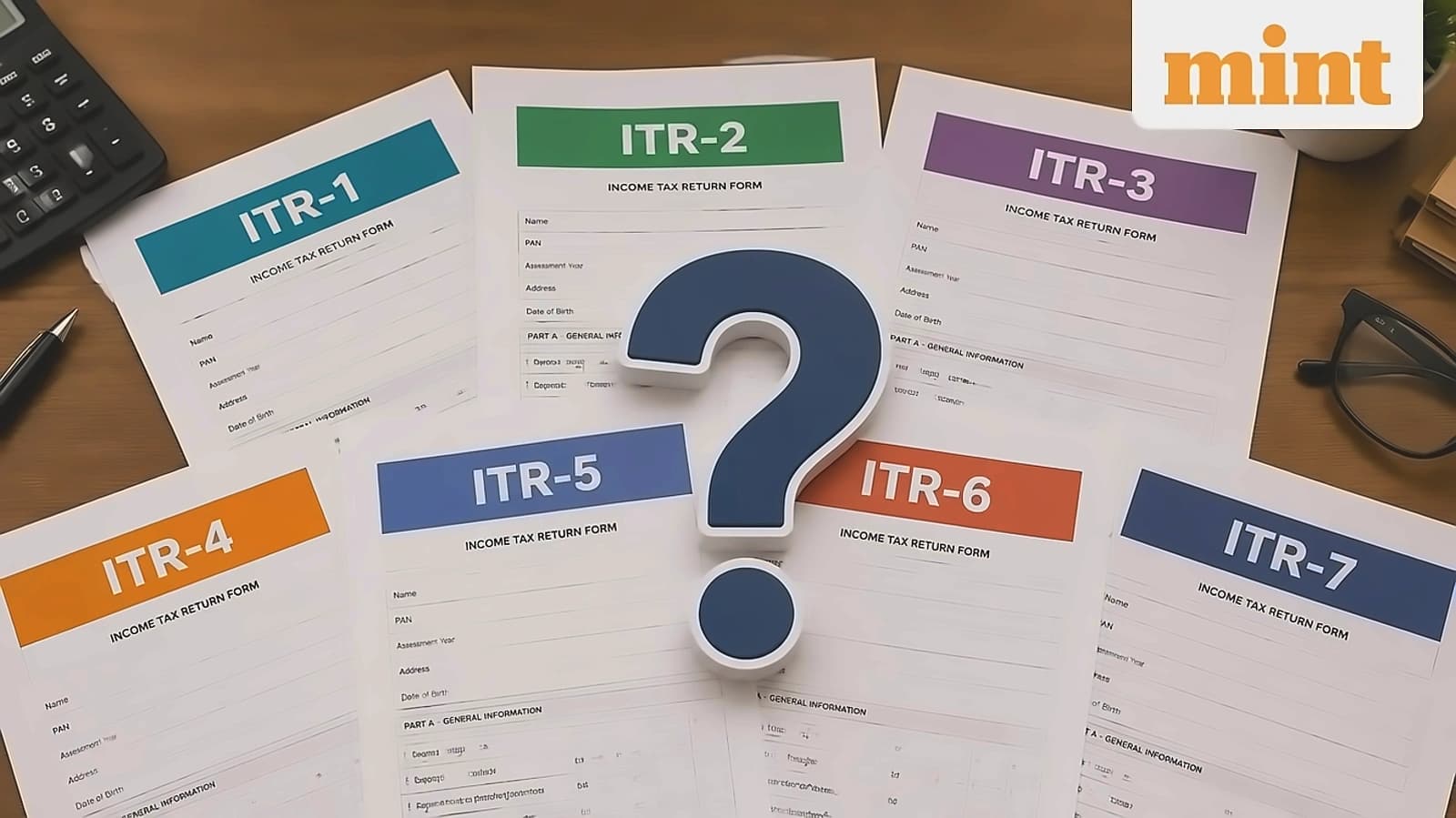
Choosing the wrong ITR form can render your return "defective" under Section 139(9) of the Income Tax Act, leading to an income tax notice and potential delays in processing refunds. According to recent reports, if a defective return is identified, taxpayers are typically given 15 days to rectify the error. Failure to respond within the prescribed timeline could result in the return being treated as invalid, exposing taxpayers to penalties, scrutiny assessments, and rejection of tax refunds. The Income Tax Department has set seven different ITR forms, each designed for specific categories of taxpayers based on their income sources, residential status, and nature of earnings.
ITR-1 (Sahaj) is designed for resident individuals with total income up to ₹50 lakh during the financial year. As reported by Mint, eligible income sources include salary or pension, income from one house property, agricultural income up to ₹5,000, long-term capital gains under Section 112A up to ₹1.25 lakh, and other sources such as savings account interest and family pension. The form also covers certain clubbed income of a spouse or minor child. However, individuals cannot file ITR-1 if they are RNORs or NRIs, have total income exceeding ₹50 lakh, have agricultural income above ₹5,000, or have taxable capital gains or LTCG under Section 112A exceeding ₹1.25 lakh. The form is the simplest return available for resident individuals, making it essential for taxpayers to carefully verify eligibility conditions before filing.
ITR-2 is applicable to individuals and Hindu Undivided Families (HUFs) who do not have income from business or profession but earn income from salary, pension, foreign assets, house property, capital gains, or other sources. According to Mint, the form is also suitable for taxpayers with total income exceeding ₹50 lakh, those owning more than one house property, individuals with foreign assets or foreign income, NRIs, RNORs, individuals with clubbed income of a spouse or minor child and partners in partnership firms receiving interest, salary, commission, bonus, or remuneration without earning business income directly. However, taxpayers earning profits and gains from business or professional activities are not eligible to file ITR-2, nor are partners in partnership firms who have business income and receive similar payments.
ITR-3 is designed for individuals and HUFs who earn income from business or profession, including proprietors, freelancers, consultants, and partners in partnership firms receiving salary, commission, bonus, or remuneration from the firm. As reported by Mint, the form also applies to taxpayers who have invested in unlisted equity shares during the financial year and those who earn business income alongside salary, pension, capital gains, house property income, or income from other sources. Companies, charitable trusts, partnership firms, LLPs, AOPs, and BOIs cannot use ITR-3, nor can taxpayers eligible for ITR-1, ITR-2, or ITR-4. Companies claiming exemption under Section 11 for charitable or religious purposes must file ITR-7 instead.
The Income Tax Department has significantly expanded its ability to collect, analyze, and cross-verify taxpayer information through multiple reporting systems. As reported by Mint, taxpayers are expected to ensure greater accuracy while selecting the appropriate ITR form and reporting income. One of the most important developments is the growing reliance on the Annual Information Statement (AIS) and Form 26AS for return validation. Taxpayers must reconcile their reported income with AIS data before filing, as any mismatch between the ITR and these records may trigger queries, notices, or additional verification requirements. Before filing, investors should review their AIS, which contains transaction data reported by brokers, mutual fund registrars, banks and other reporting entities, to ensure capital gains disclosures match broker statements and mutual fund capital gains reports.
NRIs and foreigners are subject to income tax in India based on residential status, not citizenship or nationality. According to Mint, under Section 6(1) of the Income Tax Act, a foreign citizen becomes a resident if they meet either condition: staying in India for 182 days or more during the financial year (1 April to 31 March), or staying in India for 60 days or more in the current financial year and having spent 365 days or more in India across the preceding four financial years. For NRIs or persons of Indian origin visiting India, they will be considered residents if their total income other than foreign-sourced income exceeds ₹15 lakh and they have been in India for at least 120 days in the relevant financial year and more than 365 days in four preceding financial years. The deadline for individual taxpayers filing ITR is July 31, 2026, while for those using ITR forms 3 and 4, the deadline is August 31, 2026. Taxpayers who miss the July deadline can still file a delayed return by December 31.
Tax Deducted at Source (TDS) refund becomes applicable when the amount of tax deducted from your income during a financial year is more than the tax you are actually required to pay. According to Mint, if your total taxable income is below the basic exemption limit and no tax is ultimately payable, you can still claim a refund of the TDS deducted. TDS is deducted from several types of payments, including salary, dividend income, bank interest, professional fees, consultancy charges, contract payments, commission, brokerage, lottery winnings, and online gaming. To claim a TDS refund, follow these steps: Step 1: Check TDS in Form 26AS - First, check Form 26AS, which shows all TDS deducted from your income and deposited against your PAN by different deductors. Step 2: File ITR and claim refund - While filing your ITR, report all income correctly and ensure TDS details match Form 26AS. The system will automatically compute whether any refund is due. Step 3: Verify ITR and get a refund - After filing, complete e-verification using Aadhaar OTP or other specified methods. Once e-verification gets approved, the refund is directly credited to your linked bank account. Generally, it takes around 4-5 weeks for the refund to be credited, depending on processing timelines.