Margaret Smith, a non-resident individual in Jodhpur, did not file a return for assessment year 2016-17. The tax department learnt of her property purchase and issued a notice under section 148 in April 2023. She responded with a return declaring total income of just ₹3,240. The reassessment that followed proposed two additions: ₹34,89,500 as unexplained investment in a flat bought for ₹62,27,500, and ₹16,50,000 as short-term capital gain from the sale of an old residential flat at Jodhpur. The unexplained-investment addition was later deleted by the Dispute Resolution Panel (DRP), and the gain was eventually computed at ₹10,53,992.
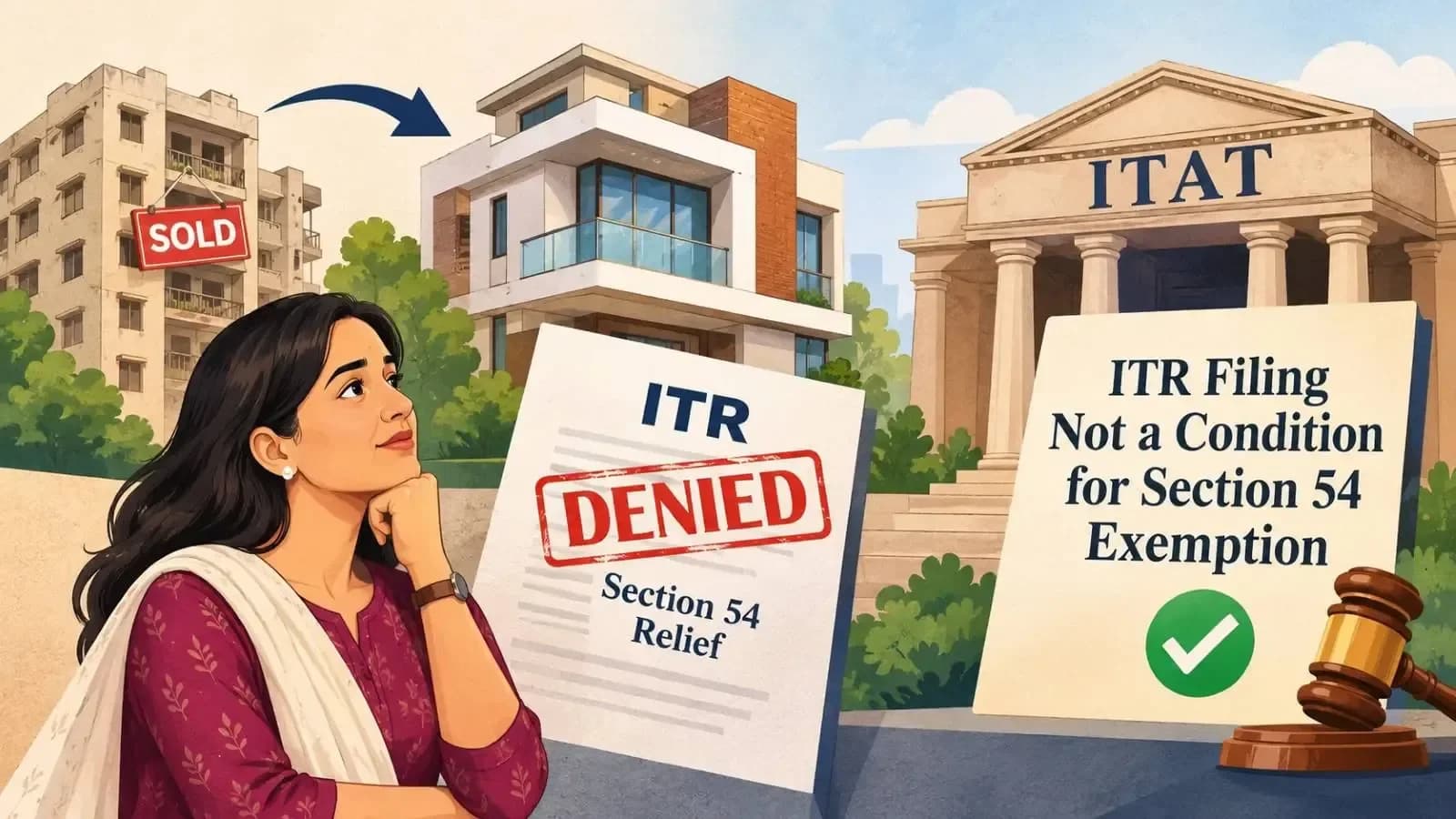
The DRP refused to provide Section 54 exemption on the gain solely because Smith had not filed an original return. The panel stated that filing of the Income Tax Return (ITR) is compulsory for claiming deduction under Section 54, and since no ITR was filed, the exemption claim could not be granted. However, the Income Tax Appellate Tribunal (ITAT), Jaipur, ruled on November 3, 2026, that Section 54 does not make the filing of a return a condition of the deduction. The tribunal noted that Section 54(1) grants deduction where gain arises from residential house held as long-term capital asset, and the assessee purchases another residential house within one year before or two years after the transfer. The key takeaway is that filing the ITR on time is not an independent condition under Section 54, particularly when the taxpayer has already invested the entire capital gain in the new property.
In a recent case from the Mumbai bench of ITAT, the tribunal has provided comprehensive relief for taxpayers who miss original return filing deadlines. The case involved an individual who purchased an immovable property valued at ₹45 lakh during assessment year 2017-18 but did not file an original ITR. The Income Tax Department initiated proceedings under Section 147, issuing a notice under Section 148 on March 24, 2024, and the taxpayer filed his return on April 4, 2024, claiming ₹49 lakh exemption under Section 54. The assessing officer rejected the claim citing absence of original ITR, adding ₹31,38,256 to the taxpayer's income, but the ITAT overturned this decision.
Section 54 exempts long-term capital gains from the sale of a residential house if the taxpayer reinvests the gains in another house in India within the prescribed period. According to Vishwas Panjiar, managing partner at SVAS Business Advisors, "The new property must be purchased within one year before or two years after the sale, or constructed within three years. The exemption generally covers one house, with a one-time option to invest in two houses if the capital gain does not exceed ₹2 crore." The exemption is calculated as the lower of the LTCG arising from the sale and the eligible investment in the new residential property, with a ₹10 crore ceiling on the investment amount. For instance, if the gain is ₹60 lakh and the investment is ₹45 lakh, the exemption is ₹45 lakh. If the investment is ₹70 lakh, the entire ₹60 lakh gain may be exempt, subject to other conditions.
The tribunal directed the assessing officer to reassess the taxpayer's entitlement to Section 54 exemption on merits and grant the benefit if applicable statutory requirements are met. The ruling establishes that taxpayers who miss original return deadlines but face reassessment over property transactions can still claim Section 54 exemption in section 148 returns, provided substantive conditions are met and documented. The case is particularly relevant for taxpayers, including non-resident individuals, who sell or buy property and whose exemption claims under Section 54 are rejected for procedural lapses rather than on merits. However, the ruling does not waive the obligation to file returns on time or provide blanket relaxation of tax-filing deadlines, as taxpayers should continue meeting their filing obligations and retain evidence of property transactions.