

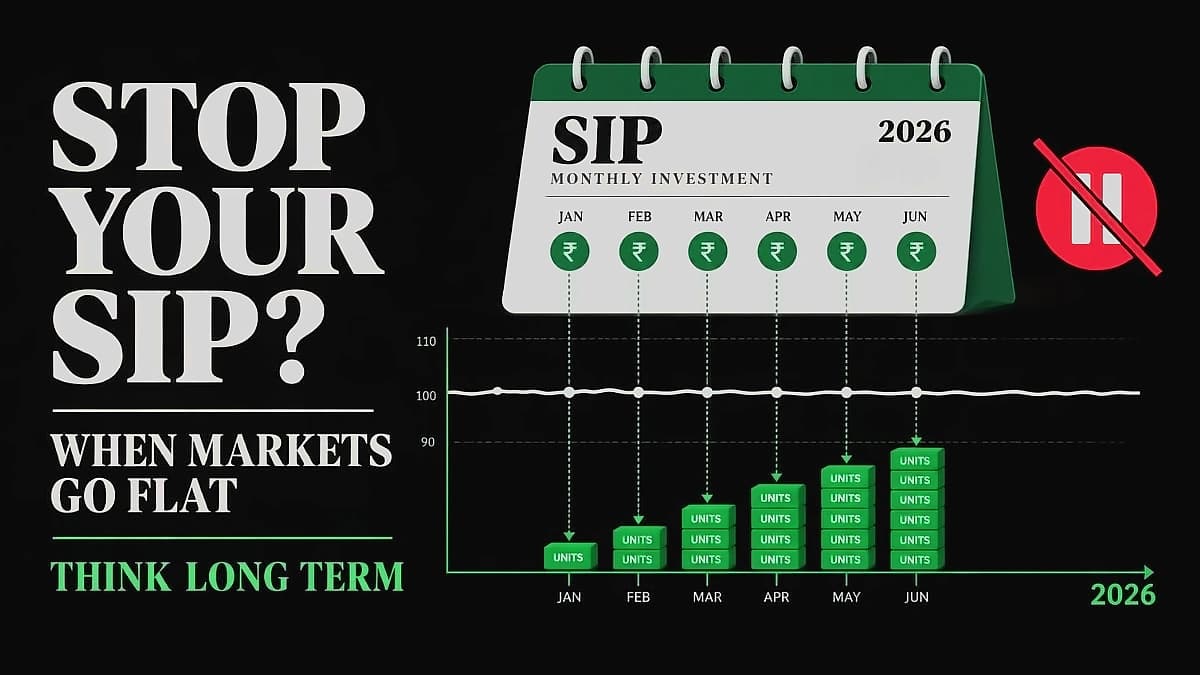

For freelancers, consultants, traders and small business owners, irregular cash flows create significant challenges in maintaining traditional systematic investment plans (SIPs). According to reports from Mint, these professionals face income patterns where some months are busy while others are lean, with single large invoices arriving quarter late. The standard monthly-SIP approach assumes a fixed paycheque arriving on the same day every month, which many irregular earners simply do not possess.
The solution lies in shifting from monthly to yearly investment planning. As reported by Mint, instead of committing a fixed sum on a fixed date, investors should decide how much they intend to invest over a full year and deploy it whenever money actually arrives. This approach allows strong months to fund more investment while weak months fund less or nothing, without creating a sense of failure. The discipline shifts from 'invest every month' to 'invest every rupee that is surplus, as it comes in' - a target that irregular earners can realistically meet.
The harder challenge with lumpy income is determining where to invest each time payment clears. According to Mint, a fixed asset allocation removes this guesswork by providing a predetermined allocation model such as 60% equity, 30% debt and 10% gold. This approach means when money arrives, investors already know where it goes, treating each investment as a top-up rather than a fresh investment decision. This strategy is particularly important for irregular earners because their investment opportunities often come in bursts, often when markets are experiencing dramatic movements.
For irregular earners, emergency fund requirements are significantly higher than for those with steady salaries. As reported by Mint, the emergency fund should be nine to twelve months of expenses rather than the standard six months recommended for regular salary earners. This larger buffer prevents forced selling of equities during lean periods coinciding with market falls, which can undo years of patient investing. The liquidity should be built first, then the equity portfolio should be fed once this financial floor is established.
The biggest risk for irregular earners comes during good months when large payments arrive. According to Mint, the natural urge is to put large inflows into whatever asset or sector has recently rallied the most, which often results in buying at market peaks. A fixed allocation provides discipline to resist this impulse, ensuring large inflows are split across equity, debt and gold in predetermined proportions rather than being concentrated in the theme of the moment. The strategy emphasizes making fewer mistakes through planning in calm moments to protect against decisions made during excited periods.