With the repo rate already 125 basis points below its post-COVID peak of 6.5%, borrowers face a key choice: pay for stability now or stick with floating rates. According to reports from Mint, this makes the choice between fully floating-rate home loans and hybrid loans more consequential for borrowers. Some banks have begun offering semi-fixed products at competitive rates, partly driven by excess liquidity following a record wave of foreign currency non-resident (FCNR(B)) deposits. In June, under a special RBI scheme, banks were allowed to offer higher interest rates on these deposits, attracting more than $127 billion before the scheme ended on August 31st.
A hybrid home loan has two phases: the rate is fixed for an initial period, usually two to five years, before switching to a floating rate linked to a benchmark. As reported by Mint, this structure provides EMI certainty when the outstanding principal is at its highest. According to Adhil Shetty, chief executive of BankBazaar, hybrid loans may suit borrowers who want certainty over their initial borrowing cost but are willing to take some interest-rate risk later. The fixed phase is therefore a bet on the direction of rates, with borrowers expecting rates to rise valuing the fixed phase, while those expecting further cuts may prefer floating because reductions can reach their loan sooner.
Floating-rate loans accounted for 73.37% of India's home-loan market in 2025, according to a June report by Mordor Intelligence. According to Mint, borrowers have preferred them because rate changes are linked to transparent external benchmarks and cuts are transmitted relatively quickly. However, floating is not automatically cheaper, as rate changes can take time to reach borrowers, and when rates rise, lenders may increase the loan tenure rather than the EMI, protecting monthly cash flow but increasing total interest paid. The main drawback of hybrid loans is that certainty comes at a premium, with lenders usually charging a higher fixed rate than their prevailing floating-rate loans. The rate certainty is rarely worth what it costs, as small differences compound into large amounts over the loan's long tenure.
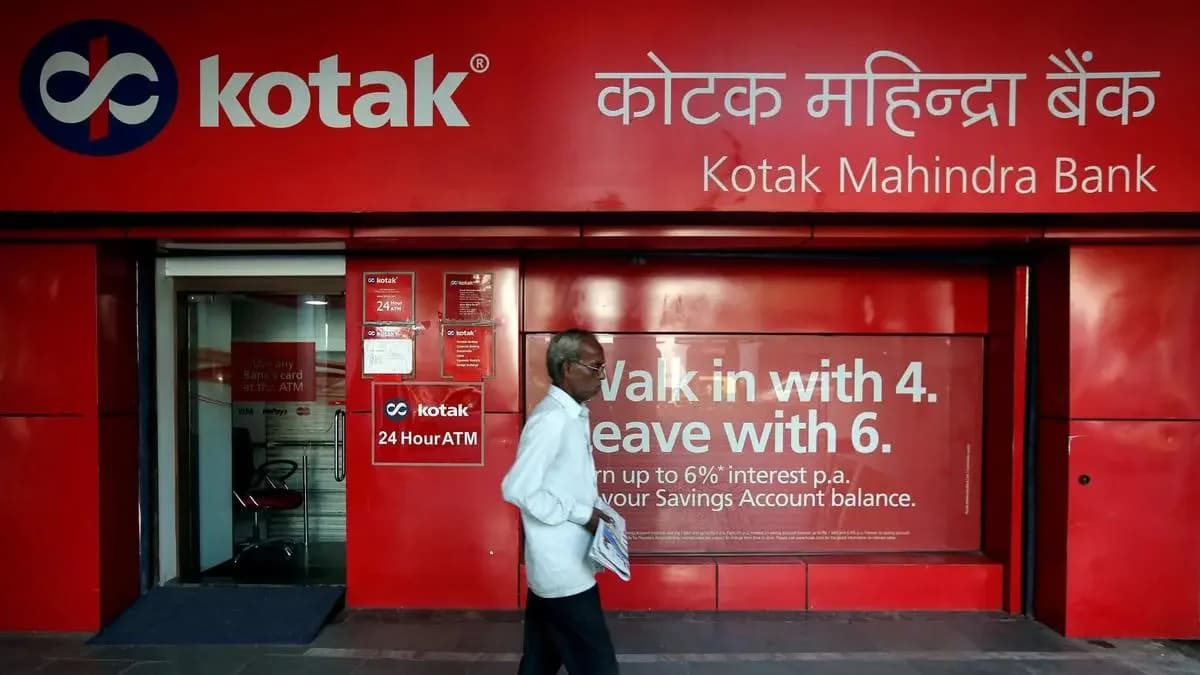
Among lenders offering hybrid variants, Kotak Mahindra Bank stands out with its no premium pricing structure. As reported by Mint, the bank's fixed-period rate is the same as its floating rate, with borrowers able to lock in an interest rate for 39, 52 or 65 months before moving to a floating structure. The current starting rate is 7.6% for the fixed phase. Nakul Saxena, business head of home loans at Kotak Mahindra Bank, explained that the bank hedges risk through treasury operations, mapping borrowing accordingly so they're not carrying higher risk on their books. Other major lenders like HSBC India offer hybrid products with varying rates, starting at around 7.5% for fixed periods compared to 7.45% for floating rates, while ICICI Bank allows fixed locks for two to 10 years, starting around 9% for fixed versus approximately 8.5% for floating.

According to calculations from Peaceful-Loans reported by Mint, a ₹2 crore loan for 25 years at a fixed rate of 7.5% for the first 36 months could save ₹3.98 lakh in interest if the fixed rate is 5 basis points higher than a fully floating structure, assuming repo rate rises by 0.25% three times during the fixed period. However, this represents a best-case scenario and assumes aggressive rate increases. The switching cost from hybrid to floating-rate loans typically ranges from 0.5% to 4% of the outstanding principal, plus 18% GST, depending on the bank and timing of the switch. Borrowers should also consider part-prepayment conditions, balance-transfer costs, processing fees, and other charges when comparing total costs. Prepayment is the lever most borrowers underuse, as interest is front-loaded, making early prepayments significantly more effective than later ones.