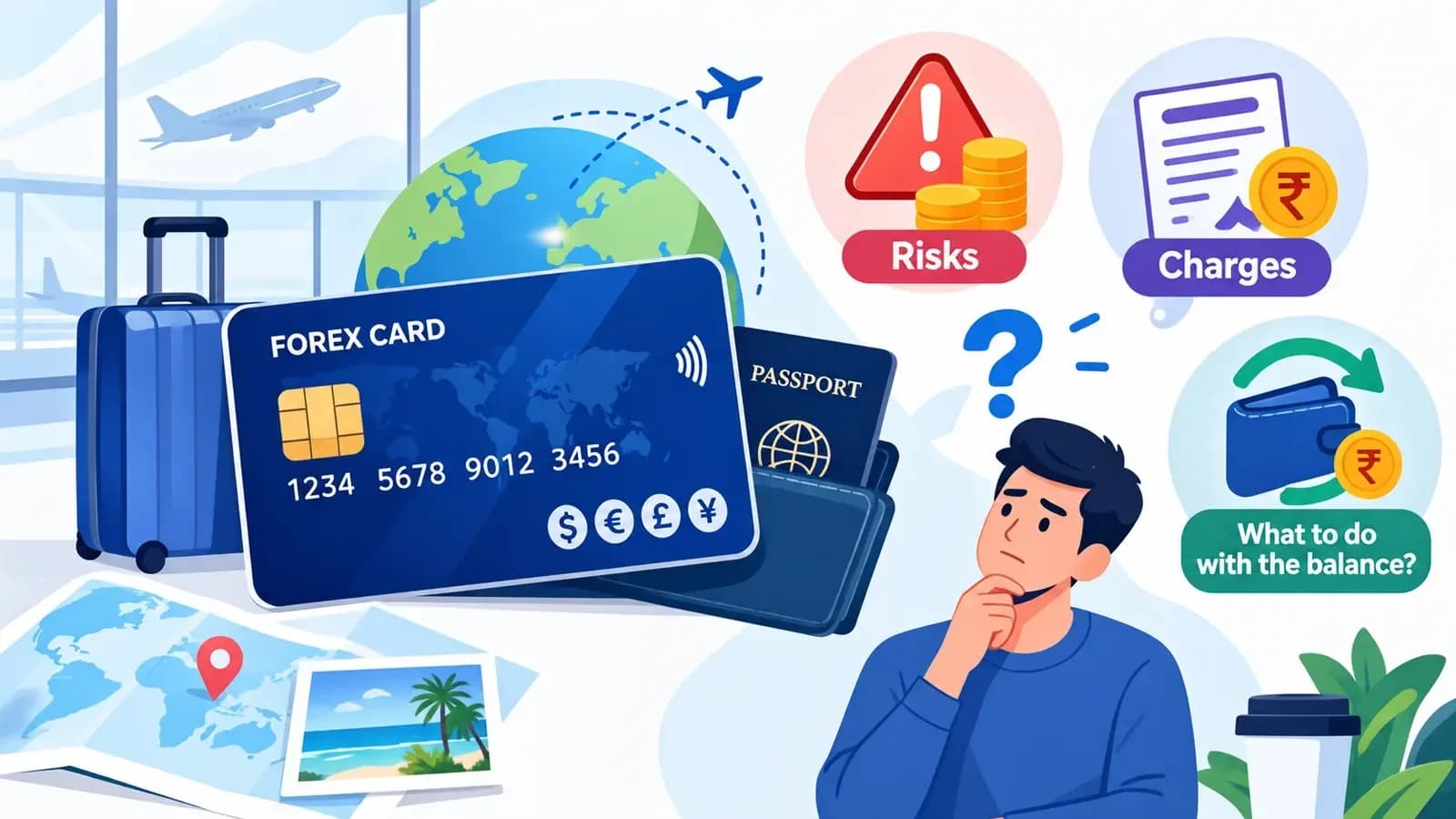
Indian residents who return from abroad with unused forex card balances can convert these funds into Indian rupees through the card issuer's refund or encashment process. According to reports from Mint, the conversion amount depends on the foreign currency balance and the exchange rate applicable at the time of encashment. For example, if a traveler has $1,000 remaining on their forex card with an exchange rate of ₹96 per US dollar, the gross value would be ₹96,000 before deducting any applicable charges and taxes. The refund process can take up to 5 working days after the request, provided the last transaction on the card was more than 10 days ago. Delays may occur if there's a discrepancy in the claimed balance or incorrect account details.
As reported by Paisabazaar, some forex card issuers allow travellers to transfer leftover money directly to their bank accounts in Indian rupees. The digital process involves logging into the forex card issuer's mobile app or online portal, navigating to the forex card section, selecting the refund or encashment option, choosing the currency and amount, selecting the bank account for credit, and completing verification. Customers can also visit the forex card issuer's nearest branch with required documents to submit a refund request form. Same day delivery is possible for orders confirmed before 1:00 PM on working days, while orders confirmed after 1:00 PM are delivered the next working day.
According to the report, different card issuers may require different documents for encashment or refund processes. The standard documentation includes the forex card, passport and PAN card, refund or encashment request form, bank account details, and other KYC or travel-related documents. Major Indian banks such as HDFC Bank, ICICI Bank, IndusInd Bank, and Axis Bank provide this facility, but customers should compare applicable charges, encashment benefits, and terms before selecting a card. Forex Aerowise charges a bank fee of ₹225 + GST for wire transfers, with additional charges possibly applied by foreign banks receiving the remittance. A replacement card costs ₹200 for Forex Aerowise customers, while add-on cards are available for an additional ₹200.
The Forex Aerowise Yes Bank Forex card offers comprehensive insurance coverage up to ₹1,50,000 for various liabilities including lost card, counterfeit, skimming, phishing, online transactions, ATM losses, and more. The insurance covers primary cards only and includes internet-based transaction losses, unauthorised usage, skimming, counterfeit, duplication, phishing, and compromised cards. The policy does not cover losses due to system breakdowns, hacking, cyberattacks, or fraudulent transactions by persons known to the cardholder. Tax Collected at Source (TCS) can be adjusted when filing tax returns, with Forex Aerowise providing automated TCS certificates for business owners to apply towards advance tax payments.
When choosing a forex card, customers should consider several key factors including low or zero forex markup, transparent fee structure, strong global acceptance, real-time tracking capabilities, and flexibility in usage. As reported by Mint, zero forex markup has emerged as the most decisive factor as it directly impacts how much travelers spend internationally. Before making a selection, customers should evaluate applicable charges, encashment benefits, and other terms to ensure the card meets their specific needs. Forex Aerowise waives off card issuance, loading, reloading, and unloading charges, though using cards at ATMs abroad may incur additional fees.