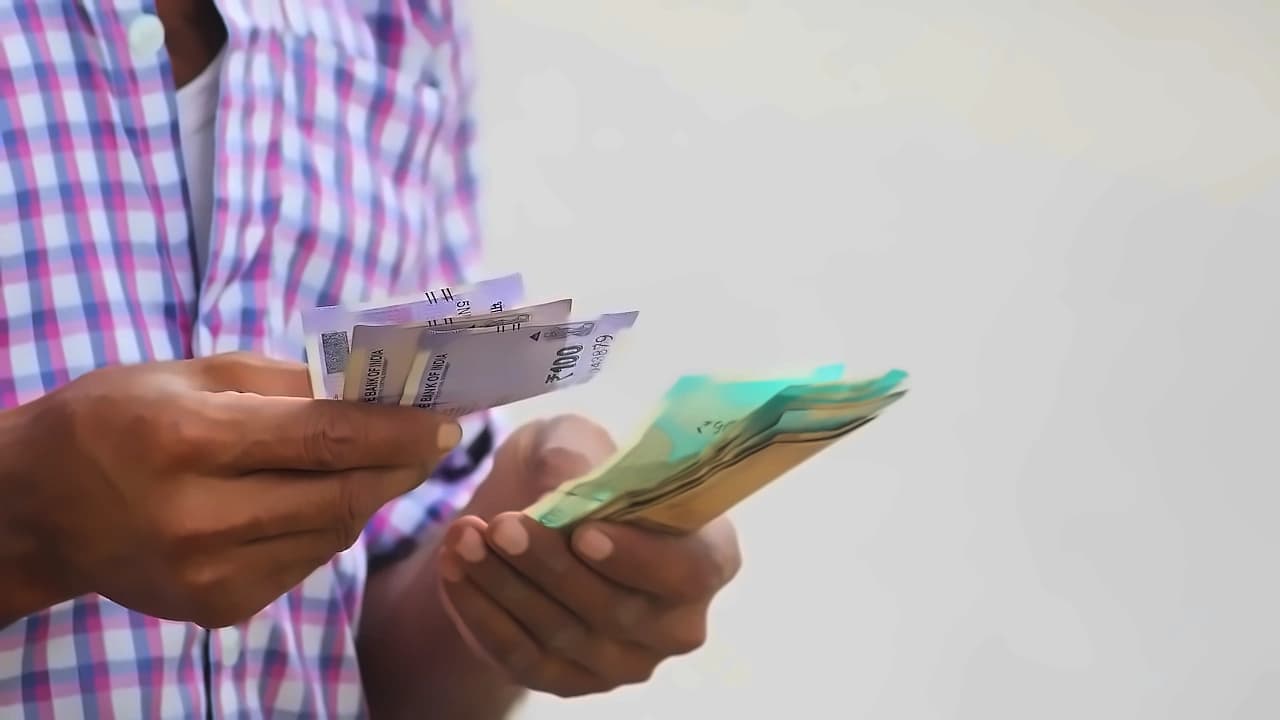
Home loan interest rates in India are determined by the External Benchmark Lending Rate (EBLR) plus a spread component, which varies based on the borrower's credit profile. According to reports from The Economic Times, most home loans are pegged to the RBI's repo rate plus this spread, making creditworthiness a critical factor in securing the lowest possible rates. Currently, Bank of India offers the lowest rate of 7.1% on home loans to borrowers with a CIBIL score of 840 and above, while those with credit scores below 700 typically pay 0.5-1.5% higher interest rates. However, international credit repair experts emphasize that "good credit" and "best credit" are different things, with the gap between a 740 and an 800+ score showing up as real money on a 30-year mortgage. Optimization strategies involve squeezing the last 40 to 60 points out by lowering utilization, spacing applications, adding the right tradelines, and pulling rare errors that even careful people miss.

The banking sector's first quarter performance revealed mixed signals with return on assets improving to 1.26% from 1.23% in Q4 2025 and 1.16% in Q1 2025, according to the FDIC. More than half of firms, or 55.2%, saw higher quarterly earnings from the prior quarter, with net operating revenue increasing $3.4 billion to $282.7 billion. However, net interest margins declined 8 basis points to 3.31% due to yield on earning assets falling faster than cost of funds, as reported by the FDIC. Noninterest income rose 5.8% on stronger trading revenue and gains on loan sales, while net interest income fell $1.6 billion as industry-wide interest income dropped faster than interest expenses. Banks' noninterest expenses increased $2.5 billion to $159.8 billion, driven largely by higher salaries and employee benefits rising $4.5 billion.
Consumer durables financing has emerged as the primary gateway to formal credit as lenders increasingly favour borrowers with established repayment records, according to Business Standard. The share of first-time borrowers as a proportion of the overall credit market has been declining consistently for the last five years, with consumer durables financing, particularly mobile phone loans, replacing traditional products such as two-wheeler and agriculture loans as the main entry point into formal credit for new-to-credit customers. As Bhavesh Jain, managing director and CEO of TransUnion CIBIL, noted, "That does not mean fewer people are entering the financial system in absolute terms. It means the overall credit market is expanding much faster than the rate at which new borrowers are being added." Banks and lenders today prefer borrowers with credit history because trust and repayment behaviour have become central to underwriting, with NBFCs leading this transformation by financing the consumer durables ecosystem at scale.
The other defining trend has been the remarkable rise of gold loans, which now form the second-largest retail loan category at close to ₹20 trillion, according to Business Standard. Home loans remain the largest at around ₹44 trillion. "Over the last four to six quarters, gold loans have grown sharply in both value and volume," Jain said, noting that "almost every second retail loan in the country today is effectively a gold loan." The average home loan ticket size is around ₹37-38 lakh, while gold loan averages around ₹2 lakh. Gold loans have achieved this despite having very small average ticket sizes and much shorter durations, with the product spreading across the country from its previous South Indian focus to becoming a pan-India phenomenon. One in five gold loan borrowers is a Gen Z, and 40% are women, demonstrating the product's broad appeal.
The repayment culture in India has improved dramatically over the past decade, especially in the last five post-Covid years, according to Business Standard. Retail and MSME delinquency levels are at decade lows, with retail and MSME delinquency maintained below 2% in a global environment filled with uncertainty. Jain attributed part of this improvement to "self-induced financial discipline" among borrowers, noting that "one-third of the time a borrower checks a credit report, there is an actual payment made within the next 90 days." India is steadily moving toward risk-based pricing as borrowers become more aware of the importance of maintaining healthy credit profiles, with 180 million Indians having already checked their own CIBIL reports and scores. The RBI's move toward weekly credit reporting from fortnightly reporting is described as one of the most progressive changes in the country's credit infrastructure, allowing the ecosystem to respond much faster to changes in borrower behaviour and repayment patterns.
As reported by The Economic Times, maintaining a credit score in the range of 780-850 is essential for securing the lowest possible home loan rates. Key strategies include paying all dues on time, keeping credit utilization below 30% of available limits, maintaining a healthy mix of secured and unsecured loans, and avoiding closure of old loan accounts. Borrowers should also review credit reports quarterly to identify and correct errors, and request credit limit enhancements after demonstrating responsible repayment behavior. International credit repair experts recommend pulling free credit reports for both spouses from AnnualCreditReport.com (all three bureaus, both partners — six reports total) and identifying any account on either report that the other spouse didn't know about. They suggest setting a target couple score 12 months out and writing it down, with most couples seeing meaningful changes within 60 to 120 days for clearly disputable items, with a typical full timeline of six to eighteen months depending on what's on the reports.