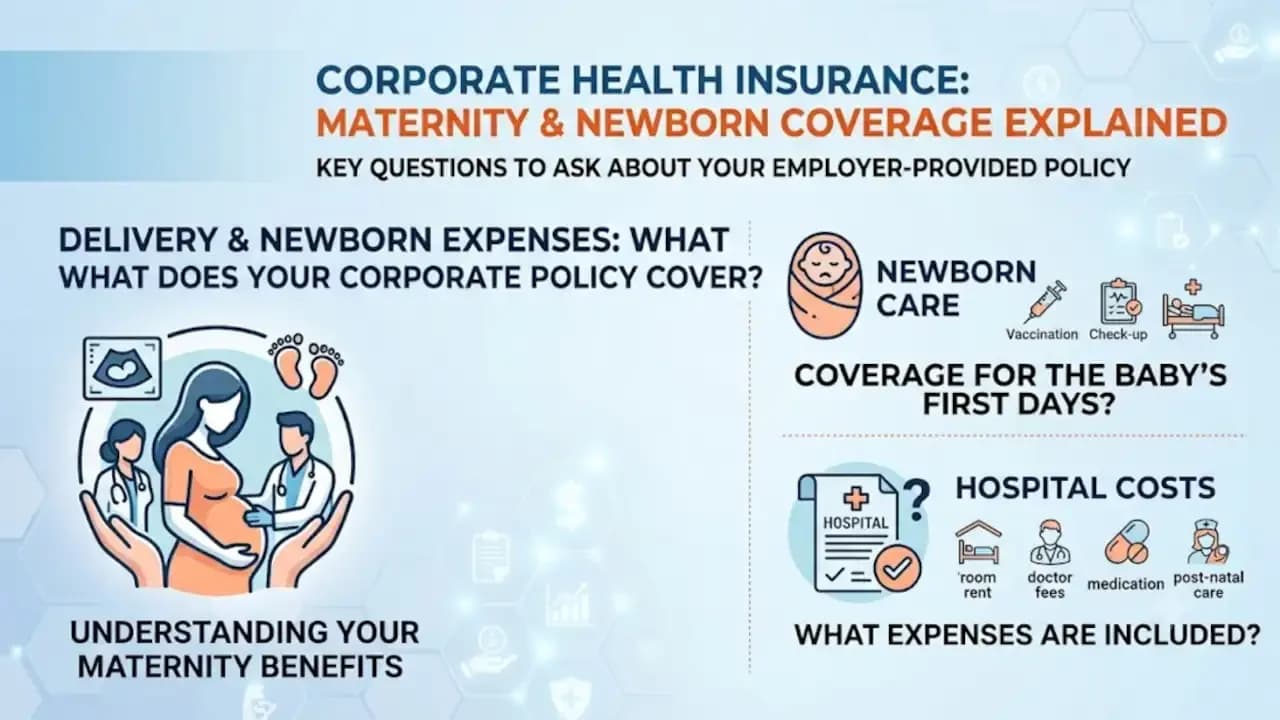
Employer health insurance policies often include separate limits for maternity expenses that can significantly impact delivery costs. According to reports, even if an employer provides health insurance worth ₹5 lakh or ₹10 lakh, families may still face substantial out-of-pocket expenses for childbirth. The key distinction lies in the difference between total health cover and maternity limits - while total health cover represents the maximum available under the policy, maternity limits specifically determine how much insurers will pay for eligible childbirth expenses. As reported, a ₹5 lakh group policy that caps maternity benefits at ₹50,000 leaves families facing potential costs of ₹40,000 for hospital bills exceeding the maternity limit, even with ₹4.5 lakh in unused coverage that doesn't automatically compensate for the shortfall. This structure makes it crucial to verify maternity benefit amounts rather than relying solely on total sum insured figures.
The financial implications become clear when examining specific policy examples. As reported, if an employer provides health insurance worth ₹5 lakh but the maternity limit is ₹50,000, families face potential costs of ₹40,000 for hospital bills exceeding the maternity limit. Even with ₹4.5 lakh in unused coverage, families may not be able to utilize this amount for childbirth expenses if the policy maintains separate maternity limits. This structure makes it crucial to verify maternity benefit amounts rather than relying solely on total sum insured figures. The problem is compounded by the fact that employer health policies are typically renewed regularly, but maternity limits may not increase in line with hospital costs, meaning caps that seemed adequate when policies were introduced can become insufficient over time. For example, if delivery costs ₹1.2 lakh and your cap is ₹50,000, you must pay the remaining ₹70,000 yourself.
Employees planning pregnancy and considering job changes must carefully evaluate waiting periods associated with maternity benefits. According to reports, some group health insurance policies impose waiting periods before maternity expenses can be claimed, depending on agreements between employers and insurers. While health insurance coverage may become active immediately upon joining a company, maternity benefits may not be available immediately, requiring careful planning before job transitions. This is particularly important for someone joining a new company while planning a pregnancy, as having health insurance from the date of joining does not necessarily mean every benefit is available immediately. Employees should specifically check the waiting period for maternity cover in their current policy schedule or Customer Information Sheet rather than assuming maternity cover begins immediately.
Newborn medical expenses present additional considerations for families planning delivery. As reported, health insurance policies may cover babies from birth subject to specific limits and conditions, with coverage potentially restricted to certain periods depending on policy terms. The Insurance Regulatory and Development Authority of India (IRDAI) advises policyholders to verify key details including coverage limits, waiting periods, deductibles, and exclusions. The Customer Information Sheet (CIS) outlines these provisions and helps policyholders understand coverage terms and conditions. Even if a policy covers a baby from birth, separate sub-limits, eligibility criteria, or waiting windows may apply. Never assume that the mother's primary maternity benefit automatically covers all infant medical procedures or hospital nursery charges - policies may impose separate limits, eligibility conditions, or coverage periods for newborn treatment.
Before relying on employer-provided insurance for childbirth, employees should conduct comprehensive policy reviews to understand their actual coverage. According to reports, key areas to verify include maternity limit amounts, delivery type coverage (normal vs Caesarean), waiting periods for maternity benefits, pre-natal and post-natal expense coverage, newborn coverage conditions, and eligible dependant coverage. The exact benefits depend on the group policy agreed between the employer and insurer, and employees should examine conditions such as sub-limits, deductibles, waiting periods and exclusions. The maternity sub-limit deserves as much attention as the overall sum insured, as a ₹10 lakh policy may sound substantial, but a low maternity cap can still leave a large hospital bill to be paid out of pocket. The key takeaway is that the overall sum insured does not tell the whole story - employees must check the maternity limit and conditions attached to it before counting on employer-provided insurance for childbirth. Evaluating policy terms early helps families arrange personal health top-ups or savings to cover unexpected gaps.