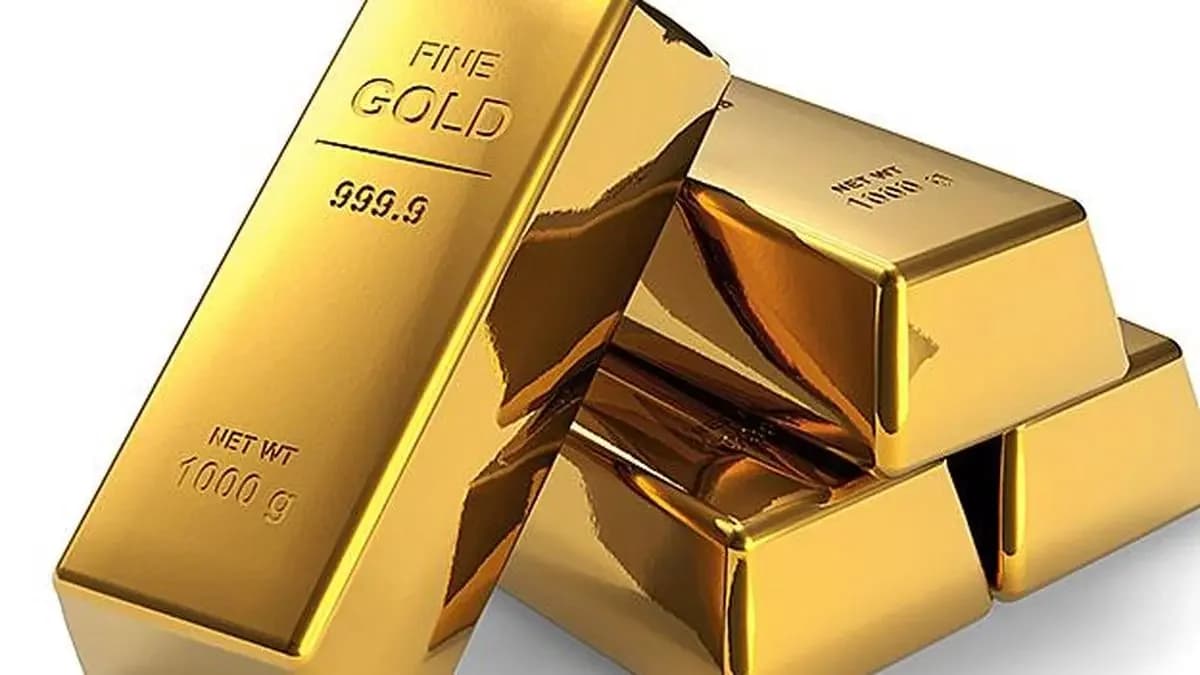
For the first time since 1996, central banks worldwide are holding more gold than US government bonds in their foreign exchange reserves. According to the latest IMF data published on July 1, 2026, gold's share reached 27% of total official reserves at the end of 2025, surpassing both the euro at 15% and US Treasuries at 22%. This milestone makes gold the single largest component of global official reserves, marking a significant shift in international monetary policy. However, as reported by The Financial Express, this dramatic change in headline numbers doesn't necessarily reflect actual de-dollarization, as the IMF's own data shows US dollar holdings increased to 57.13% in 2026Q1 from 56.42% in 2025Q4, with roughly half of this quarter's rise coming from dollar strengthening against other major currencies.
Gold has delivered strong returns of 9.6% over the past month, providing relief to investors after remaining almost stagnant with a -1.8% return over the past year. According to reports from Business Standard, the rally has been driven by several key factors including expectations around Federal Reserve policy and bond-market interventions that signal downward pressure on long-end US Treasury yields. As noted by Mohit Bagdi, head of research at MIRA Money, expectations of lower real rates have supported demand for non-yielding gold. The current rally is part of a broader 'debasement trade' in August 2026, where investors are buying scarce assets like Bitcoin and gold on concerns over US deficits, bond buyback plans and inflation expectations, helping push BTC above $80,000 again and driving ETF inflows into majors. Recent market analysis shows that total crypto market capitalization rose about 1.3% over 24 hours, but the aggregate altcoin market cap (excluding BTC and ETH) fell about 0.8%, indicating capital concentrating in major cryptocurrencies rather than smaller alternatives.
Central banks have demonstrated unprecedented commitment to gold accumulation, with central banks adding an average of 1,000 tonnes annually over the past four years, roughly double the 500-tonne average of the preceding decade. As reported by The Financial Express, central banks bought 51 tonnes of gold in June 2025, with Poland and China continuing to lead global accumulation. The World Gold Council's Central Bank Gold Reserves Survey 2026 found that 84% of central banks believe gold will hold a moderately or significantly higher share of total reserves five years from now, up from 76% last year, while 89% believe official gold reserves will keep rising. When asked why they hold gold, 90% of central banks pointed to its performance during crises, 84% cited its role as a store of value, and 83% valued it as a portfolio diversifier. The RBI's gold stock stood at 880.52 tonnes as of March 31, 2026, and remained unchanged as of August 31, 2025.
Hong Kong is positioning itself as a major gold hub to diversify its financial sector and support China's reserve diversification strategy. As reported by Nikkei Asia, Beijing's vision to make Hong Kong a gold hub represents a "bid for market dominance" intended to increase China's influence over international pricing that has long been anchored in London and New York. The initiative leverages Hong Kong's unique position as a physical gold transit hub and its 'One Country, Two Systems' framework offering access to Mainland markets alongside global institutional trust. Hong Kong's assay facilities already hold London Bullion Market Association (LBMA) Good Delivery accreditation, with the Hong Kong Gold Exchange (HKGX) developing blockchain-enabled traceability to align with LBMA Responsible Gold guidance. The stakes are substantial, as a mature gold ecosystem would diversify Hong Kong's financial sector exposure from traditional segments that have faced volatility from evolving market dynamics.
While central banks worldwide embrace gold as a strategic asset, not all major institutions share this optimism. European Central Bank President Christine Lagarde recently outlined her reservations about gold's role as a reserve asset in unusually direct terms. As reported by The Financial Express, Lagarde highlighted "gold faces limitations as an official reserve asset compared with the major fiat currencies: its price is volatile, it is not remunerated, and, when held in physical form, it is costly to store. More importantly, the supply of gold is not fully elastic and does not adjust seamlessly to shifts in international demand for liquidity." This contrasts sharply with the World Gold Council's survey showing growing central bank confidence, with only 11% thinking gold's share will stay unchanged, up from 5% last year. The IMF's data provides a more nuanced perspective, showing that while gold's share in headline terms has increased dramatically, the underlying dollar share has remained broadly stable, suggesting that gold's rise may be more about price appreciation than actual de-dollarization.