According to the World Gold Council's latest report titled Gold: the most effective commodity investment, 2026 edition, gold has delivered better returns than every major commodity sub-index over a 20-year horizon. The report reveals that gold has generated positive annualised returns across 3-, 5-, 10- and 20-year horizons ending June 30, 2026, while a number of sub-indices and broad commodities have fallen over the past 20 years. Gold's returns were not eroded by futures market mechanics, with the metal returning 9.9% in spot terms and 8.9% through futures between June 2006 and June 2026, a gap of just one percentage point. This compares favorably to oil, which generated a -0.2% spot return but -7.2% futures return over the same period due to rolling and collateral costs.
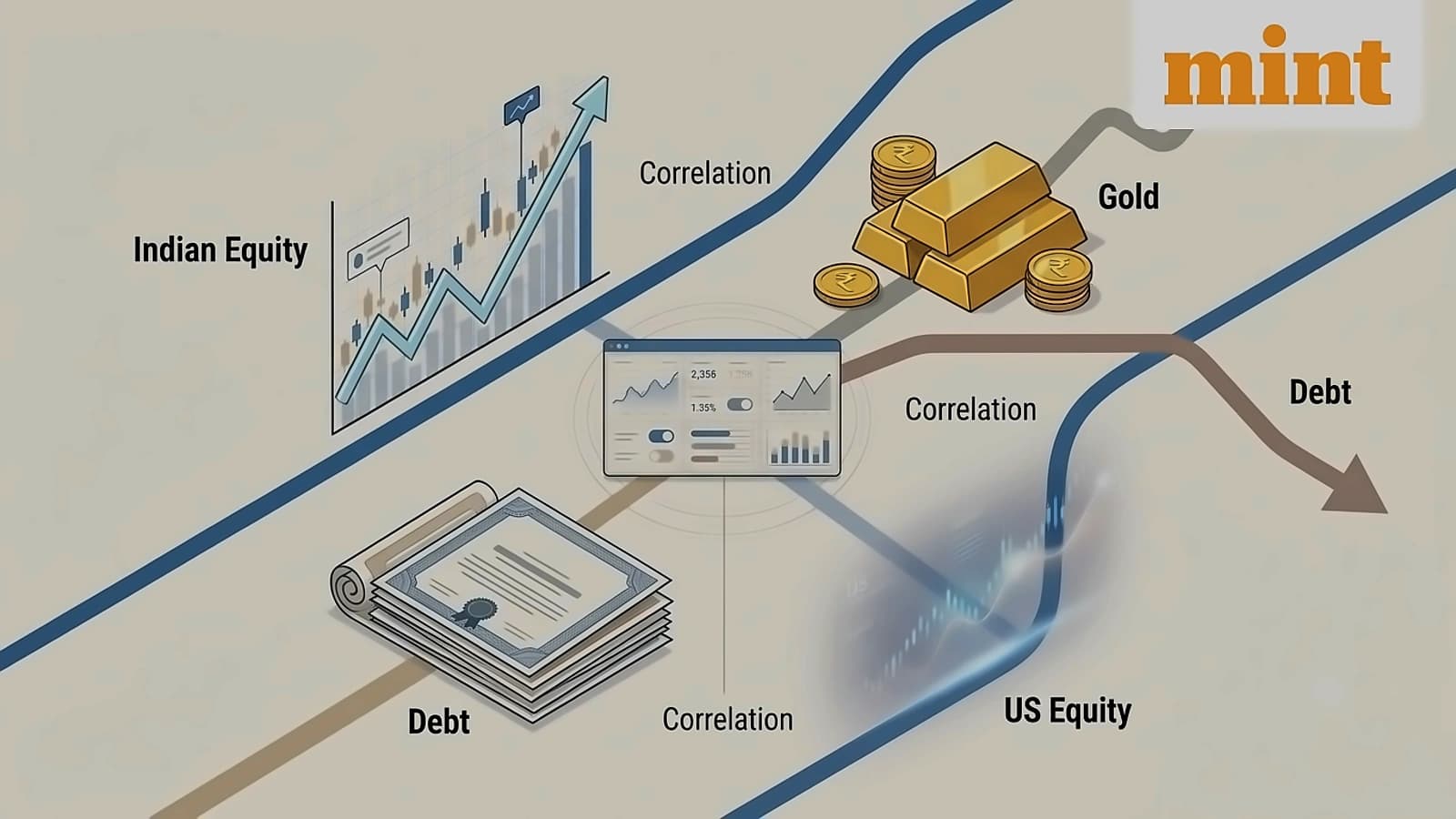
The report demonstrates gold's unique diversification properties, showing it has little to no correlation with many other assets, including other commodities. During stress periods, gold's correlation with stocks turns negative, something broad commodities do not offer. During the Q4 2018 global equity selloff, the MSCI USA index fell 14% while commodities fell 9%, yet gold rose 8%. During the COVID-19 crash in Q1 2020, the MSCI USA fell 20% and commodities fell 23%, while gold returned 6%. The WGC analysis found that a 5% allocation to gold contributes 28% of total diversification benefits in a hypothetical portfolio, ranking it first among all asset classes, while commodities at the same allocation contribute just 15%.
According to the report, gold has outperformed commodities in high-inflation environments while maintaining positive returns when inflation is low. In periods of low inflation (below 2%), commodities delivered negative nominal returns while gold posted positive returns, reflecting increased demand when economic conditions are robust. The WGC places gold at the lower end of the commodity risk spectrum, with lower average daily volatility than silver, crude oil, industrial metals and agriculture over the 20-year period to June 2026. Over a 20-year horizon, a hypothetical portfolio without gold returned 7.8% annually with 11.8% volatility and a maximum drawdown of -41.0%, while adding 5% gold nudged returns to 7.9% while cutting volatility to 11.3% and reducing maximum drawdown to -38.6%.
The global gold market averaged US$373 billion in daily trading volume in 2025, a scale that can comfortably accommodate large institutional investors. Around 48% of gold trading occurs over-the-counter linked to physical delivery, while futures account for about 50%. On the COMEX alone, daily volumes averaged US$53 billion over the past 10 years, second only to oil among all commodity futures. The OTC market sees an estimated daily volume of around US$180 billion, and gold-backed ETFs add another US$7.2 billion daily. This multi-channel liquidity is unusual for most other commodities, where futures dominate trading and physical delivery is rare.
While gold has delivered superior long-term returns, recent market data shows mixed performance in 2026. According to latest ETF performance data, GLD (SPDR Gold Shares) is essentially flat in 2026, up about 0.1% year to date, though it still shows a 24.7% trailing-year gain and roughly 30% annualized over three years. The fund charges 0.40%, holds about $153 billion and remains the most liquid way to own bullion. In contrast, crude oil has driven significant gains with the main oil fund roughly doubling year to date, while broad commodity baskets are up more than 40%. This year's performance reflects the rotation within commodity markets, with energy and diversified baskets leading while precious metals consolidate after earlier substantial gains.