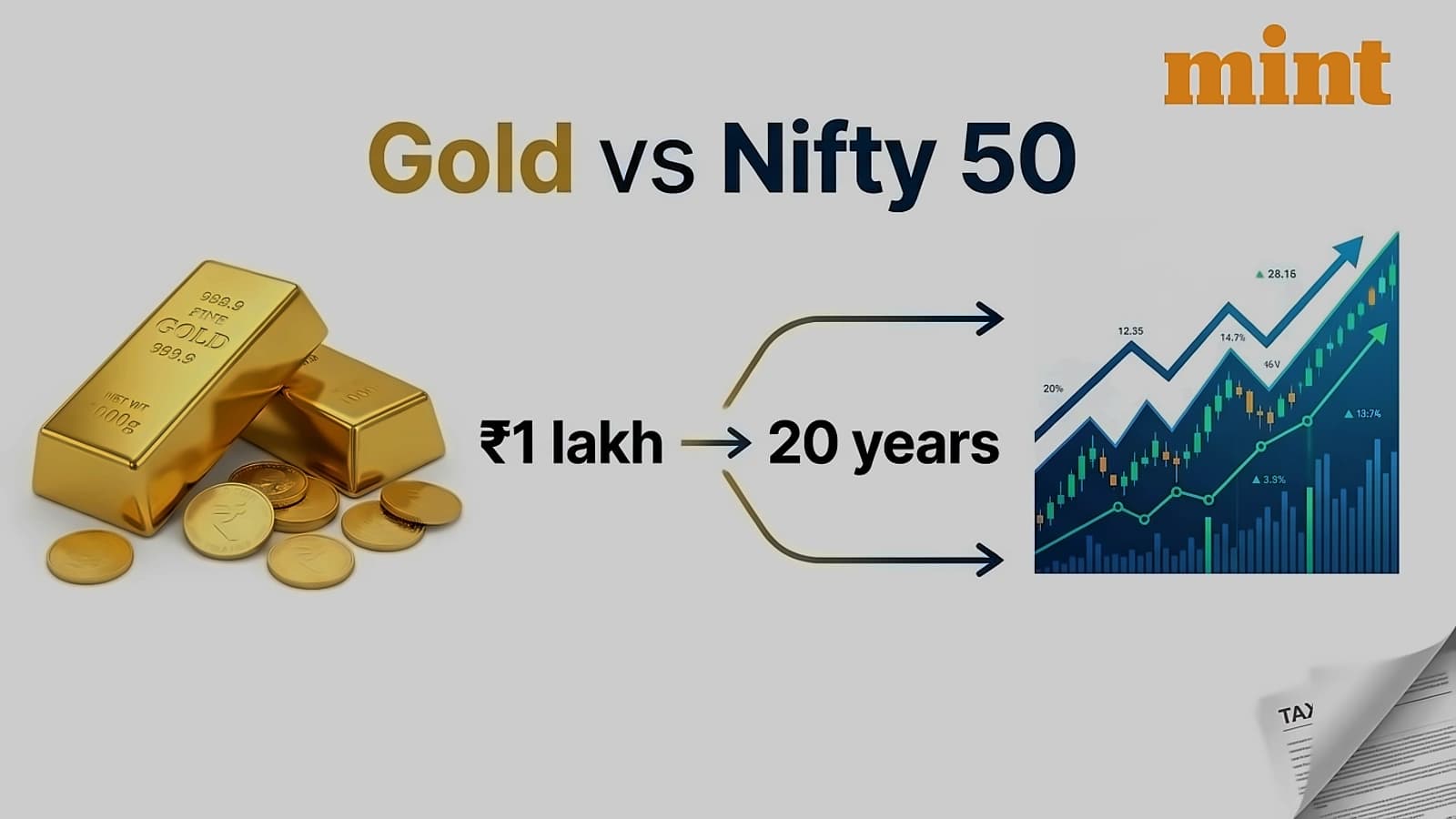
According to reports from Mint, gold has delivered a 14.5% CAGR over the past 20 years, significantly outperforming the Nifty 50 TRI's 11.6% CAGR. An investment of ₹1 lakh in both asset classes 20 years ago would have grown to ₹8.98 lakh in Nifty 50 and ₹15 lakh in gold. However, the tax treatment of these investments creates a substantial difference in final returns for investors.
As reported by Mint, gold ETFs face different tax treatment compared to equity investments. Gold investments are not eligible for the ₹1.25 lakh equity LTCG exemption that applies to Nifty 50 ETFs. The entire long-term gain is taxed at 12.5%, resulting in a tax outgo of approximately ₹1.75 lakh on the ₹1 lakh investment. After tax deduction, the final value after 20 years drops to ₹13.25 lakh, compared to ₹8.14 lakh for Nifty 50 investments.
According to Mint's analysis, the tax impact significantly reduces the effective returns for both investments. The Nifty 50's pre-tax CAGR of 11.6% falls to a post-tax CAGR of 11.05% after accounting for the ₹1.25 lakh exemption and 12.5% tax on remaining gains. Similarly, gold's pre-tax CAGR of 14.5% drops to a post-tax CAGR of 13.79% due to the absence of exemptions and higher tax rates. The comparison assumes both investments were held for the full 20-year period and sold at the end.
According to stock market experts, the Indian stock market is in the oversold zone, and further downside in key benchmark indices is limited. Key indices have declined due to sharp falls in index heavyweights such as HDFC Bank, Reliance Industries Ltd (RIL), TCS, Wipro, and Infosys. However, the fast-approaching festival season, the Jio Platforms IPO expected around Dussehra, and buzz about AI slowdown are expected to fuel RIL, banking, and IT stocks. Market experts suggest that IT and tech stocks are expected to bounce back strongly as they are the most beaten-down stocks in the recent sell-off, with their weightage around 10% in the Nifty 50 index.