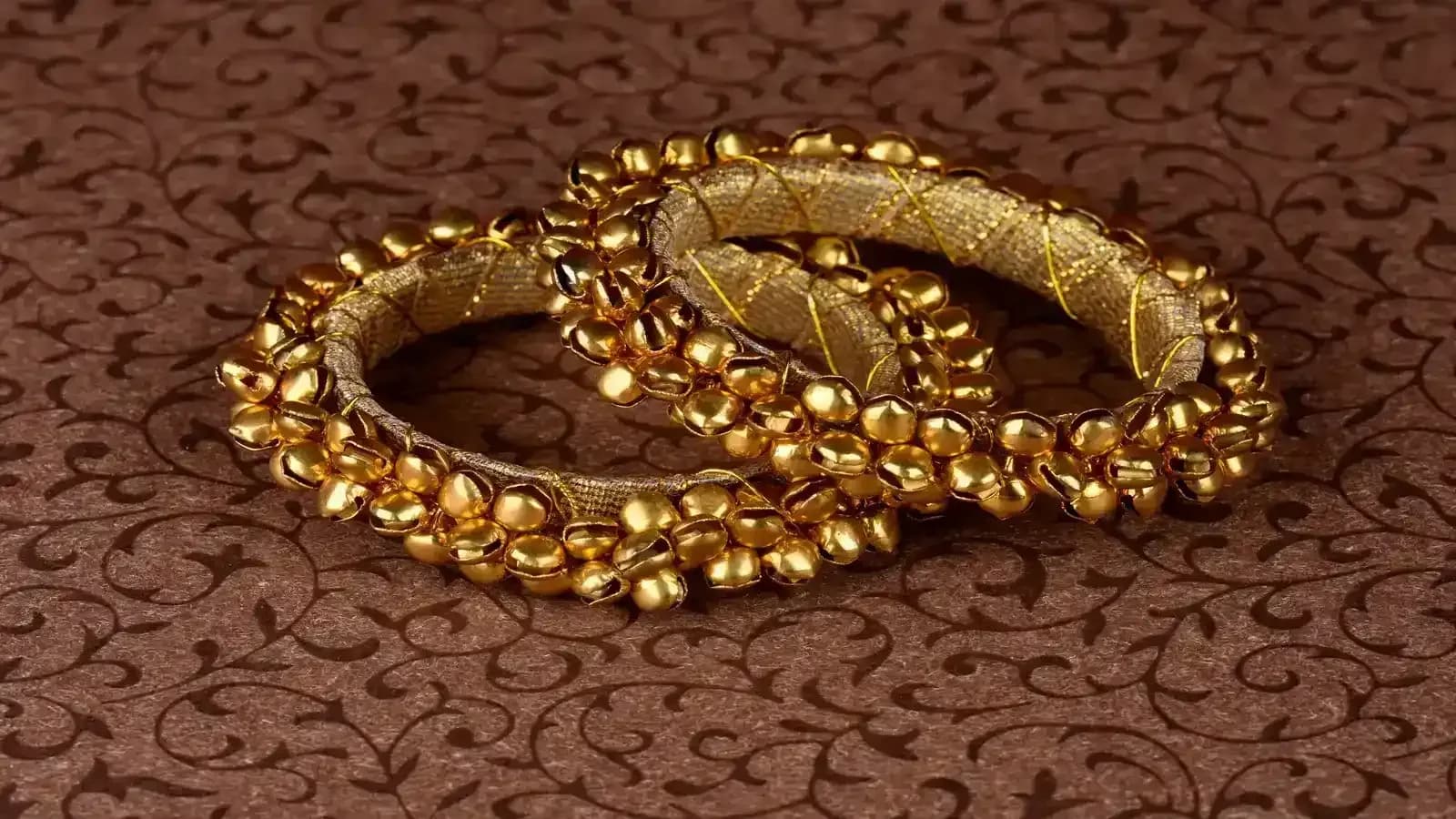
The income tax department treats jewellery as a capital asset even when held for personal use, creating potential tax implications for exchanges. According to tax experts, when old gold jewellery is sold or exchanged for new pieces, any resulting capital gain may be taxable under the Income Tax Act. Under Section 2(14) of the Income-tax Act, jewellery is excluded from the definition of 'personal effects', with ornaments made of gold, silver, platinum or any other precious metal specifically included within the definition of jewellery. The holding period threshold dropped from 36 months to 24 months from FY 2024-25 onward, meaning gold now qualifies for long-term treatment a full year sooner than it used to. If you're researching this topic and come across older articles quoting 20% with indexation or a 3-year threshold, that's the pre-2024 rule; it no longer applies for any sale happening now.
The tax department provides that 'any profits or gains arising from the transfer of a capital asset' are chargeable to tax under the head 'Capital gains' under Section 45. For example, if jewellery purchased for ₹1 lakh is exchanged for jewellery valued at ₹2.5 lakh, the ₹1.5 lakh gain may be taxable. According to CA Abhishek Soni, the tax treatment depends on the holding period: jewellery held for more than 24 months is generally treated as Long Term Capital Gains (LTCG) and taxed at 12.5% without indexation for transfers on or after 23 July 2024, while jewellery held for 24 months or less is generally treated as Short Term Capital Gains (STCG) and taxed at the applicable slab rate. STCG rates were unaffected by the 2024 changes, in both periods, short-term gains simply get added to your income and taxed at whatever slab rate applies to your total income for the year.
The tax treatment differs significantly between selling and exchanging jewellery. As reported by tax experts, selling or exchanging old gold jewellery can attract capital gains tax in India because an exchange is considered a transfer under the Income Tax Act. CA Abhishek Soni emphasizes that buying new jewellery does not automatically make the gain tax-free, as the sale/exchange of old jewellery and purchase of new jewellery are treated separately for tax purposes. The Income Tax Department's capital-gains rules provide exemptions in specified cases, but buying another piece of jewellery is not the reinvestment specified under Section 54F provisions. For a recipient specifically, this makes SGBs a meaningfully different gift compared to physical gold or ETF units: alongside potential price appreciation, SGBs also pay a fixed 2.5% annual interest, which is taxable at your slab rate each year regardless of how long you hold the bond, separate from the capital gains treatment on the bond's price movement itself.
The income-tax treatment is separate from GST implications. According to tax experts, an individual selling old personal jewellery to a jeweller generally does not have to charge GST on the sale, while the purchase of new jewellery is generally subject to GST. If jewellery was inherited or received as a gift, the tax calculation can be different, as the Income Tax Department takes into account the previous owner's cost and period of holding when calculating capital gains. This means that the tax treatment depends on whether the jewellery was originally purchased or received as a gift or inheritance. For taxable gold gifts, the recipient must maintain proper documentation including a gift deed identifying the giver, recipient, description of the gold, and date of transfer, giver's purchase invoice or valuation certificate establishing the cost of acquisition, hallmark certificate or jeweller's receipt confirming purity and weight, and photographs of the gold item particularly useful for inherited jewellery where purchase records may not exist. Gifts from relatives are fully exempt regardless of value, while gifts from non-relatives are taxable above ₹50,000 in aggregate, with the entire amount becoming taxable, not just the excess over the threshold.