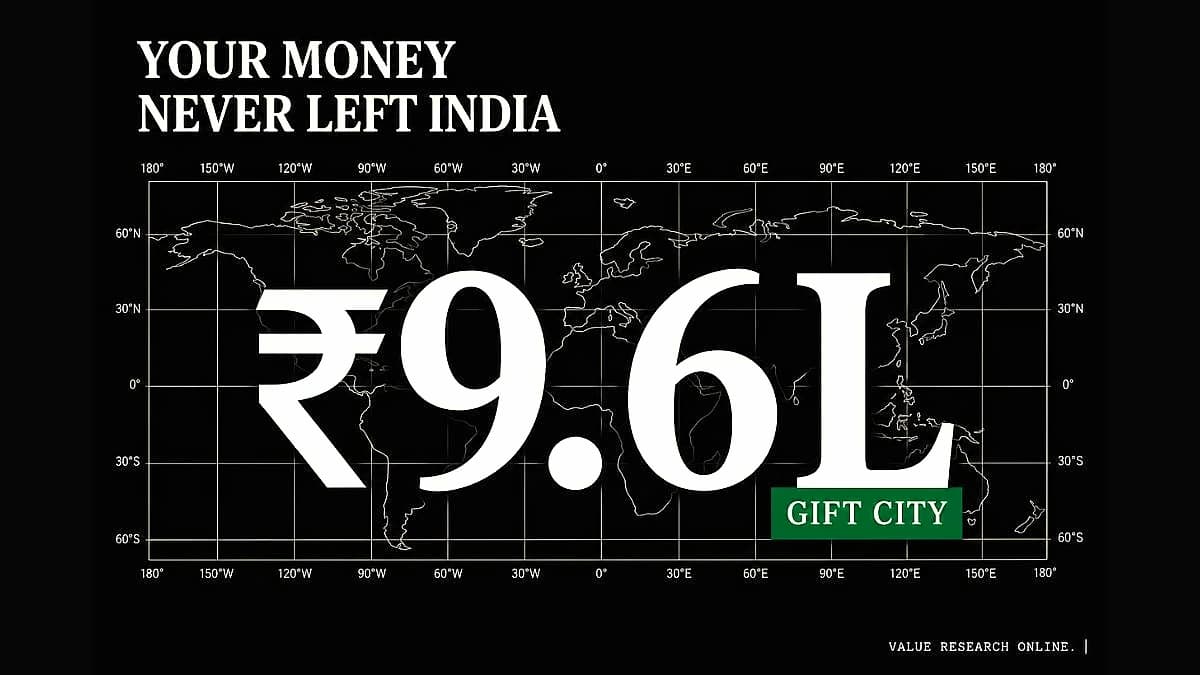
As international mutual funds breach overseas investment limits, several schemes have either stopped accepting fresh investments or reopened for limited periods. According to reports from Mint, GIFT City offers an alternative route for Indian retail investors seeking global equity exposure through pooled funds. Aditya Agarwal, Co-Founder of Wealthy.in, stated that GIFT City is currently the main open channel for a resident Indian who wants meaningful global equity exposure through a pooled fund. The route operates under India's foreign exchange rules where IFSC units are treated as non-residents despite being located on Indian soil, regulated by IFSCA rather than SEBI.
The investment process involves several key steps as reported by Mint. Investors must first check fund eligibility between outbound and inbound investments, complete KYC with PAN, Aadhaar, address proof, cancelled cheque, and FATCA/CRS declarations. Funds, deposits, and trades in GIFT City are denominated in USD and other foreign currencies, not rupees, and remittances are made under LRS with Form A2 and LRS declaration. Agarwal explained that units are allotted once money is received by the fund, with NAV declared daily in USD, and redemption proceeds are paid in USD before conversion back to rupees through banks.
According to Mint reports, seven retail outbound schemes across five fund houses are currently live, all being USD-denominated, open-ended, and IFSCA-registered available to resident Indians under LRS. The funds include Parag Parikh IFSC S&P 500 FoF and Nasdaq 100 FoF with $500 minimum investment, HDFC International Developed Markets Equity Fund ($5,000 minimum), HDFC International Emerging Markets Equity Fund ($5,000 minimum), DSP Global Equity Fund ($5,000 minimum), and Edelweiss Greater China Equity Fund ($10,000 minimum). As reported by Mint, PPFAS offers US exposure through S&P 500 and Nasdaq 100, HDFC covers developed and emerging markets, DSP provides global exposure, while the Edelweiss fund offers concentrated Greater China exposure.
According to Mint reports, GIFT City investments fall under the LRS framework, consuming the resident's LRS limit even though money never physically leaves India. The LRS permits up to $250,000 per financial year across all purposes including overseas investment, foreign travel, education, medical treatment, gifts and maintenance of relatives abroad. There is currently no rupee auto-debit SIP available in GIFT City outbound funds, as noted by Agarwal. Foreign exchange costs apply both ways with around 2% spread on a round trip, plus SWIFT, bank, and fund fees, making small, frequent investments costlier.
As reported by Mint, tax is another drawback with gains within 24 months taxed at roughly 42.75% irrespective of the investor's slab, while the concessional 14.95% rate applies only after two years, versus 12 months for domestic equity. Investors can access the US, Japan, UK, Canada, France, Taiwan, South Korea, China, India, Brazil, Singapore, Hong Kong, and others through GIFT City funds. The route operates outside the domestic overseas-investment cap of approximately $7 billion across schemes investing in foreign securities, plus a separate $1 billion window for overseas ETFs, making GIFT City funds not subject to these regulatory ceilings.