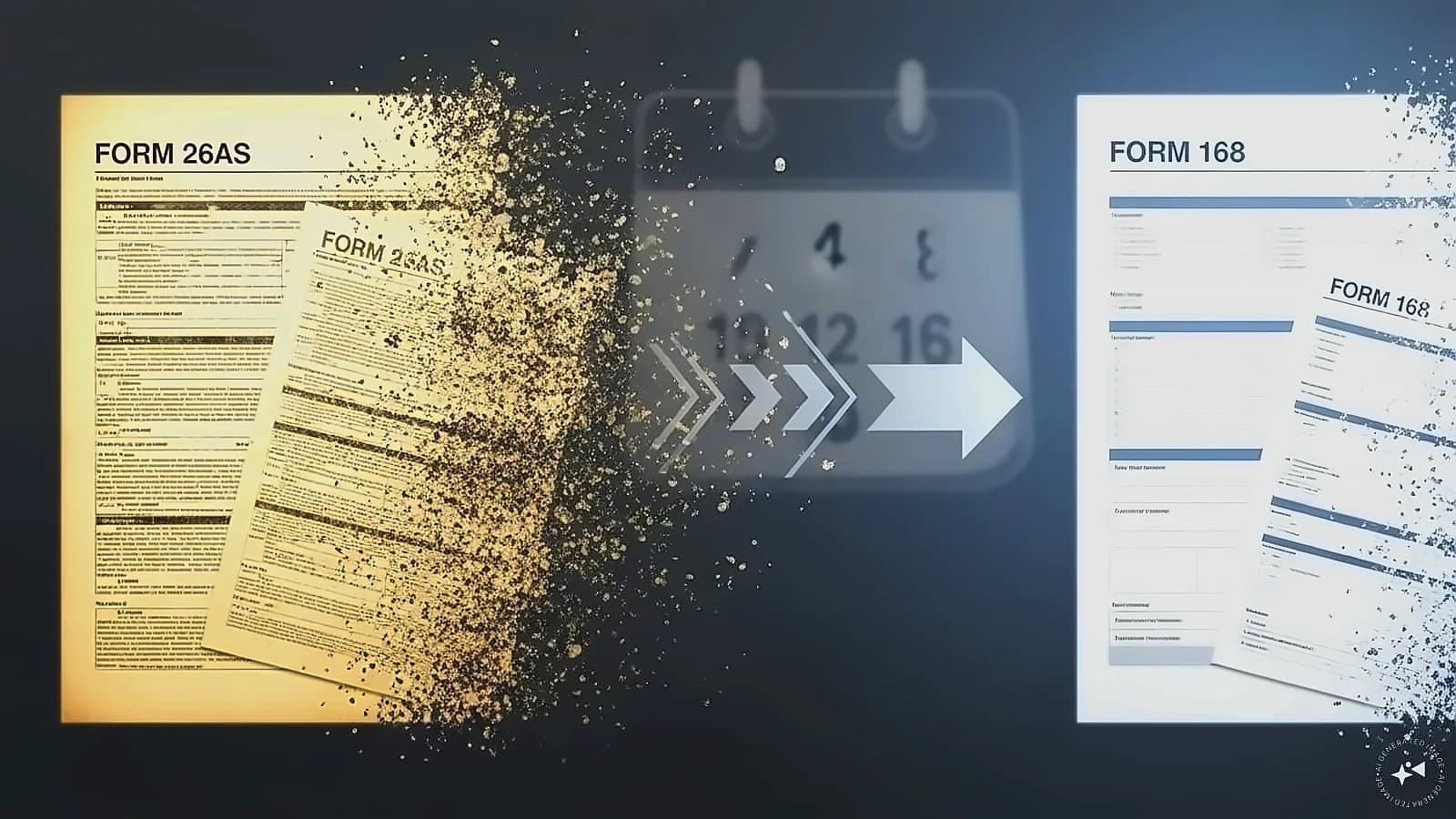
Under the new Income Tax Rules, 2026, Form 26AS is set to be replaced by Form 168, marking a significant change in how taxpayers verify their tax-related information. According to reports from Moneycontrol, Form 26AS has long been the primary document for taxpayers to verify TDS, tax payments and refunds before filing their income tax returns. However, the new comprehensive statement will provide taxpayers and the Income Tax Department with a much broader view of financial transactions and tax-related information.
The expanded Form 168 will include a wide range of financial information such as salary income, bank interest, dividend earnings, mutual fund investments, share market transactions, property purchases and sales, foreign remittances, credit card transactions, GST turnover details, income tax refunds and interest received. As reported by Moneycontrol, it will also cover high-value financial transactions, off-market transactions, and details of pending and completed tax proceedings linked to the taxpayer. The document will be structured in two parts, with Part A containing general profile details and Part B providing a consolidated overview of tax-related information for the relevant financial year.
According to Himank Singla, Partner at SBHS & Associates, Form 26AS includes details of Tax Deducted at Source (TDS) on salary, bank interest and other income, Tax Collected at Source (TCS), advance tax and self-assessment tax paid by the taxpayer, as well as income tax refunds issued by the Income Tax Department. Suresh Surana, a Mumbai-based chartered accountant, explains that Part B of Form 168 will cover details relating to Tax Deducted at Source (TDS) and Tax Collected at Source (TCS), Specified Financial Transactions (SFTs), details of taxes paid, information relating to tax demands and refunds, details of pending proceedings, details of completed proceedings, and any other information as prescribed under Rule 245(2) of the Income-tax Rules, 2026. The latest ruling by the Income Tax Appellate Tribunal (ITAT) reinforces that TDS credit cannot be denied once income is taxed, even if no income tax return is filed, as long as the corresponding income is reflected in Form 26AS.
Taxpayers should verify reported income to ensure all sources of income including salary, interest, dividends, capital gains, rental income, foreign remittances, and other receipts have been appropriately disclosed in the ITR. As reported by Moneycontrol, they should also reconcile tax credits by cross-checking details of TDS, TCS, advance tax, self-assessment tax, and refunds to avoid mismatch in tax credit claims. The verification process can help detect any unreported or incorrectly reported transactions, duplicate entries, or mismatches between taxpayer records and information available with the Income-tax Department, potentially reducing the likelihood of receiving notices or reassessment proceedings. The recent ITAT ruling further emphasizes that taxes deducted and deposited cannot be disregarded on technical grounds, ensuring that TDS credits are granted even when no return is filed, as long as the income is taxed.