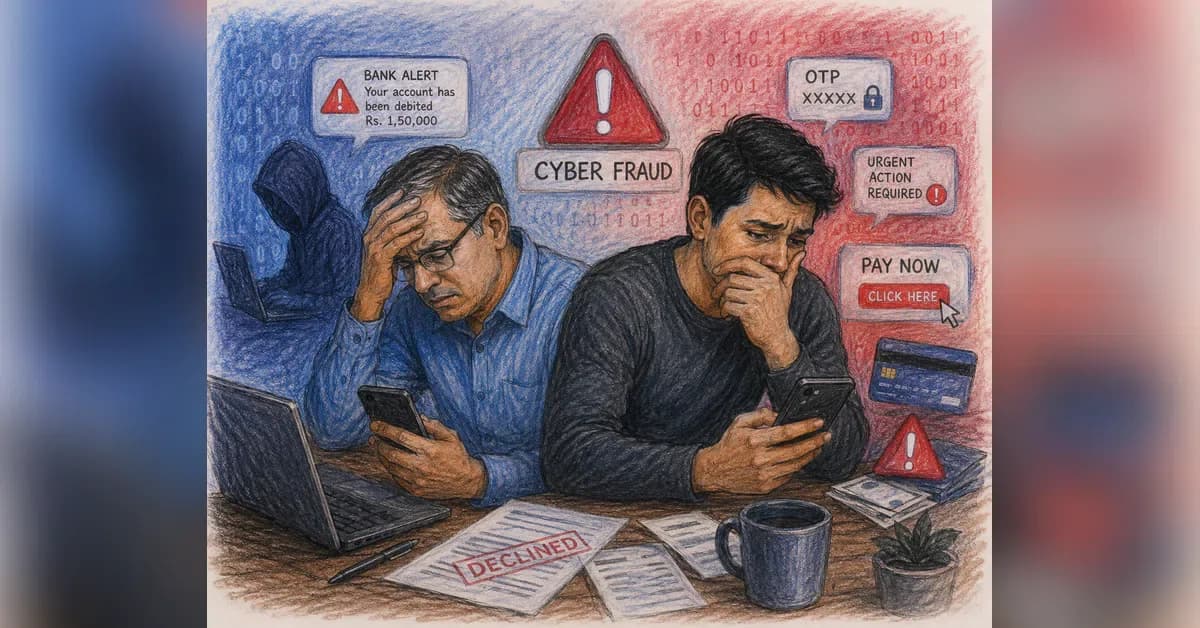
India's digital landscape faces mounting cybersecurity challenges as cybersecurity incidents surged from 1.029 million in 2022 to 2.268 million in 2024, according to government data reported by Business Standard. With more than 86% of households connected to the internet, India's cyberspace processes millions of transactions daily, creating a vast attack surface for fraudsters. The growing scale and complexity of digital threats require immediate and structured responses when fraud occurs.
The first priority after suspecting fraud is immediate access blocking - freeze debit or credit cards, disable net banking and UPI, and use your bank's app or helpline to freeze your account. As reported by Business Standard, even a short delay can allow fraudsters to make multiple transactions, potentially turning a small loss into substantial amounts. The rule is simple: block first and verify later - you can always restore access once you're sure. This immediate action cuts off the fraudster's ability to continue withdrawals.
Reporting within three working days can result in zero liability in many third-party fraud cases, according to Business Standard reporting. A delay of 4-7 days can limit compensation or cap losses, while reporting beyond seven days largely depends on the bank's internal policies. Banks are expected to provisionally credit disputed amounts within about 10 days of being notified, subject to investigation. The timing directly affects recovery chances - reporting the same day provides a realistic chance of freezing funds, while waiting a week makes recovery far more difficult as funds are likely routed through multiple accounts.
Recovery potential depends on two critical factors: who caused the breach and how quickly you reported it. As reported by Business Standard, if you report fraud within three days, you may have zero liability in many third-party cases, meaning the bank bears the loss. If you report within 4-7 days, liability is usually limited, often capped based on account type. However, if you shared sensitive details like OTP or PIN, you may be responsible for the loss up to the point of reporting. Preserve evidence immediately by capturing transaction IDs, screenshots of chats, SMS alerts, emails, and phone numbers involved, as fraudsters often delete messages or deactivate accounts.

Post-recovery focus should shift to prevention measures including device cleaning, account resetting, and payment habit improvements. According to Business Standard, victims are often targeted again through follow-up scams, so treat any unsolicited help with caution. File formal complaints with proper documentation to create a paper trail, and monitor complaint status while responding promptly to bank requests. Banks typically have up to 90 days to resolve complaints, though timelines vary based on complexity. The key principle remains: immediate action, structured response, and proper documentation are essential for successful fraud recovery.