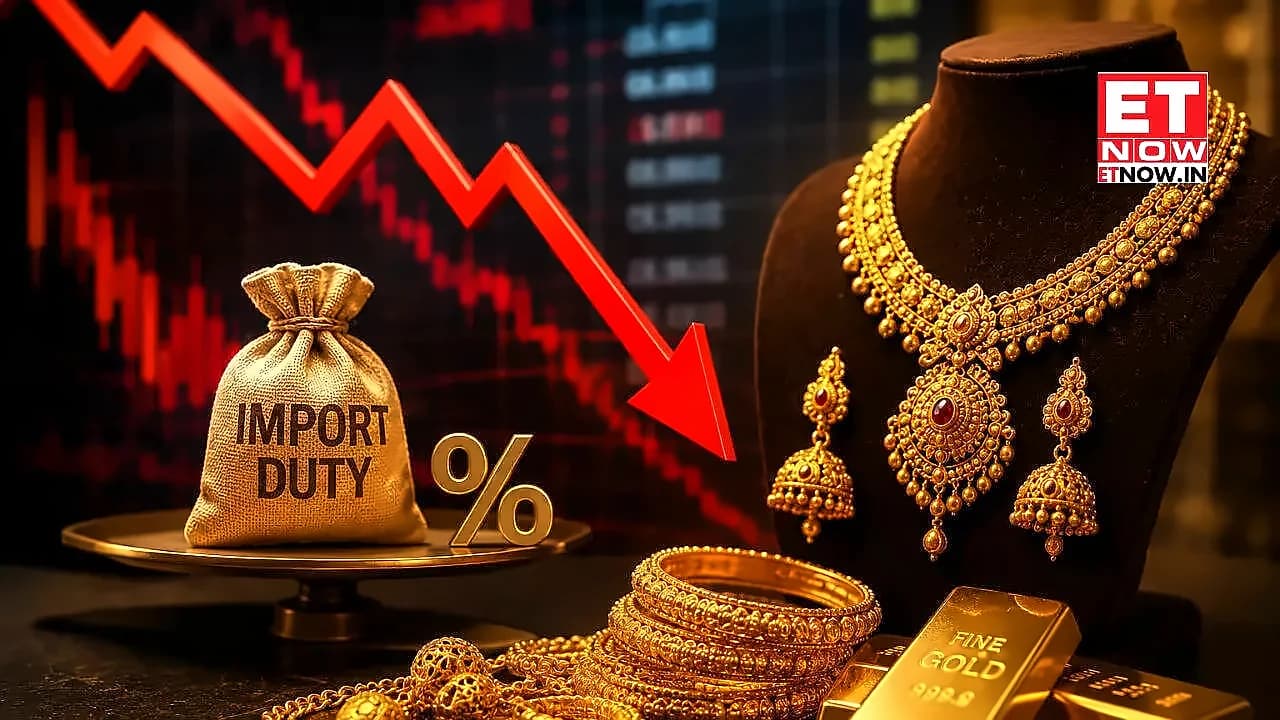
India's shock hike in gold and silver import duty to 15% has revived memories of the 2013 crisis, with experts warning the move may simply push more demand into the grey market. As reported by The Economic Times, MCX gold June futures jumped by ₹9,000 to hit ₹1.62 lakh per 10 grams, representing a 6% surge following the policy announcement. The impact was immediate, with jewelry stocks including Kalyan Jewellers, Thangamayil, and Sky Gold plunging as much as 7%. The sudden policy shift has drawn immediate parallels to the 2012-13 crisis, when policymakers utilized regulatory tightening measures to limit Current Account Deficit risk. Jefferies analyst Vivek Maheshwari noted that the Prime Minister's call "brings back memories of FY12-13," pointing out that during the previous crisis, the rupee depreciated by approximately 20% between January and September 2013.
Financial experts have emphasized that gold should remain a limited allocation within a diversified portfolio, rather than becoming a dominant asset. According to Zee Business reports, Nisha Sanghavi, Certified Financial Planner, recommended that gold exposure should ideally not exceed 10–15% of a total investment portfolio. She noted that while gold acts as an inflation hedge and diversification tool, excessive allocation can reduce long-term portfolio efficiency. The recommendation comes against the backdrop of a recent public appeal by Prime Minister Narendra Modi on reducing dependence on physical gold and avoiding purchasing gold jewellery for a year. Recent market developments show panic buying hitting jewellery stores as buyers rush purchases amid fears of policy curbs and rising gold duties, highlighting the continued appeal of physical gold despite expert recommendations. Deveya Gaglani, Senior Research Analyst at Axis Direct, recommended investors maintain around 10% portfolio allocation to gold as a hedge against ongoing global uncertainty.
As reported by Zee Business, Vikas Puri, Senior Partner at Complete Circle Capital, explained how India's traditional method of buying gold—through jewellery, coins, or bars from jewellery stores—is gradually being replaced by digital and regulated investment formats. The market has evolved significantly with Gold Exchange-Traded Funds (Gold ETFs), Digital gold platforms, Government-backed instruments like Sovereign Gold Bonds (SGBs), and newly introduced Electronic Gold Receipts (EGRs). According to Puri, digital gold instruments address multiple challenges associated with physical gold ownership, including ease of ownership, small-ticket investing capabilities, standardized quality, and higher liquidity compared to traditional physical gold purchases.

According to Zee Business reports, Electronic Gold Receipts (EGRs) are structured as dematerialised gold-backed instruments listed on exchanges such as the National Stock Exchange of India. The system operates through depositors—regulated entities approved by the Securities and Exchange Board of India—who deposit physical gold in secured vaults, with depositors including banks, bullion traders, refiners, or institutional participants. As explained by Puri, EGRs are issued in standardised denominations such as 1 gram, 10 grams, and 100 grams, with purity typically around 995 or 999 fineness levels. The most significant advantage of EGRs is the ability to convert digital holdings into physical gold through authorised vaults or approved jewellers, addressing a long-standing gap in Gold ETFs where investors typically only receive cash equivalent on exit.
Despite the policy intervention, experts warn that India's structural gold appetite remains intact despite the government's dual-pronged approach. Jateen Trivedi, VP Research Analyst at LKP Securities, noted that while the appeal is "primarily from the perspective of India's macroeconomic stability and import management," the move may be a "blunt instrument" that fuels the grey market rather than solving underlying problems. Sachin Sawrikar, Founder and Managing Partner at Artha Bharat Investment Managers, pointed directly to the 2013 precedent, stating that duty hikes then drove an estimated surge in gold smuggling even as official import data showed a decline. Anindya Banerjee, Head of Commodity and Currency Research at Kotak Securities, urged investors not to misread the domestic price surge, characterizing it as "mechanical re-pricing to a new import parity" rather than a fundamental rally. Kotak expects international gold to move toward $6,000 an ounce over the next 12 to 18 months, driven by global de-dollarisation themes and central bank buying.