Investment decisions should extend beyond headline returns to consider taxation, liquidity, and portfolio fit. According to financial experts, the right choice depends on selecting the right tool for specific financial goals rather than finding the better investment overall. Guaranteed-return instruments such as fixed deposits, Public Provident Fund (PPF) and government bonds provide returns that are known in advance, while equity mutual funds and direct stocks offer no such assurance but have the potential to generate significantly greater wealth over time. The challenge lies in aligning investments with time horizons, as money needed within three years generally belongs in guaranteed products to protect against market fluctuations, while long-term goals extending beyond seven years often require growth-oriented investments where compounding becomes the primary driver of wealth creation.

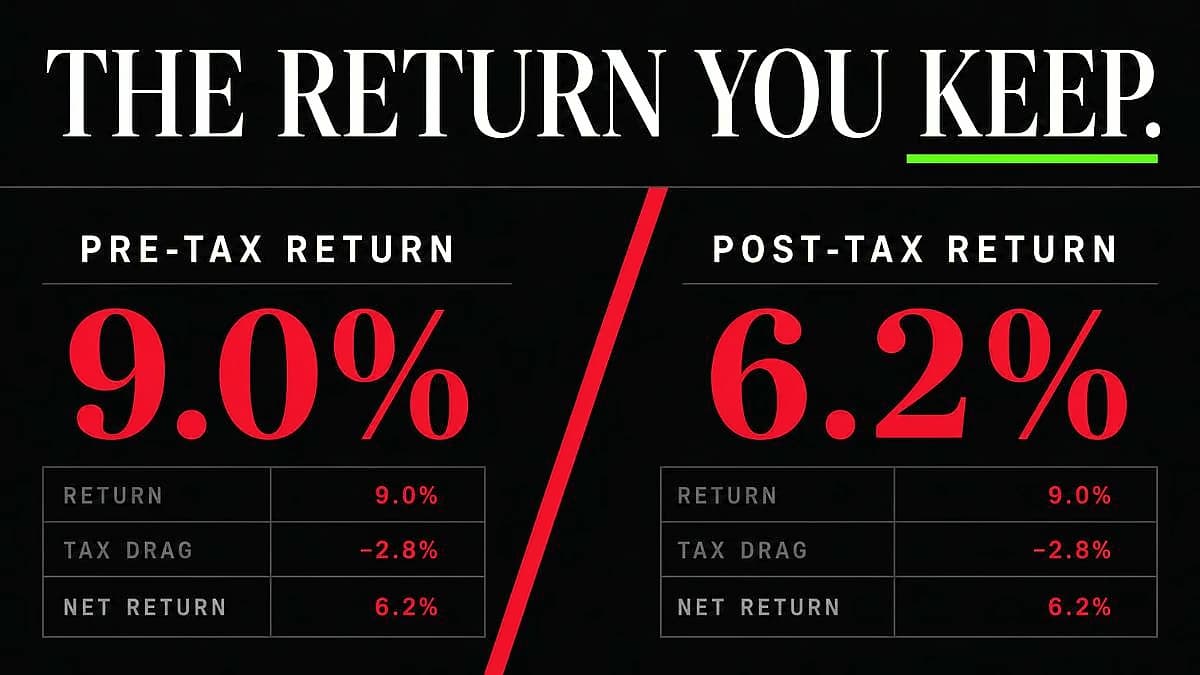
Taxation significantly reduces actual returns from guaranteed products. In 2026, most guaranteed products in India are taxed according to an investor's income tax slab. For someone in the 30 per cent tax bracket, a 7 per cent fixed deposit effectively delivers a return of only 4.9 per cent. This tax impact becomes particularly relevant when considering the 'idle cash penalty' that accumulates over time as money sits in savings accounts designed for convenience rather than long-term growth. The challenge arises when significantly larger sums remain parked in accounts designed for convenience rather than long-term growth, creating what experts call an 'idle cash penalty' that accumulates over time, with the cost not visible day-to-day but can accumulate significantly over extended periods.
For goals that fall between three and seven years, a combination of guaranteed and growth investments may provide a balanced approach. This strategy offers both stability and growth potential, allowing investors to participate in economic growth while reducing exposure to sudden market declines as financial goals approach. By blending different asset classes, investors avoid being entirely dependent on either guaranteed products or equities, creating a cushion that may ease the impact of market volatility. The approach provides flexibility while keeping long-term objectives in focus, particularly important as healthcare inflation in 2026 often exceeds 10 per cent, making it essential to distinguish between essential emergency reserves and excess cash that may be eroding purchasing power.
For individuals preferring to keep money within the banking system, auto-sweep or sweep-in accounts can provide a practical middle path. These accounts automatically move balances above specified thresholds into instruments earning returns closer to fixed deposit rates, reducing the drag caused by large amounts of idle money in standard savings accounts. The benefit includes convenience as savers don't need to manually transfer funds when surplus cash builds up, while reducing the 'idle cash penalty' that accumulates over time. This approach can be particularly useful for people wanting easy access to funds while making cash work harder in the background, with the greatest financial mistake often occurring not in choosing the wrong product but in delaying decisions altogether, allowing excess cash balances to accumulate when funds could potentially generate better returns.