Employee Stock Options (ESOPs) do not trigger immediate tax obligations when granted to employees, as reported by Mint. The taxation occurs in two distinct stages - at the time of exercise and at the time of sale. When employees exercise options, the difference between the fair market value of shares on the exercise date and the exercise price is taxed as perquisite under salary income. The employer calculates TDS on this perquisite value, which must be included under salary income while filing ITR in the relevant financial year. According to the Income Tax Appellate Tribunal (ITAT) Mumbai, the discount under ESOPs is in the nature of employee cost and is deductible during the vesting period with reference to the market price at the time of grant. However, an adjustment to income is required at the time of exercise by the amount of difference between the discount calculated with reference to the grant price and the exercise price.
Upon selling shares acquired through ESOPs, employees face a second tax liability based on capital gains calculations. According to Mint, if shares are held for more than 12 months, they are treated as long-term capital gains, while stocks sold within 12 months are considered short-term gains. The difference between the sale price and fair market value on the exercise date determines the capital gains taxation. As per the ITAT Mumbai, the assessee company measured the cost of shares based on intrinsic value method as per guidance given by Institute of Chartered Accountants of India, with the difference recognized as employee staff welfare expenses over the vested period starting from the date of grant.
Indian employees working for foreign companies may face double taxation concerns, paying tax in both the employer's country and India. However, as reported by Mint, India has Double Tax Avoidance Agreements (DTAAs) with several countries, including the United States, which prevent individuals from paying tax twice on the same income. Foreign employers may withhold tax through sell-to-cover transactions, and employees can claim foreign tax credit while filing Indian ITR, subject to applicable rules.
As startups grow, managing employee equity across multiple group companies becomes increasingly complex. Under the Companies (Share Capital and Debentures) Rules, 2014, the definition of an eligible employee for ESOPs can include employees of subsidiaries or holding companies, requiring separate shareholder approval for each entity. A practical approach involves maintaining consistent equity philosophy across the organization while keeping separate records for each legal entity. For every grant, companies must track key details including the employee, employing entity, granting legal entity, number of options, vesting terms, and accounting treatment across all relevant group entities.
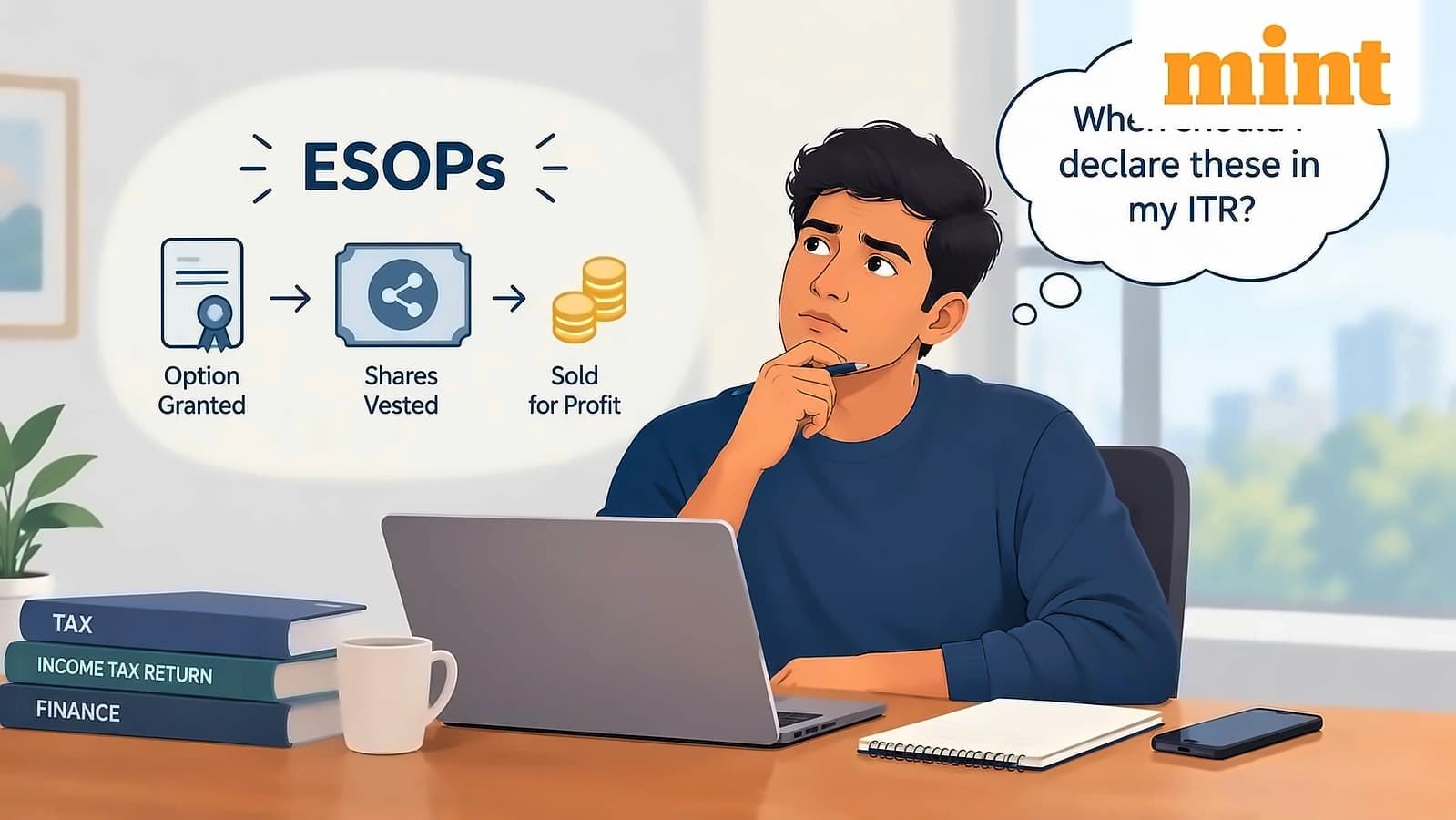
ESOPs can generate substantial wealth when company share prices rise significantly. According to Mint, if an employee has an ESOP with an exercise price of ₹100 per share and the shares are worth ₹300 when exercised, the employee acquires them at ₹100. If these shares are later sold for ₹400, the employee makes a substantial profit. This wealth creation potential is particularly significant for employees of large technology companies, with the most important consideration being the economic difference between different ESOP arrangements even when employees work for the same founder group across multiple entities.