Employee Stock Option Plans (ESOPs) are taxed at two different stages under the Income-tax Act, creating a dual taxation structure. According to CA Abhishek Soni, employees are liable to pay tax when they exercise the ESOP, even if they continue to hold the shares. The difference between the Fair Market Value (FMV) of the shares on the exercise date and the exercise price is treated as a salary perquisite and taxed according to the employee's applicable income tax slab. If subsequently sold, any gains should be disclosed under Schedule Capital Gains, with the FMV that was taxed as salary at the time of exercise becoming the cost of acquisition for calculating capital gains.
The tax treatment remains broadly similar for listed and unlisted companies, but determining FMV is more critical for unlisted shares. As reported by CA Soni, employees are liable to pay tax when they exercise the ESOP, even if they continue to hold the shares. The FMV of unlisted shares is determined using prescribed valuation rules, and the same FMV becomes the cost of acquisition when the shares are eventually sold. According to Shourya Garg, Advocate at Garg & Garg Tax Associates, unlisted shares qualify as long-term capital assets after a holding period of more than 24 months, compared with 12 months for listed shares. Employees holding ESOPs in unlisted companies need to pay special attention to valuation, as these shares lack a readily available market price, requiring proper valuation documents and maintaining detailed records.
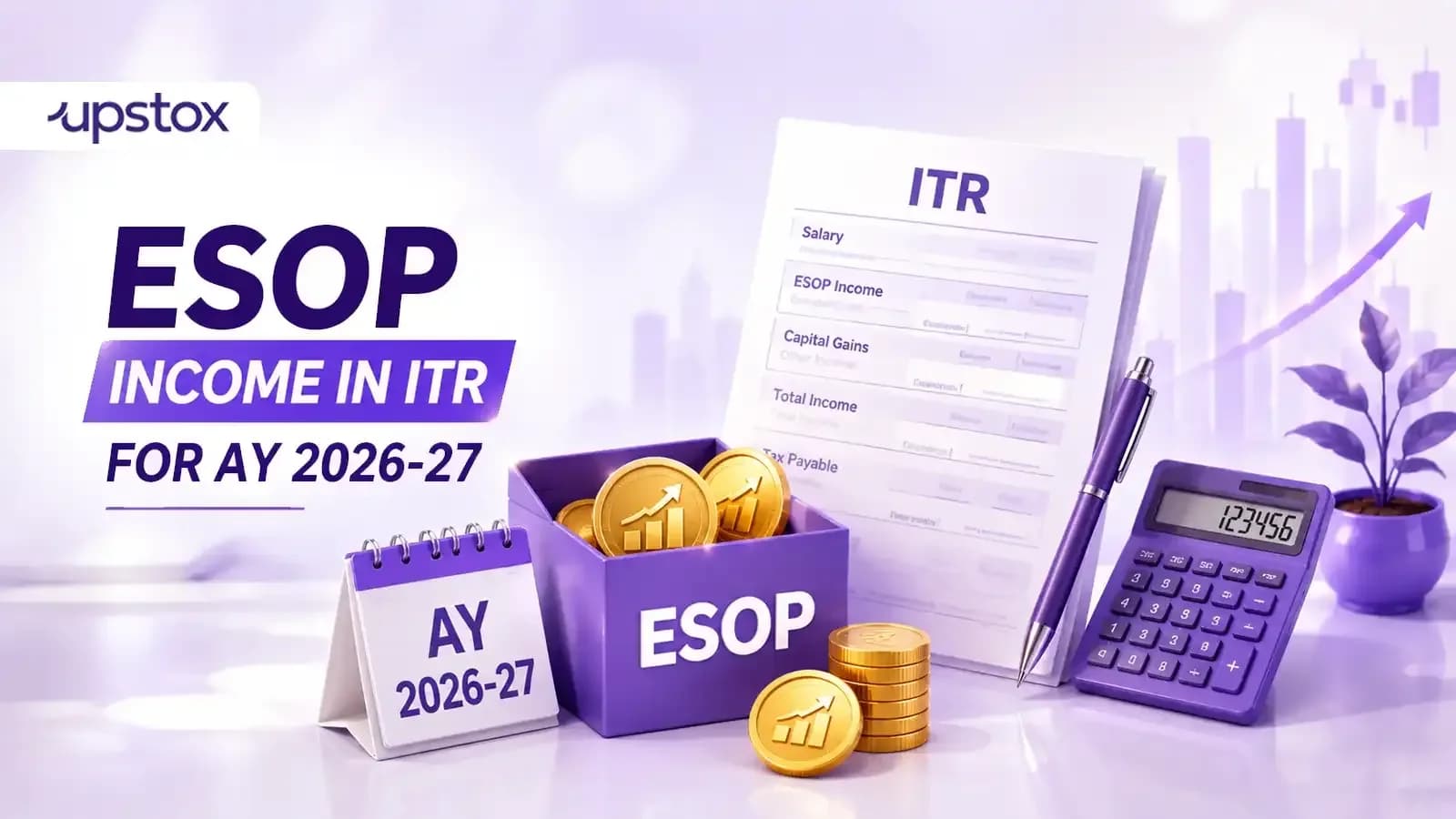
Taxpayers must maintain proper documentation to avoid disputes during assessment, particularly for unlisted company ESOPs. According to Vipin Upadhyay, Partner at King Stubb & Kasiva, Advocates and Attorneys, valuation reports are particularly important because the FMV is determined under prescribed valuation rules rather than market prices. Taxpayers should retain valuation reports, ESOP exercise records and share sale documents to support the income reported in their ITR. The focus should be on maintaining detailed records including ESOP grant details, exercise documents, valuation reports, and share sale statements, as these documents can help employees accurately report income and support tax calculations.
The way ESOP income is reported depends on whether you have exercised the options or sold the shares. According to CA Abhishek Soni, the difference between the FMV of the shares on the exercise date and the exercise price is treated as a salary perquisite and should be reported under the Salary head while filing the ITR. If you subsequently sell the shares, any gains should be disclosed under Schedule Capital Gains. For unlisted companies, the FMV must be determined using a Category I merchant banker's valuation certificate, which should be valid within 180 days of the exercise date. Employees should ensure they qualify for the tax deferral benefits available to eligible startup individuals under applicable legal provisions.
A significant development in ESOP taxation emerged with the Bengaluru ITAT's recent order directing tax authorities to reconsider the tax treatment of ESOP buyback payouts. The tribunal remanded a case involving nearly ₹39.74 lakh received by a former Flipkart employee from buyback of vested stock options, asking the Commissioner of Income Tax (Appeals) to examine the matter on merits in light of the Karnataka High Court's June 2025 ruling in Manjeet Singh Chawla vs Deputy Commissioner of TDS. The High Court clarified that taxation of ESOPs as salary perquisite arises only when an employee exercises the stock option and shares are actually allotted, and compensation for unexercised options cannot automatically be taxed as salary merely because the employer deducted TDS or reported the amount in Form 16. This ruling strengthens the case for startup employees to argue that payouts from vested but unexercised ESOPs should be taxed as capital gains instead of salary, potentially reducing their tax liability significantly.