According to Zee Business reports, Bond SIPs are debt-based systematic investment plans that invest in fixed-investment instruments such as corporate bonds, government securities, and treasury bills, rather than equities. As explained by Kalpesh Ashar, Founder of Full Circle Financial Planner, Equity SIPs primarily benefit from rupee cost averaging where investors accumulate more units during market volatility, while Bond SIPs work differently as bond prices are influenced by interest rates, helping investors average out interest rate movements over time. The key difference lies in their underlying assets - equity markets versus fixed-income instruments.
As reported by Zee Business, Equity SIPs are exposed primarily to market volatility, while Bond SIPs carry different risks including default risk, liquidity risk, and interest rate risk. According to Mrin Agarwal, Founder of Finsafe, Bond SIP strategies broadly fall into two categories - high-yield strategies offering 10-12% returns with higher default risk, and capital preservation strategies focusing on AAA to AA-rated bonds with 7.5-9.5% returns. Agarwal cautioned that investors should not assume every secured bond is completely safe, emphasizing the importance of examining collateral backing and recovery processes. She noted that debt mutual funds may be more suitable for new investors due to established fund management processes.
Understanding duration risk is crucial for debt fund investors, as it represents the risk that a debt fund's NAV changes because interest rates move. Bond prices and interest rates generally move in opposite directions - when rates rise, existing bonds with lower coupons become less attractive and their market prices tend to fall, while when rates fall, those bonds may become more valuable and prices can rise. Modified duration is commonly used to estimate how sensitive a bond or debt fund is to interest rate changes, with a higher duration indicating greater sensitivity and lower duration meaning less sensitivity. Duration and maturity are related but not identical - maturity refers to when a bond repays principal, while duration reflects interest rate sensitivity, which depends on maturity, coupon payments, and portfolio structure.
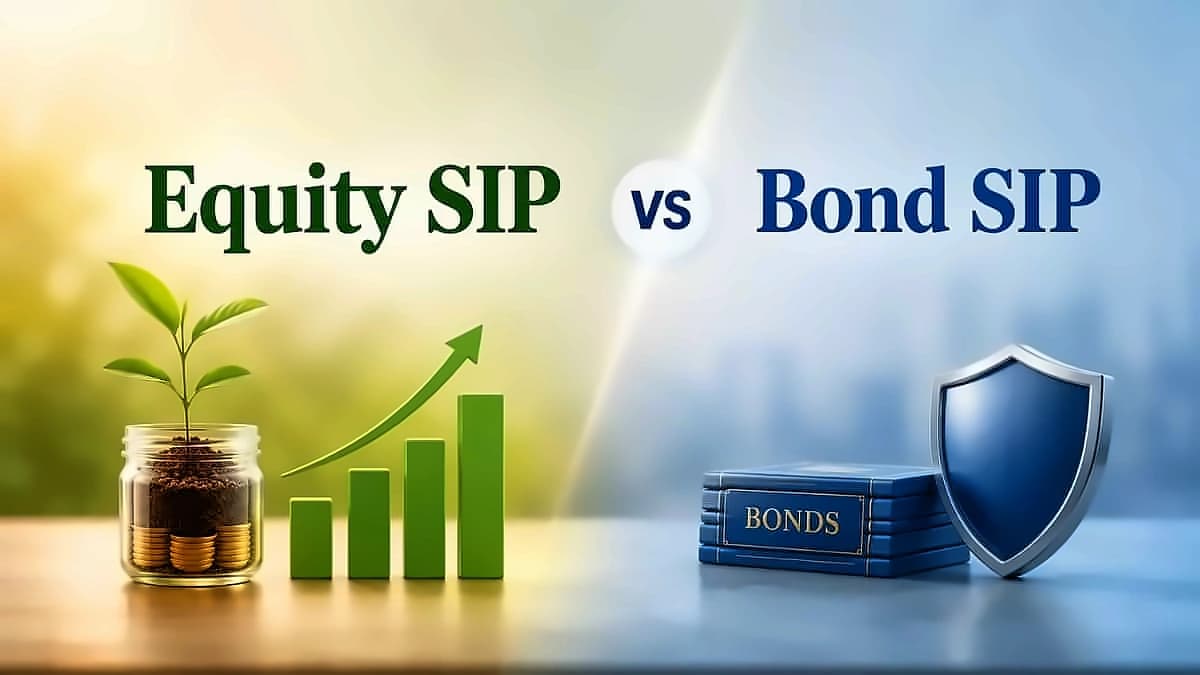
According to Zee Business reports, Equity SIPs are better suited for long-term investors as market volatility works in favor of disciplined investors over time, allowing them to accumulate more units during market declines. Ashar explained that for short-term goals like accumulating ₹5 lakh in one to two years, debt-based SIPs may be more suitable due to limited fluctuations and higher probability of achieving targets. Experts suggest that investors with 70% equity allocation can maintain proper asset allocation by keeping a portion in debt investments for contingency planning and short-term requirements. However, Agarwal noted that Bond SIPs are not suitable for new investors due to limited visibility into bond selection processes and credit risk management.
As reported by Zee Business, experts emphasize that investors do not necessarily have to choose only one asset class - debt investments can play important roles in maintaining proper asset allocation and building emergency corpus. Ashar suggested that for investors looking for relatively safer fixed-income exposure, debt mutual funds may be more suitable than Bond SIPs. Agarwal noted that debt funds may not offer 10-12% returns like some Bond SIP strategies, but they are comparatively safer with established fund management processes. The experts concluded that investors should choose between Equity SIPs and debt-based investments based on their financial goals, investment horizon, and risk appetite rather than chasing higher returns alone.