The Employees' Provident Fund Organisation (EPFO) is expected to launch E-PRAAPTI by the end of August 2026 to help members recover money from old or inactive PF accounts. According to The Hindu BusinessLine, the EPFO is currently testing a back-end software upgrade to create a stable national database before launching the platform. Union Labour and Employment Minister Mansukh Mandaviya first announced the platform in April this year, describing it as "a dedicated digital platform to facilitate identification, tracking, UAN linking and activation of old EPF accounts." The portal will provide a streamlined Aadhaar-based authentication mechanism that will allow members to securely access old EPF accounts not linked to a Universal Account Number (UAN), update their profiles, and complete UAN linking and activation. As per The Hindu BusinessLine, Aadhaar-based verification will replace much of the existing manual process, reducing paperwork and speeding up claims.
The new portal's launch comes amid a significant discovery of unclaimed PF funds. According to an RTI response, more than 30.91 lakh inoperative EPF accounts held unclaimed deposits of around ₹9,330 crore as of March 31, 2026. This substantial amount represents funds from employees who started their careers before the introduction of Aadhaar-based verification and the Universal Account Number (UAN) system. An EPF account becomes inoperative if no contributions are received for three consecutive years. Currently, nearly eight crore EPFO members contribute to their PF accounts every month through 7.89 lakh establishments. Before UAN was introduced in 2014, every employer issued a separate EPF Member ID to employees, and when workers changed jobs, a new PF account was often created under the new employer. After UAN was introduced, EPFO started linking multiple Member IDs to a single account, but many employees who had changed jobs before 2014 either never linked their old accounts or no longer remember their previous Member IDs.
According to The Hindu BusinessLine, E-PRAAPTI is primarily aimed at members who still have old Member Identification Numbers (MIDs)—the unique account numbers used before the Universal Account Number (UAN) was introduced in October 2014. The portal will work as follows: Secure Aadhaar login: Members will be able to log in using Aadhaar-based authentication to trace old or scattered PF deposits without initially submitting full documentation. Online application: Subscribers will need to fill out an online form with their EPF details and other information required to process the request. Automatic PF account merger or withdrawal: If the system finds that an old MID matches an existing UAN, it will automatically process the request to merge old PF accounts with the latest one or facilitate withdrawal, subject to eligibility conditions. New UAN where required: If a subscriber has an MID but does not have a UAN, the portal is expected to generate a new UAN for future transactions. Identity verification for unmatched cases: If a subscriber does not have an MID, the online application will be forwarded to the EPFO office concerned for identity verification before the claim is processed. The digital process is expected to reduce dependence on past employers for verification, minimise paperwork and eliminate multiple visits to EPFO offices.
If an earlier employer or PF account does not appear in the service history, employees should first check whether the employment period has been captured correctly. As reported by Moneycontrol, if they remember their old Member ID but cannot find it on the portal, they should contact the previous employer to verify the records. Employees who do not remember their earlier UAN should approach their former employer, who can retrieve it through the EPFO employer portal. To ensure a smooth experience while using the portal, members should keep the following documents ready: Aadhaar card with a mobile number linked for OTP authentication, old EPF account details including Member IDs, regional office codes and employer names, PAN card and active bank account details linked to the current UAN. If the establishment has closed, EPFO can still help trace the account. According to Beik, in cases where the former establishment has been closed or is no longer operational, you may approach the jurisdictional EPFO office with your previous Member ID and supporting documents. The EPFO can assist in tracing earlier records, facilitating the generation or retrieval of the UAN, and linking the previous EPF account to your current UAN, subject to verification.
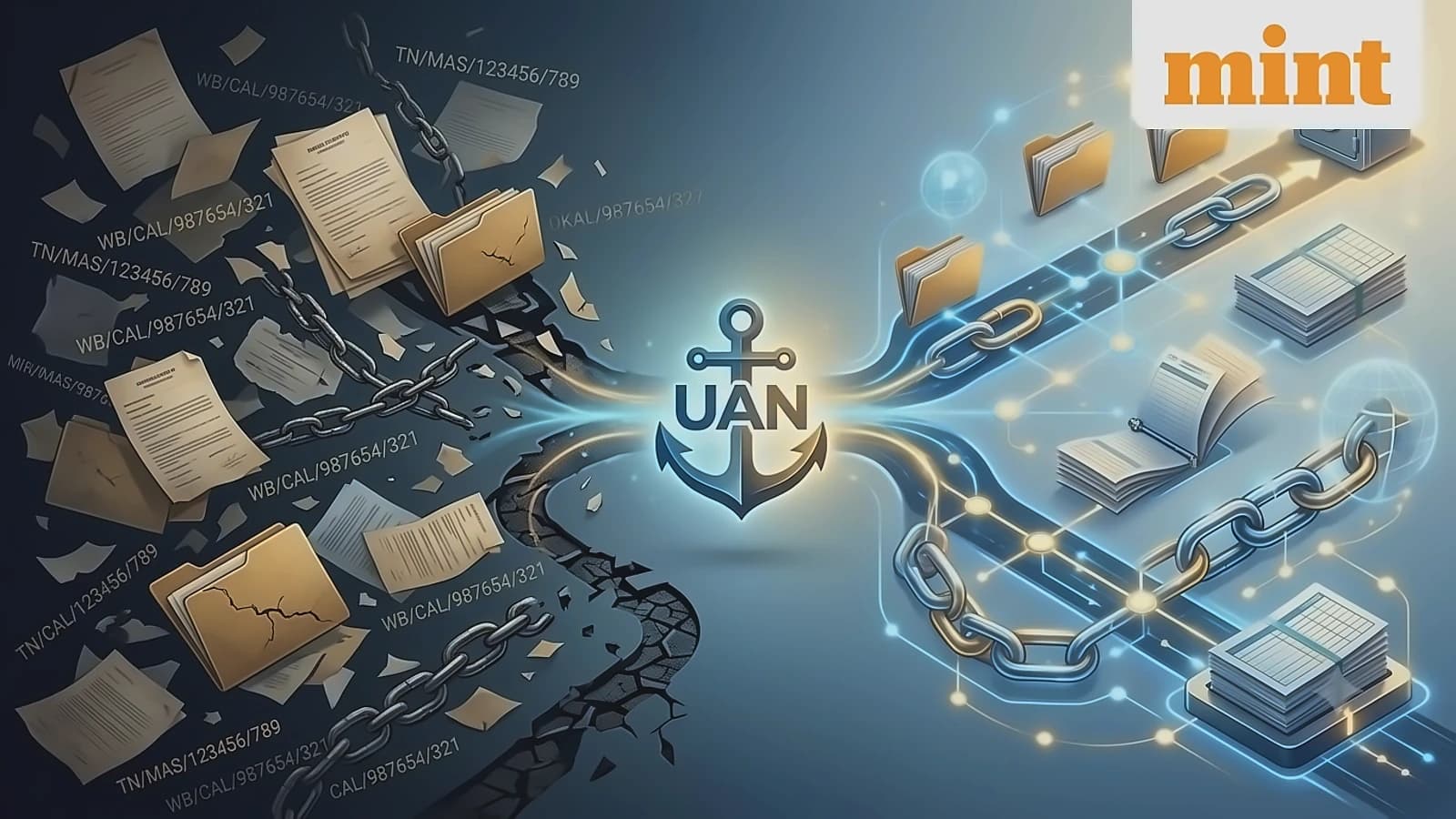
Along with checking service history, members are advised to verify their KYC details on the EPFO portal to ensure smooth operations. According to EPFO, this includes ensuring that Aadhaar, PAN, bank account, and mobile number are updated, as small mismatches in these records are among the common reasons why PF claims and transfers get delayed. Spending a few extra minutes reviewing your profile today can save a lot of paperwork later, as these minor discrepancies often cause significant delays when members need to access their funds or apply for pension-related benefits. The Service History feature also comes in handy for those who think they may have more than one UAN, as duplicate ones were created in some cases when people changed jobs, even though every employee is supposed to have only one UAN throughout their career. For employees nearing retirement, maintaining a complete service history is particularly important because pension eligibility and other benefits depend on accurate employment records.