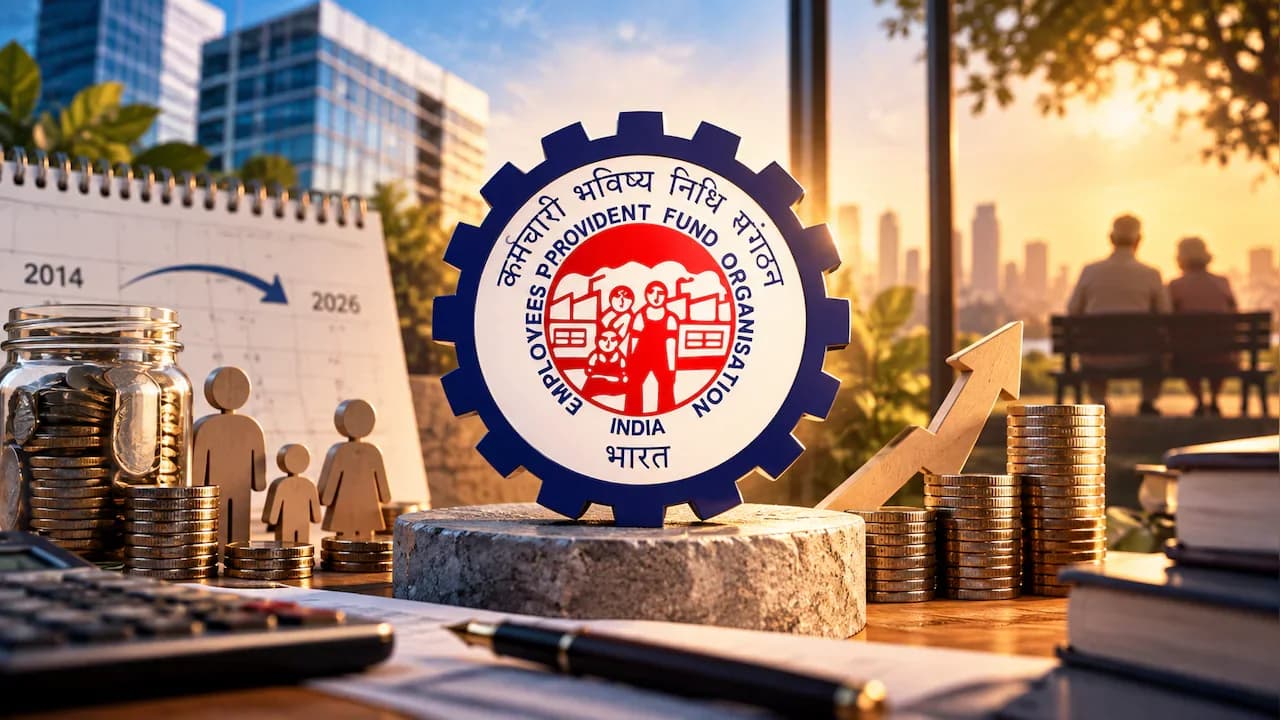
The Union Cabinet's decision to raise the EPFO wage ceiling from ₹15,000 to ₹25,000 per month has received widespread industry support, with FICCI Director General Jyoti Vij calling the revision overdue. As reported by Zee News, Vij noted that the previous wage ceiling was set in 2014, while wage levels, incomes and employment structures have changed significantly since then. The Bharatiya Mazdoor Sangh (BMS) has also welcomed the move, with Girish Chandra Arya describing the revision after nearly 12 years as an important step for employees. The FICCI Director General emphasized that the increase would bring around 51 lakh additional employees under formal social security coverage, contributing to employment formalization and strengthening retirement security.
The wage ceiling expansion significantly increases employee EPF contributions, with monthly contributions rising from ₹1,800 to ₹3,000 based on the revised ceiling. According to Zee Business, employees generally contribute 12% towards EPF, with the contribution calculated based on the applicable wage ceiling or full basic salary. The higher contribution means more money can accumulate in the Employees' Provident Fund over time, with compounding effects becoming more significant over longer periods. Over a 30-year period, an EPF corpus of around ₹33.5 lakh at a ₹15,000 wage ceiling could increase to approximately ₹56 lakh when calculated on the ₹25,000 ceiling, representing a difference of roughly ₹22 lakh. Over 35 years, the corresponding corpus could rise from around ₹51 lakh to approximately ₹85-86 lakh, resulting in a difference of about ₹35 lakh.

The higher wage ceiling significantly impacts pension benefits under the Employees' Pension Scheme (EPS). For an employee with 30 years of service, the pension calculation shows an illustrative monthly pension of around ₹6,857 at a ₹15,000 pensionable salary, which rises to approximately ₹11,429 at ₹25,000 salary. This represents an increase of roughly ₹4,500 per month, or about 67%, in the illustrative calculation. However, experts clarify that the actual pension depends on factors including the employee's salary bracket, length of service and applicable pension calculation. The BMS has emphasized that broader EPFO coverage would also strengthen workers' access to long-term pension and insurance protection beyond just provident fund benefits.
According to industry experts, the wage ceiling expansion will contribute to employment formalization while helping companies retain employees and strengthening retirement security. As reported by Zee News, FICCI's Jyoti Vij noted that access to provident fund, pension and other social security benefits can improve employee morale and job stability, creating benefits for both workers and employers. BMS's Girish Chandra Arya highlighted that when employees have confidence in financial security after retirement, they are likely to remain more committed to their work and stay longer with an organization. The decision could extend beyond immediate beneficiaries, as the government's efforts to promote formal employment and bring workers from the unorganized sector into organized workforce could bring more employees under schemes such as EPF, ESI and bonus benefits in the future.
The government estimates an additional annual expenditure of ₹11,339 crore, with the five-year expenditure projected at ₹56,696 crore. Currently, EPFO manages a corpus of ₹31.2 lakh crore with over 7.5 crore active members contributing to provident fund, pension, and insurance schemes each month. The BMS has emphasized that the move should not be viewed merely as an increase in provident fund coverage, but as a broader step to strengthen workers' access to long-term pension and insurance protection. The decision will particularly impact inoperative accounts as more employees become eligible for formal social security coverage, with all PF accounts continuing to earn interest until members reach 58 years of age.