The Reserve Bank of India (RBI) has introduced comprehensive rules to protect credit card customers from certain late payment charges, providing crucial relief for cardholders facing payment delays. According to latest RBI guidelines, a credit card issuer can levy late payment charges or report an account as past due to credit information companies only when the account remains overdue for more than three days after the payment due date. This means customers have significant protection if their payment is delayed by a short period, though the three-day period does not automatically mean customers can pay bills late without facing interest charges. The RBI's grievance redressal framework allows customers to approach the RBI Ombudsman if the bank does not respond within 30 days or they are dissatisfied with its response.
When payments are credited after the due date, the outcome depends on several factors including when the payment was received, processing delays, and the bank's applicable rules. As reported by Mint, consider a scenario where a ₹30,000 credit card bill is due on November 15, but the payment appears in the account on November 17 through an authorized payment platform. In such cases, cardholders should first check the payment date recorded by the card issuer and request the bank to recognize the original payment date if successful receipt occurred on the due date. Under RBI rules, late payment fees should not be imposed merely because an account remains overdue for one or two days, though interest treatment may depend on whether the full amount was received by the due date.
Interest and late payment fees are distinct charges with different treatment under RBI guidelines. Interest, also called finance charges, may apply when the full outstanding amount is not paid by the due date, with calculations based on the outstanding amount after adjusting payments, refunds, and reversed transactions. According to Mint, consider a cardholder with an outstanding credit card bill of ₹50,000 where the minimum payment due is just ₹2,500 (5% of the total balance). The remaining ₹47,500 continues to accrue finance charges, taxes, and associated expenses until complete repayment. If a customer pays only part of the bill, the interest-free credit period may be lost, making it crucial to pay the full outstanding balance each cycle to avoid compounding interest charges.
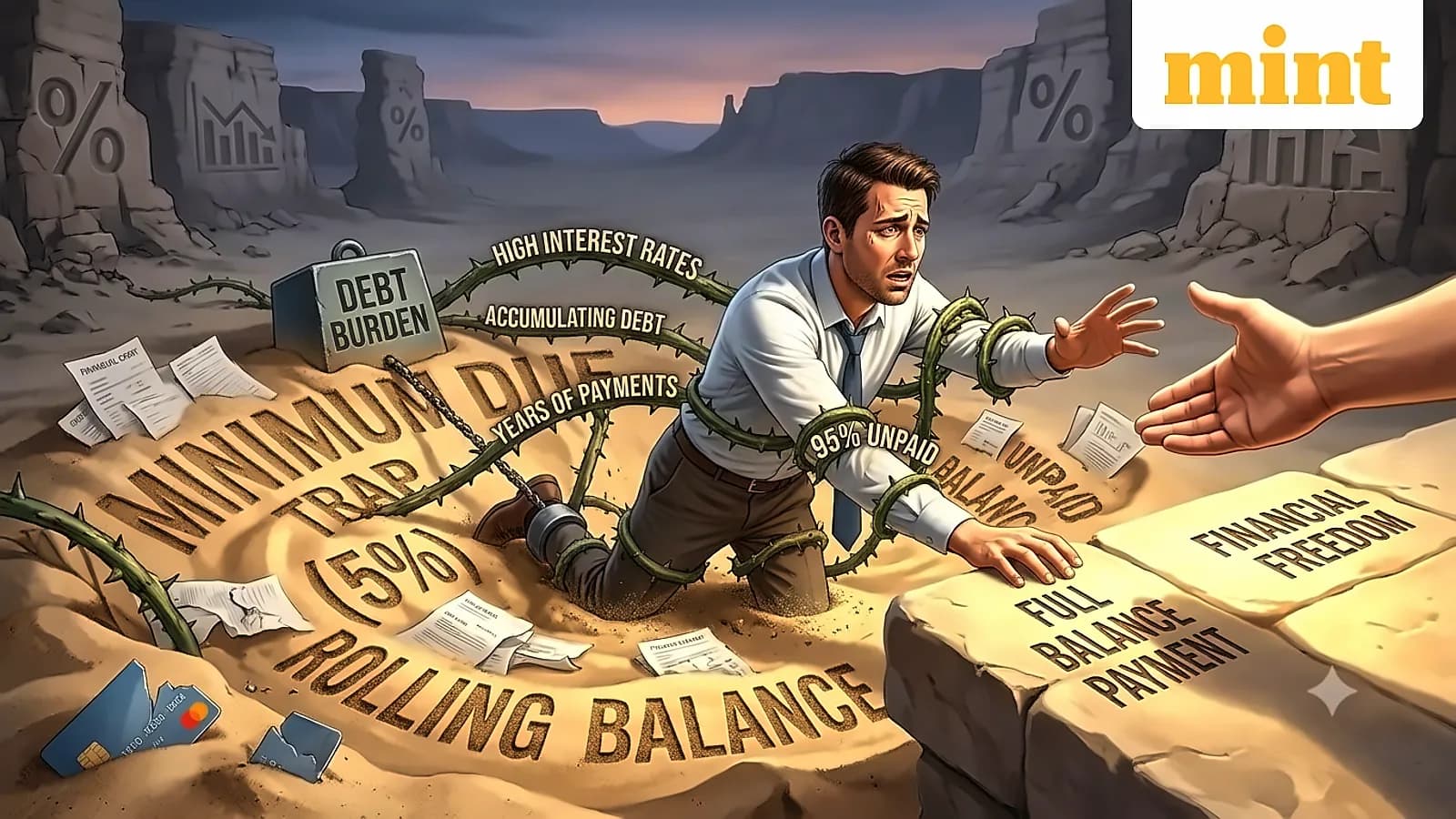
According to Raj P. Narayanam, Founder & Executive Chairman of Zaggle, paying only the minimum due provides short-term relief but is not a sustainable repayment strategy. "Paying only the minimum due keeps your account in good standing, but it is a short-term cushion, not a repayment plan," Narayanam explained, emphasizing that clearing the full outstanding balance each cycle allows cardholders to keep all rewards earned and pay no interest at all. To avoid payment delays, experts recommend paying credit card bills a few days before the due date and using payment methods authorized by card issuers. Setting up automatic payments can help avoid missed deadlines, provided there is sufficient money in the linked bank account, while maintaining careful monitoring of payment processing details and checking statements regularly.