The consumer credit market is experiencing significant regulatory changes across major economies. India's RBI issued comprehensive digital lending directions on May 8, 2025, mandating that all lending through digital apps be reported to credit information companies, strengthening borrower data governance. Meanwhile, the US Federal Reserve announced in May 2025 that it would not prioritize enforcement of its BNPL interpretive rule and is considering rescinding it, even as individual states step in, most notably New York's Buy-Now-Pay-Later Act. In Europe, Directive (EU) 2023/2225 enters application on November 20, 2026, bringing most BNPL products under formal consumer credit regulation for the first time, with coverage extended to non-mortgage loans up to EUR 100,000.
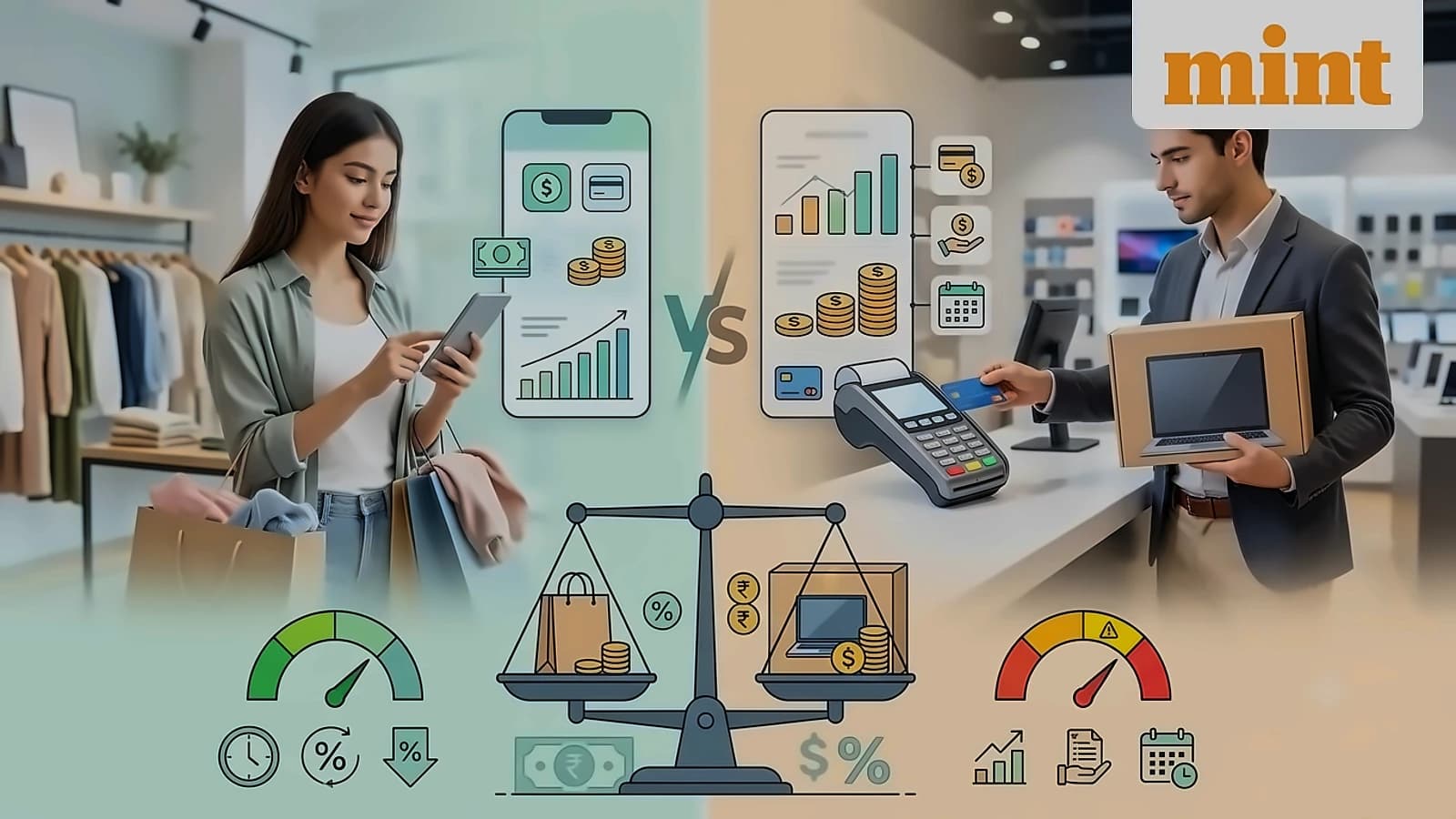
According to Mint reports, the choice between Buy Now, Pay Later (BNPL) and credit card EMIs largely depends on purchase amount and repayment timeline. BNPL can be cheaper for smaller purchases like clothes and gifts when repaid within weeks, as the interest-free period may result in little or no additional charges. However, credit card EMIs are more suitable for expensive purchases such as smartphones, televisions, laptops and household appliances, especially when banks offer promotional discounts or no-cost EMI schemes. As reported by Mint, credit card EMIs generally carry interest rates of approximately 13% to 18% annually, along with processing fees and GST. Recent festive season analysis suggests that instant cash discounts may be more financially sensible than no-cost EMI for big purchases, particularly when buyers can afford to pay upfront without affecting their savings.
According to Mint analysis, a consumer purchasing a ₹60,000 smartphone through credit card EMI at 15% annual interest over 12 months would pay approximately ₹5,415 per month. The total repayment would be around ₹64,986, including approximately ₹4,986 in interest, before processing fees and applicable taxes. Zero-interest BNPL schemes generally require lender approval, completion of know-your-customer (KYC) verification and purchases from participating merchants. Even without interest charges, borrowers may still pay processing fees, applicable GST and penalties for missing repayment deadlines. Recent analysis reveals that no-cost EMI offers may come with hidden charges, including processing fees and transaction costs that increase the actual cost.
As reported by Mint, missed BNPL instalments can affect a borrower's credit score just like delayed credit card EMI payments. Many borrowers assume that BNPL transactions do not affect their credit scores because they involve relatively small purchases or short repayment periods. However, loans provided by regulated lenders, including short-term and pay-later facilities, are reported to credit bureaus. A missed payment can show up on a credit record, whether the purchase was made through BNPL or a card EMI. Apart from affecting creditworthiness, delayed payments may attract late fees and other penalties, depending on the lender's terms.
According to Mint reports, BNPL generally works better for smaller purchases that can be repaid over a short period without straining the monthly budget. It may also provide an alternative for consumers who do not have credit cards, subject to lender eligibility requirements. Credit card EMIs may be more suitable for expensive purchases where consumers need longer repayment periods and can benefit from reasonable interest rates, cashback or promotional offers. However, neither option is automatically cheaper, as a zero-interest BNPL offer may become expensive if it carries substantial processing charges or late-payment penalties, while a credit card EMI may cost more when interest, processing fees and GST are included. Recent festive season analysis suggests that buyers should carefully compare the final amount payable after accounting for all charges and fees before choosing between no-cost EMI and instant cash discounts.