According to the latest updates from Mint, subscribers can withdraw from APY by submitting a request to the associated bank or post office branch. Once accepted, the subscriber will receive 100% annuitisation of accumulated pension until death. However, early withdrawal is only allowed in exceptional cases - death of the subscriber or terminal disease. In case of death, the pension is provided to the spouse or nominee. If the account is closed before reaching 60 years, only the subscriber's contribution plus interest earned is paid, and subscribers lose the government's co-contribution or interest earned on that amount.
As reported by Mint, defaulting on payments leads to small penalties by the bank based on contribution amounts: ₹1/month for contributions up to ₹100/month, ₹2/month for contributions between ₹101-500/month, ₹5/month for contributions between ₹501-10,000/month, and ₹10/month for contributions beyond ₹1,001/month. According to Clear Tax reports, accounts are frozen if defaulted for six months, deactivated after 12 months (one year), and closed if defaulted for 24 months (two years). The remaining amount is then paid to the subscriber.
The Atal Pension Yojana (APY) is open to all Indian citizens between 18-40 years of age, with some important restrictions. According to reports from Mint, since October 2022, Indians who pay income tax are deemed ineligible for the scheme. Subscribers must have an Aadhaar-linked bank or post office savings account and a valid mobile number, and must commit to making contributions for at least 20 years. The scheme is designed to provide pension cover for the poor, underprivileged, and unorganised sector workers under the broader National Pension System (NPS) umbrella.
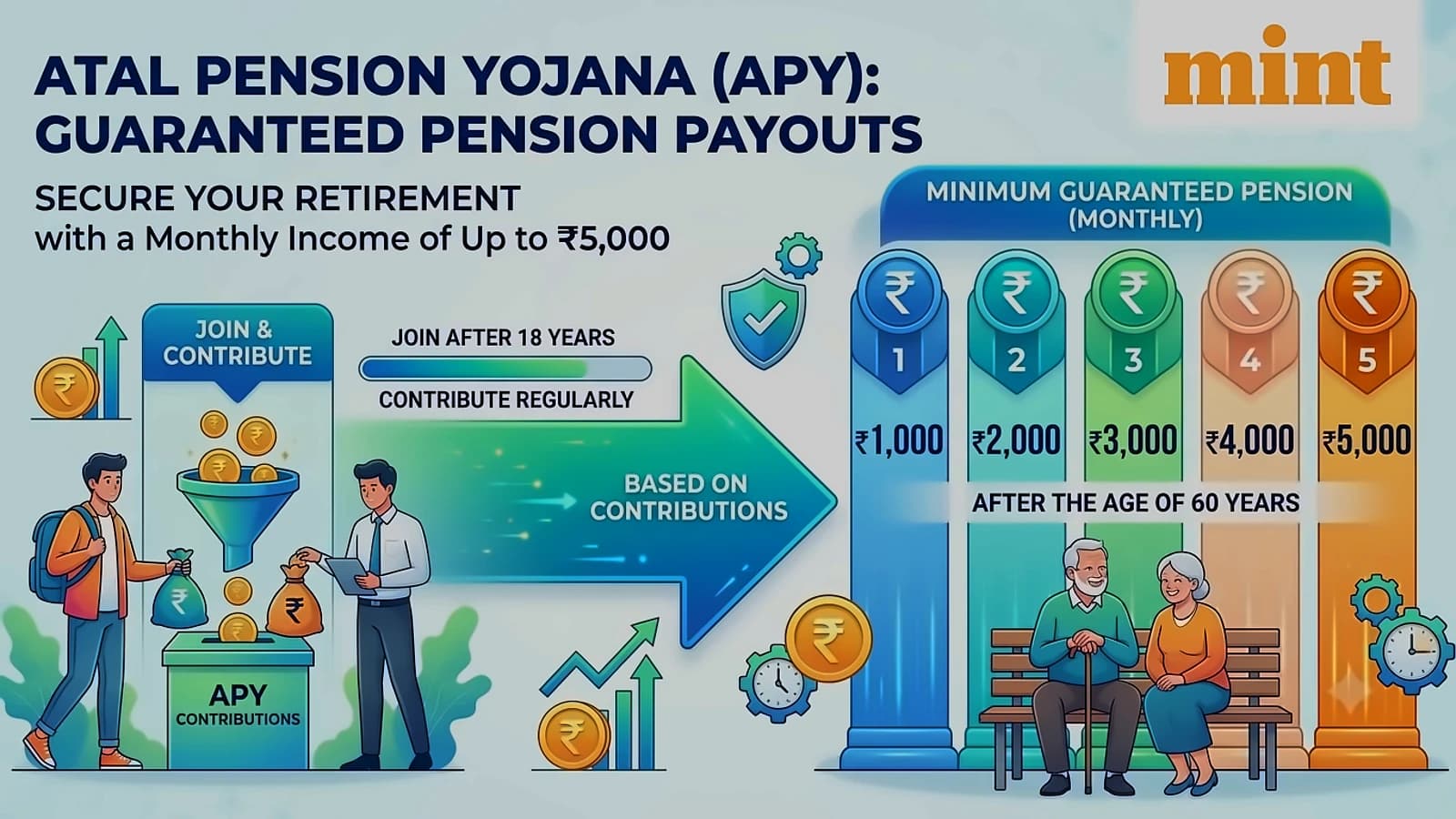
According to Mint, subscribers will receive a guaranteed minimum monthly pension payout of ₹1,000, ₹2,000, ₹3,000, ₹4,000, or ₹5,000 after the age of 60 years, based on contributions made after joining the scheme. In case the account is closed before reaching 60 years, only the subscriber's contribution plus interest earned is paid, and subscribers lose the government's co-contribution or interest earned on that amount. Taxpayers can avail exemption on contributions up to ₹1,50,000 under Section 80CCD of the Income Tax Act, 1961, and an additional exemption of ₹50,000 for APY contributions under Section 80CCD(1B).

As reported by Mint, subscribers receive periodic SMS alerts on the registered mobile number about PRAN activation, account balance, and contribution credits. They can also access details through the NSDL's APY app and receive a physical Statement of Account once a financial year at their registered address. In case of account closure, the scheme is only open to Indian citizens, and if a subscriber becomes a non-citizen, their APY account will be closed with the net actual interest earned on contributions refunded, but government co-contribution and interest earned on it will not be returned.
According to Mint, minors cannot open APY accounts, and non-resident Indians in the 18-40 age group with a bank account with APY point of presence (PoP) are eligible to open accounts. PoPs are entities appointed by the PFRDA to provide services to all citizens of India for opening and operating NPS accounts. The toll-free helpline number for APY Scheme is 1800-110-069, and since it replaced the erstwhile Swavalamban Yojana, all previous beneficiaries were automatically migrated to APY. For NRI banking assistance, customers can access NRI Phone Banking services through toll-free numbers across countries or call +91-40-6717-4100 for account support and emergency banking assistance.