According to FundsIndia's latest report titled 'Wealth Conversations', long-term equity investment of 7 years or more is essential for wealth creation. The data reveals that markets have witnessed sharp drawdowns of 30-50% over recent decades, yet indices recovered within 1-3 years. The report identifies a clear pattern where equity returns peak around the 7th year, after which the chances of strong positive returns improve significantly while short-term volatility tends to smooth out. This threshold represents the critical point where compounding begins working meaningfully in favor of investors, providing a key investor behavioural insight that 7 years and beyond can be considered as long term for equity investments. As reported by FundsIndia, equity risks are temporary in nature, while recovery and wealth creation are driven by time in the market, making this 7-year timeline particularly significant for long-term wealth creation strategies.
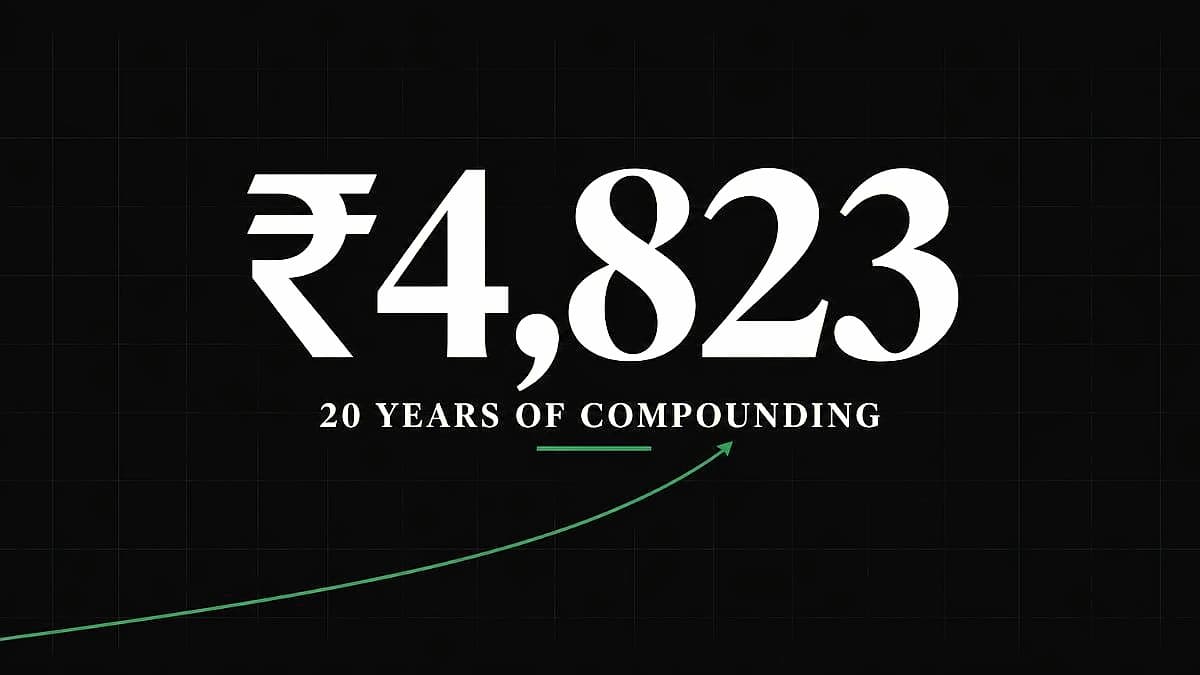
The report found that Indian equities delivered annual returns of 13.2% over 10 years, 11.3% over 15 years and 11.4% over 20 years. At these rates, investments would have multiplied roughly 3.5 times in 10 years, 5 times in 15 years and nearly 8.7 times over two decades. US equities performed even better, delivering annualised returns of 19.4% over 10 years, 19.8% over 15 years and 15.2% over 20 years, with money multiplying at 5.9x, 15x and 17.01x over similar periods. In comparison, real estate provided returns of 5.6% and 7.9% in 15 and 20 years respectively, while debt instruments provided returns in the range of 7.5% to 7.6% over the same periods. The data shows that if investors stay invested for across 5–20 year horizons, their equity portfolios have delivered double-digit returns, demonstrating the consistency of long-term equity performance across different investment periods. As noted in the latest analysis, stocks have historically outperformed savings rates over long periods, with compound growth helping achieve long-term financial goals.

The structured investment approach has gained significant traction among Indian investors, with SIP inflows crossing ₹32,000 crore in March 2026 alone. This represents substantial growth from the total SIP inflow of approximately ₹44,000 crore for the entire financial year 2016–17. SIPs provide a disciplined method for long-term wealth creation by allowing gradual participation in equity markets without the stress of timing entries or large lump sum investments. The automated approach helps investors stay invested during market ups and downs, while regular investing compounds into meaningful wealth over extended periods. As reported by FundsIndia, equity risks are temporary in nature, while recovery and wealth creation are driven by time in the market, making SIPs particularly effective for first-time investors who may lack market timing experience. The latest analysis emphasizes that investing offers potentially higher rates of return over long periods, though there's potential for risk of loss as asset values can fluctuate significantly.
As reported by FundsIndia, equity risks are temporary in nature, while recovery and wealth creation are driven by time in the market. Despite market fluctuations, long-term holding periods have consistently rewarded investors. The report notes that equity investing rewards patience, as the investment horizon increases, the chances of negative returns narrows while the possibility of earning over 7-10% returns rises significantly. Conservative asset allocation combinations involving equity, debt, and gold have shown stable long-term returns with controlled downside risk, demonstrating the resilience of diversified investment strategies. This pattern holds true even during periods of sharp market drawdowns, as historical data shows that markets have witnessed sharp drawdowns of 30-50% over recent decades, yet indices recovered within 1-3 years. The latest analysis highlights that there could be costs or penalty fees for selling or removing money before investments come to term, and returns are not guaranteed and can vary widely over shorter periods. However, stocks have historically outperformed savings rates over long periods, making them suitable for long-term goals where time horizon allows for market volatility.