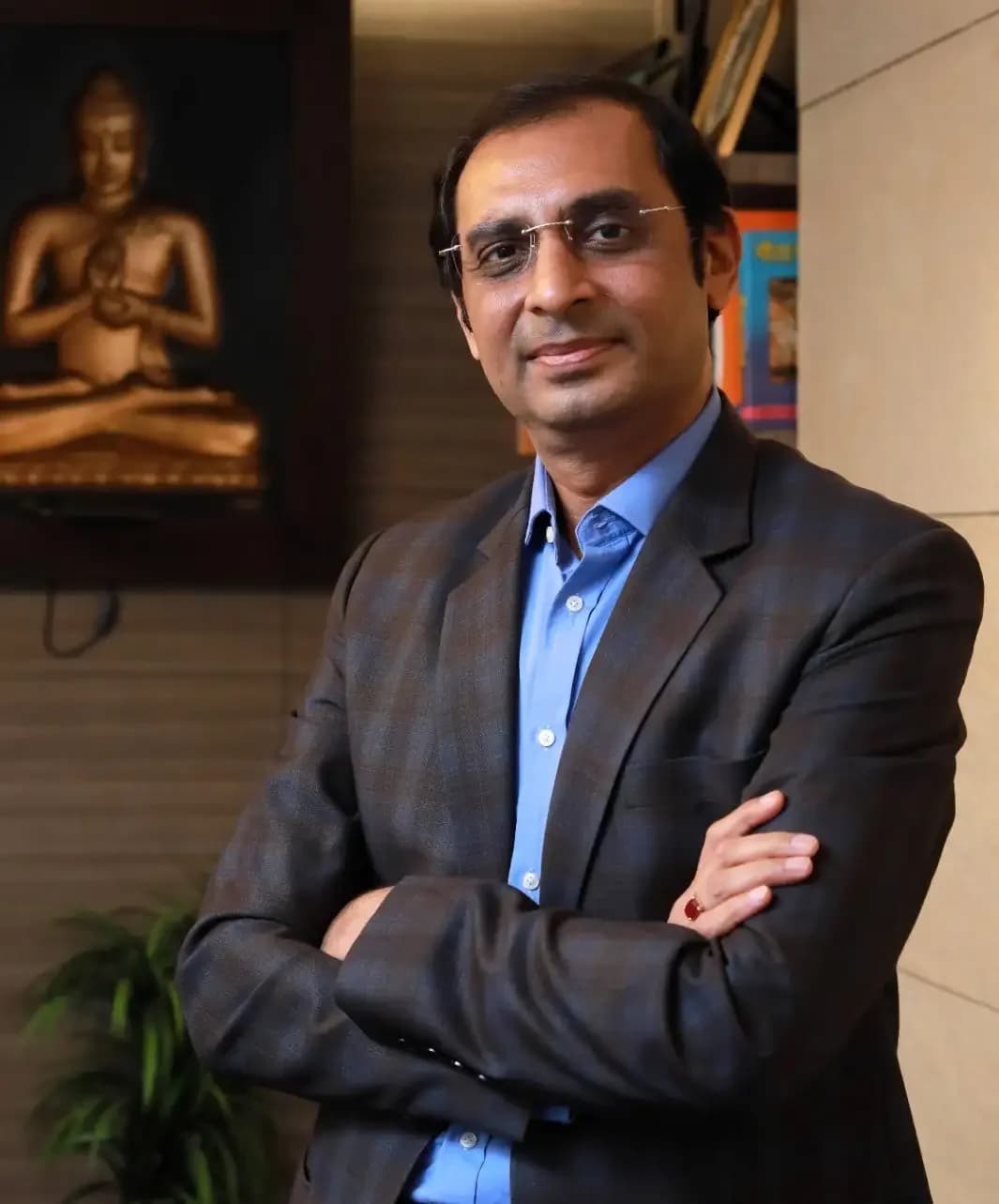
As much as $1.5 trillion in wealth is expected to change hands between generations in India over the next decade, setting the stage for a fundamental redesign of family portfolios. According to Akash Hariani, joint managing director at Motilal Oswal Private Wealth, next-generation HNIs are demanding consolidated reporting, formal asset-allocation frameworks, investment committees and professional manager selection. The founder generation often created wealth through concentration in one business, one industry and predominantly one country, while their investment approach outside the operating business was relationship-led and relatively informal. As reported by The Economic Times, the biggest change is probably in how investment decisions are made, with the next generation beginning to look at the family's wealth more like an institutional balance sheet.
Next-generation HNIs are building portfolios across listed equities, fixed income, private markets, real estate, gold and overseas assets, while concentrating bets are being ring-fenced to a smaller pool of capital. Their risk appetite is more segmented, with families wanting core wealth diversified and professionally managed while being comfortable taking concentrated risk in smaller pools through private equity, venture investing, direct deals or new-age themes. Their involvement is much greater, with nearly 70% of young investors using paid advisers interacting with them at least monthly, according to a 2026 CFA Institute survey. As reported by The Economic Times, the objective for large portfolios should increasingly be to distinguish between wealth creation and wealth preservation, with the core portfolio diversified across listed equities, fixed income, real assets, alternatives and global assets, while concentrated or higher-risk opportunities should sit around that core.

Private markets can create superior returns but require careful manager selection, as the dispersion between managers and deals is significantly wider than in listed markets. According to The Economic Times, Category II AIFs alone had raised over ₹4.4 lakh crore (drawdown amount) and invested more than ₹4.1 lakh crore by March 2026. For diversified NextGen UHNI portfolios, a reasonable strategic range includes 25-35% in listed equities, 15-25% in fixed income, 15-25% in private markets/alternatives, 10-20% in real estate/real assets, 5-10% in gold, and 10-20% in international exposure. Investors need to look beyond IRR to DPI, TVPI, actual cash distributions, holding periods and the proportion of investments that have been written down or failed. The attraction is genuine, allowing investors to participate in companies earlier in their growth cycle and access businesses and sectors that may not yet be available in public markets.
Indian equities today are shaped by what Motilal Oswal Private Wealth describes as "a tale of two currents" - supportive domestic backdrop with resilient growth and structural themes, but intensified global headwinds through higher crude and elevated bond yields. The firm maintains a Neutral view on Equities with a portfolio allocation of 40% to Hybrid/Large caps, 10% to Global, and 50% to Midcap & Smallcap. For HNI and UHNI portfolios, opportunities remain in defence and aerospace, specialised manufacturing, electronics, energy transition, and financialisation themes, while avoiding segments where price has run ahead of fundamentals. The opportunity is increasingly micro rather than macro, and stock-specific rather than index-wide, making this a stock-picker's market where earnings delivery and entry valuation matter more than index-level calls.
For most India-based UHNIs, 10-15% of financial assets overseas represents a reasonable strategic range for global diversification. As reported by The Economic Times, the three key reasons include country diversification, currency hedge against INR depreciation, and opportunity diversification through access to technology platforms, semiconductors, healthcare innovators, and global industrial companies. The firm emphasizes that being bullish on India and diversifying globally are not contradictory views, as no large family balance sheet should depend entirely on one geography and one currency. For resident Indians, implementation also has to take account of the regulatory route and the US$250,000 per person per financial year LRS limit for permitted overseas remittances. The next decade of wealth creation is unlikely to come from simply taking more risk; it will come from allocating risk more intelligently, with the larger opportunity being to build portfolios that combine India's structural equity opportunity with differentiated sources of return.