India faces a massive unclaimed money crisis with ₹1.1 lakh crore sitting unclaimed across banks, share markets, insurance companies and other financial institutions. According to latest government data shared in Parliament, this substantial amount has crossed ₹1.1 lakh crore in financial year 2026, with the largest share belonging to inactive bank deposits. Many individuals forget about old bank accounts, fixed deposits, shares, dividends and insurance policies, while several families remain unaware of their investment details. This crisis affects lakhs of Indian families across generations, with experts noting that unclaimed assets have become a major financial challenge beyond just forgotten banking issues.
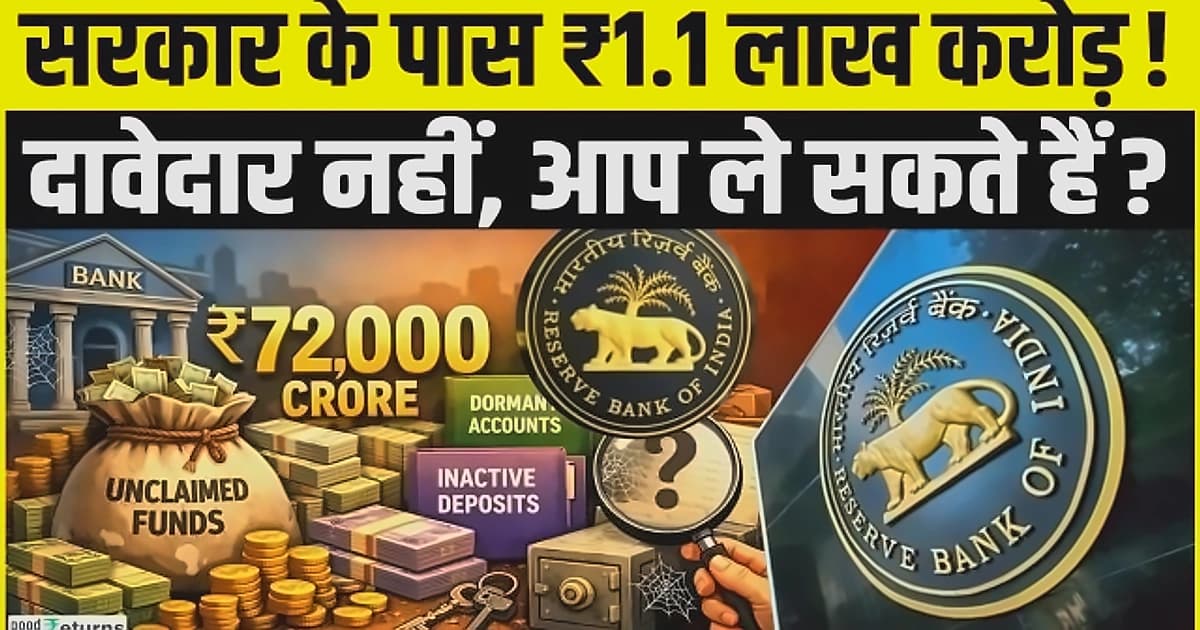
Government data reveals the specific distribution of unclaimed money across different financial sectors. Over ₹83,000 crore is currently parked in unclaimed bank deposits alone, while nearly ₹10,000 crore is linked to unclaimed shares and investments. Additionally, around ₹14,000 crore is tied to inactive insurance policies. These amounts remain unclaimed because account holders passed away, forgot about investments, changed addresses, or their legal heirs never completed the claim process. When no claim is made for several years, the money is transferred to special regulatory funds managed by financial authorities.
The Reserve Bank of India's UDGAM Portal and IEPF Portal serve as key tools for locating and recovering these unclaimed funds. The RBI has introduced initiatives that help people identify forgotten or inactive accounts and submit claims electronically. Last year, RBI, SEBI, and insurance regulator IRDAI jointly launched a nationwide awareness campaign called 'Your Money, Your Right' that reached 748 districts across India and helped return nearly ₹5,777 crore worth of unclaimed assets to rightful owners and legal heirs. Many procedures can now be completed digitally through online portals, though awareness remains low and many families still do not check whether old investments exist in the names of deceased relatives.
Despite digital initiatives, recovery remains complicated due to historical documentation issues. Accounts opened before India's digital banking era present particular challenges as names were recorded differently across documents and PAN-Aadhaar linking did not exist. Even small spelling differences between records can create major verification issues. Claimants often require No Objection Certificates (NOCs) and multiple levels of verification before approval. The biggest complications are seen in accounts without nominees, where legal heirs face long procedural delays requiring consent from other family members and additional legal documents. Financial planners advise families to periodically review their accounts, add nominees, update KYC information, and maintain clear financial records to reduce future complications for legal heirs.