Small-cap mutual funds experienced unprecedented investor interest in August 2026, with record inflows of ₹7,973 crore marking the highest monthly inflow since the Association of Mutual Funds in India (Amfi) began disclosing category-wise data in April 2019. According to Mint, this surge in investor flows appears to be driven by the Nifty Smallcap 250's strong performance, which rose approximately 21% between April and August 2026, significantly outpacing the Nifty 50's 8% gain over the same period. The influx reflects investors' pursuit of small-cap returns, though it comes with important considerations about the sector's inherent volatility. As per Elara Capital, this represents a significant shift as small- and mid-cap funds now account for around 50%-55% of total inflows into actively managed equity funds, a level last seen in 2024.
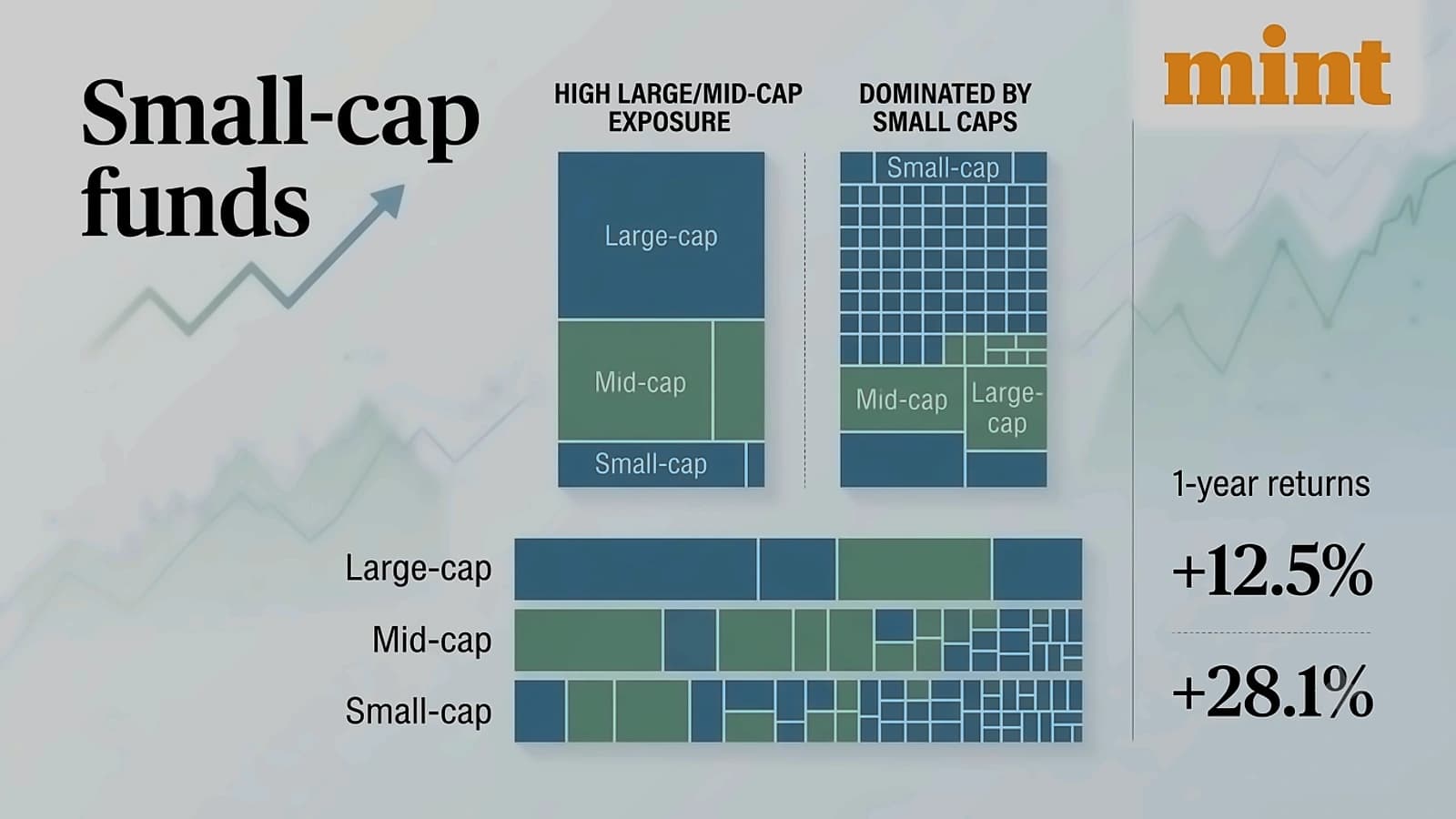
Small-cap mutual funds are required to invest at least 65% of their assets in small-cap stocks, but fund managers have flexibility over the remaining portion of the portfolio. According to reports from Mint, this flexibility allows small-cap funds to have significantly different exposure to larger companies, with wide variations in large- and mid-cap allocations across schemes. The analysis covers the top 10 small-cap funds by assets under management, revealing substantial differences in investment strategies beyond the mandatory small-cap requirement.
Quant Small Cap Fund emerged as the leader in large-cap exposure with 14.90% allocation, followed by Nippon India Small Cap Fund at 14.59%. As reported by Mint, at the other end of the spectrum, DSP Small Cap Fund had no large-cap allocation, while SBI Small Cap Fund maintained only 1.03% exposure. Despite Quant Small Cap's highest large-cap allocation of 14.90%, it delivered a 13.67% return, while DSP Small Cap Fund with zero large-cap exposure achieved the highest return of 17.22% among the 10 funds. According to Elara Capital, the top five small-cap funds have captured around 60% of all small-cap inflows since 2024, highlighting how concentrated investment flows are becoming.
HSBC Small Cap Fund led mid-cap allocations at 23.06%, followed by Kotak Small Cap Fund at 16.84% and Invesco India Small Cap Fund at 16.49%. According to Mint data, SBI Small Cap Fund had the lowest mid-cap exposure at 3.16%, while DSP Small Cap Fund maintained 7.70% mid-cap allocation. Notably, HSBC's relatively high mid-cap allocation of 23.06% coincided with a 12.17% return, demonstrating how mid-cap exposure can contribute to performance. As per Elara Capital, mid-cap funds recorded their fastest pace of new folio additions since July 2025, though the increase was slower than in small caps.
Despite small-cap funds' potential for outperformance, their returns swing far more sharply than large-caps, both up and down. As reported by Mint, the Nifty Smallcap 250 TRI has demonstrated this volatility with calendar-year returns ranging from 72% gains in 2014 to 35% losses in 2011. A rolling-returns analysis shows that one-year holding periods can result in returns ranging from −43% to 136%, with approximately 36% of windows ending in losses. However, the odds improve significantly with longer investment horizons - three-year windows see only 13% of periods ending in losses, while five-year windows have just 2.5% negative returns. According to Ankur Punj from Equirus Wealth, investors who want to allocate to small-caps should consider up to 10% allocation for conservative investors, or 15-20% for more aggressive investors, emphasizing the importance of maintaining asset allocation discipline.