BSE shares climbed 3.14% and Angel One gained 4.8% on Friday as investors reacted to SEBI's announcement of a review of the Closing Auction Session (CAS) framework, with MCX rising 3.3% and Motilal Oswal Financial Services advancing 2.4%. According to The Economic Times, the Nifty Capital Markets index closed 1% higher at 5,420, against the previous close of 5,357.20, as traders responded positively to the regulator's latest circular. Billionbrains Garage Ventures (Groww) gained 2.2% as market participants anticipated potential changes to the CAS mechanism. As per The Financial Express, the regulator's decision to review the closing auction session mechanism has provided significant relief to market players following extreme price swings on derivative expiry days.
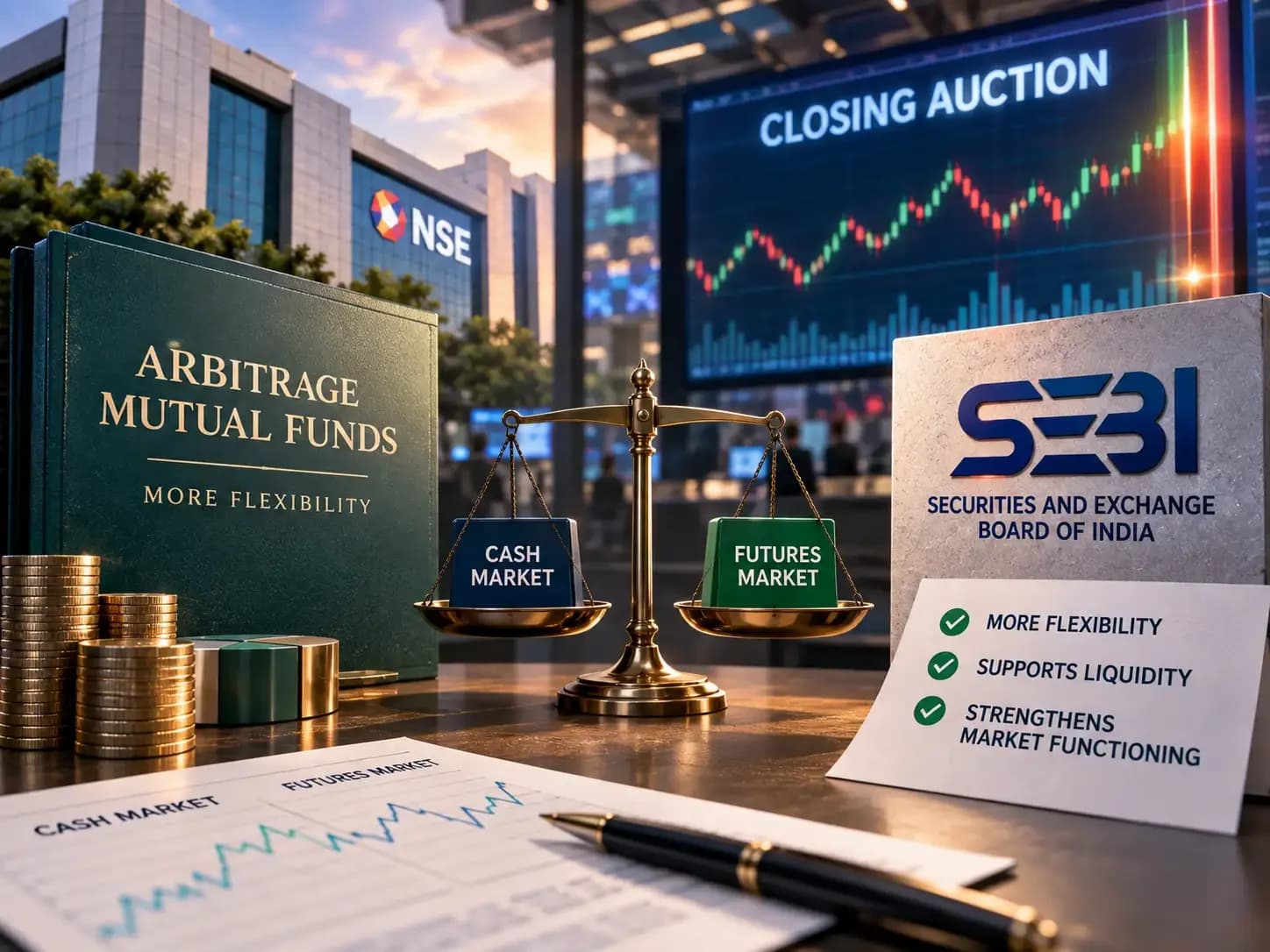
The Securities and Exchange Board of India's (SEBI) introduction of Closing Auction Session (CAS) rules from August 3 has created significant challenges for arbitrage funds, with the Sensex experiencing a sharp 2,100-point drop during the closing auction session on expiry day, causing a massive surge in out-of-the-money put options. According to The Economic Times, erratic settlement prints since August 3 caused option premiums to swing 400-500%, with the August 13 episode, where thin auction-window liquidity allowed a few large orders to move prices sharply, triggering SEBI's interim order against two entities. Under the new CAS framework, the cash market moves into auction session from 3:15 pm to 3:35 pm, while equity derivatives continue trading until 3:40 pm. This fundamental change has disrupted the traditional arbitrage strategy where funds simultaneously buy stocks in the cash market and sell matching futures contracts, with traders reporting sudden option price swings during the auction window.
Following the introduction of CAS, capital-market stocks displayed a sharp divergence in performance over the past month, with Motilal Oswal Financial Services and MCX emerging as the biggest gainers, both rising over 21%. As per The Economic Times, MCX gained 21.66%, moving from ₹2,692.20 on July 31 to ₹3,275.40 on September 4, while Motilal Oswal Financial Services rose 21% with strong capital-market activity and expectations of improved institutional trading volumes. Anand Rathi Wealth rose 6.86% to ₹2,215.90 and Aditya Birla Sun Life AMC gained 4.99% to ₹1,062.30. Central Depository Services (India) was up 4.62%, with its closing price rising from ₹1,333 to ₹1,394.60. However, Indian Energy Exchange, BSE, HDFC AMC, and CAMS experienced significant falls, with losses ranging from around 6% to 10%.

Market experts have proposed comprehensive reforms to address the CAS-related volatility. Rajesh Palviya, head of research at Axis Securities, suggested a hybrid mechanism combining the CAS closing price with the 30-minute volume-weighted average price (VWAP). Such a system, he said, could preserve the liquidity benefits of an auction while reducing distortions caused by dependence on a single closing price. Tejas Shah, head of trading at Equirus Securities, emphasized that since the underlying cash market and derivatives are closely interconnected, aligning their closing times could help curb forced trades and the triggering of stop-loss orders. According to The Economic Times, market participants expect SEBI's consultation paper, due within a week, to reduce reliance on the single CAS print, with a credible fix expected to restore trader and investor confidence by delinking options settlement from the CAS-determined closing. The introduction of CAS had created volatility around expiry-day settlement, prompting some traders and liquidity providers to scale back participation and contributing to a decline in derivatives volumes during August.
While the regulatory changes have created short-term execution challenges, Kumar emphasizes that investors do not need to panic over the situation. As reported by NDTV Profit, the changes require investors to modify their approach and timing to manage volatility effectively. SEBI plans to review the methodology for setting derivative settlement prices on expiry after market participants raised concerns over the new Closing Auction Session, with a consultation paper expected to be issued next week. The regulator will consider delinking derivative settlements from CAS closing prices rather than scrapping the mechanism, with analysts expecting the review to reduce sharp expiry-day swings while curbing extreme volatility without eliminating normal expiry-day market swings. Ravi Singh, chief research officer at Mastertrust, noted that the leaders can sustain momentum if trading volumes, liquidity and investor participation recover, while the underperformers could see a recovery if market volumes, regulatory clarity and company-specific earnings catalysts improve.