According to the July 2026 factsheet, Quant Mid Cap Fund has staged a notable short-term comeback, outperforming its benchmark index over the last 3 and 6 months with returns of 18.18% and 7.07% respectively. However, the fund has underperformed the benchmark over the last 1, 3, and 5 years, with 1-year returns of 1.26% compared to the benchmark's 4.22%. As reported by Mint, the fund has also underperformed the category average across all time horizons, with 3-year returns of 16.95% versus the category average of 20.10%.
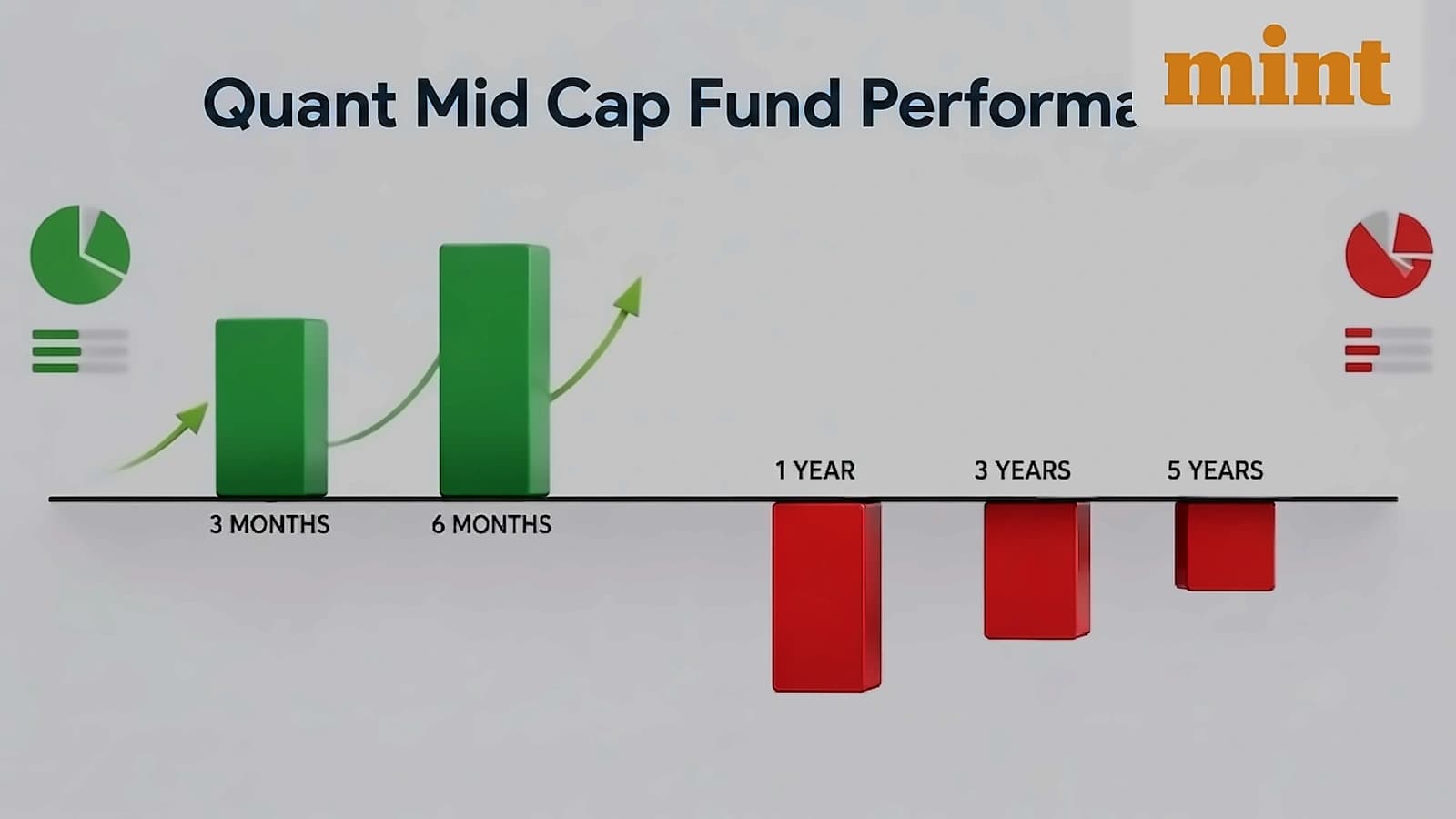
Bharath Rathore, Executive Director at Anand Rathi Wealth, attributed the fund's weaker long-term performance to stock selection and portfolio positioning challenges. According to his analysis, Quant AMC employs a high-conviction and high portfolio turnover approach, frequently reshaping positions based on its investment framework. The fund has reduced exposure to Reliance Industries over the past year while increasing conviction in stocks such as Tata Communications and Aurobindo Pharma. Healthcare, basic materials and technology sectors have emerged as key contributors to the 6-month performance improvement.
Rathore noted that the fund manager change in February 2025 may have contributed to the transition phase, as reported by Mint. He emphasized that such a strategy can underperform when market trends don't favor the fund's positioning but has the potential to generate strong alpha when those positions begin to play out. The expert advised investors to consider reducing exposure only if mid caps become an outsized portion of the portfolio, such as 70-80% of equity allocation.
According to Rathore's analysis reported by Mint, investors should avoid making entry or exit decisions based on recent returns, as this often leads to buying high and selling low. He advised focusing on consistency in rolling returns, sustained alpha generation over the benchmark, improvements in portfolio quality, and stronger risk-adjusted performance through metrics such as the Sharpe ratio and Jensen's Alpha. Recent performance alone should never be the basis for judging whether a mid-cap fund has genuinely recovered, he emphasized.