A compelling example from The Motley Fool demonstrates the power of long-term index fund investing. Investing $25,000 in an S&P 500 index fund in 1960 would have grown to over $20.6 million today without additional investments, solely through reinvesting dividends. This strategy involved no trading in individual stocks, market timing, or complex forecasting - simply time and patience. The Vanguard S&P 500 ETF (VOO) exemplifies this approach, charging just 0.03% annually with minimum investments as low as $1 daily. This historical case proves that complex investment strategies are not necessary for long-term wealth accumulation, as many alternative vehicles come with high fees and elevated tax bills due to short-term trading.

According to Mint reports, investors should prioritize tracking difference over all other factors when considering switching index funds. As explained by Anshi Shrivastava, Head - Personal Finance Training at 1 Finance, an index fund's primary job is to copy a benchmark as closely as possible. Tracking difference measures the gap between the index return and the fund's return over a period, with examples showing funds that underperform their benchmark by 1.5 percentage points annually. The focus should be on consistent tracking errors rather than short-term performance variations. This historical performance data reinforces the importance of tracking accuracy, as funds that consistently fail to replicate benchmarks may indicate structural management problems.
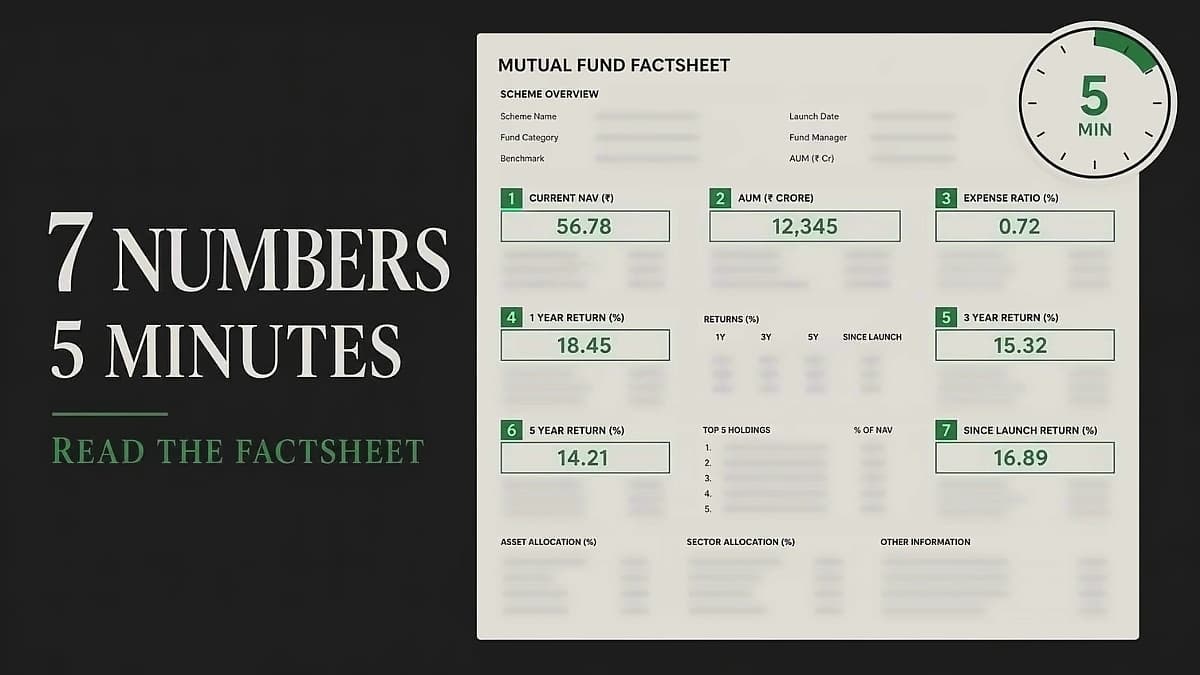
Despite expense ratios being important for index funds, investors should avoid automatically choosing the lowest-cost option. According to Mint analysis, most index funds tracking major benchmarks in India charge 0.05% to 0.4% annually. The difference between funds charging 0.10% and 0.15% amounts to only 0.05 percentage points, which translates to approximately ₹250 annually on a ₹5 lakh investment before compounding effects. As reported by Mint, expense ratios become meaningful only when differences exceed 0.3 to 0.5 percentage points between funds tracking the same index, particularly over a decade or longer. The Vanguard S&P 500 ETF's 0.03% fee demonstrates how minimal expense ratios can significantly impact long-term returns.
While larger funds may offer advantages in trade execution and liquidity, they do not guarantee better tracking processes. According to Mint reports, large AUM funds can execute trades more efficiently and spread rebalancing costs over a larger asset base. However, substantial short-term institutional money can force sudden redemptions, potentially increasing costs and tracking slippage. The analysis emphasizes that AUM should be treated as one factor rather than a quality score, with investors first establishing whether the fund consistently tracks its benchmark well. This approach is validated by historical data showing that AUM size alone doesn't guarantee superior performance, as demonstrated by the S&P 500 index fund's ability to generate massive returns regardless of fund size.
As reported by Mint, switching index funds is not inconsistent with passive investing when done for structural issues or genuine cost advantages. The key distinction lies in the reason for switching - moving from one fund to another because the first fund persistently fails to replicate its benchmark differs from market timing attempts. Shrivastava recommends comparing tracking difference and tracking error across funds tracking the same index over a three-to-five-year period. Consistently trailing benchmarks by wider margins than peers could indicate structural management problems, making switching a prudent portfolio management decision. This philosophy is particularly relevant in today's environment where investors face inundation with complex investment vehicles, while historical data proves that simply sticking with a broad market index fund for decades remains an elite approach to building wealth.