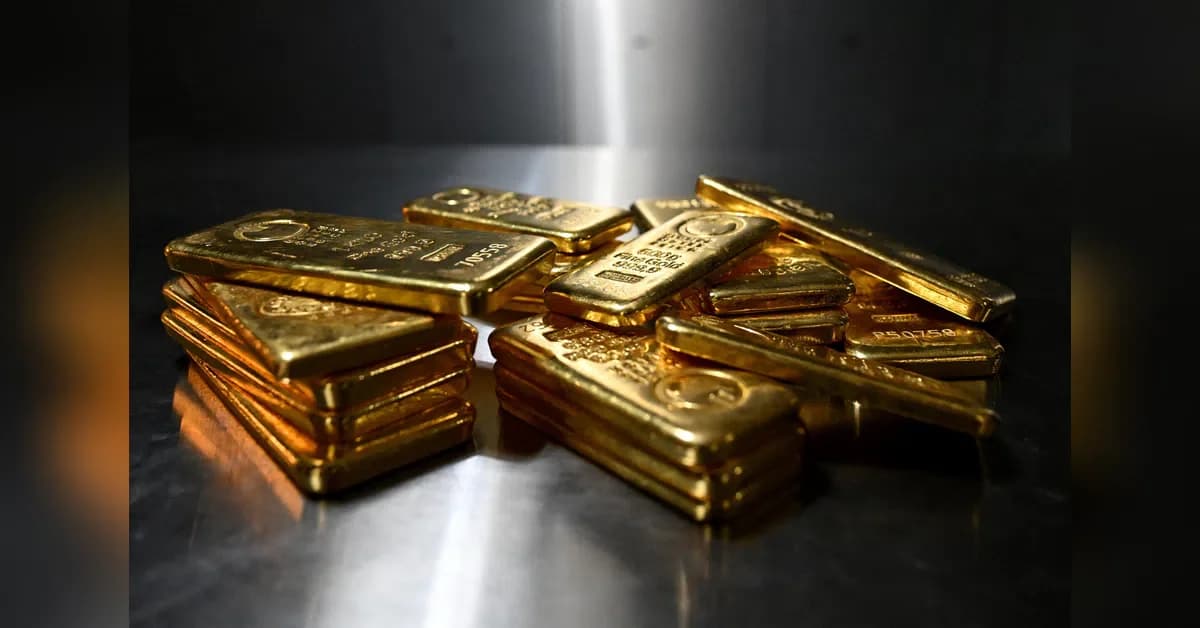
The Finance Ministry has directed bullion-importing banks to furnish detailed information on gold metal loans and loans backed by gold from 2023 onwards, as reported by The Times of India. According to two people familiar with the matter, the Department of Financial Services sought details through a communication sent to banks on Friday evening, requesting information including the value and volume of gold metal loans, customer counts, international gold suppliers, portfolio sizes, collateral amounts and the number of borrowers. Banks were asked to submit the data by Monday, with some instances providing month-wise figures. A senior banker noted that following the increase in import duty on gold to 15% and subsequent restrictions on silver imports, there is a view that further steps could be announced soon. The person added that June and July are typically slow months for gold demand, making the current period suitable for examining policy options.
HDFC Mutual Fund and ICICI Prudential Mutual Fund have implemented caps on certain investment routes in their gold ETFs and gold ETF Fund of Funds (FoF) to manage large-scale corporate inflows amid significant supply chain constraints. According to reports from Mint, ICICI Prudential Mutual Fund will not accept direct transactions from large investors investing ₹25 crore or more in the gold ETF, as per an addendum by the mutual fund. Similarly, HDFC Mutual Fund has restricted lump sum investments in its gold FoF to ₹10 lakh per individual per month. The restrictions come as India's April 2026 gold imports fell to approximately 15 tonnes, near a 30-year low, with banks pausing shipments after an unexpected 3% IGST demand created pricing uncertainty. As reported by Mint, the World Gold Council reported that Q1 2026 was a record quarter for Indian gold ETF demand, with net inflows of 20 tonnes, creating an unusual tension between record financial demand and constrained physical gold sourcing capabilities.
The four major gold ETF managers control substantial assets, with Nippon India Mutual Fund managing ₹55,540 crore, ICICI Prudential Mutual Fund managing ₹26,381 crore, HDFC Mutual Fund managing ₹23,239 crore, and Kotak Mahindra Mutual Fund managing ₹14,340 crore in gold ETF assets, according to Value Research data reported by Mint. As reported by the Association of Mutual Funds in India (AMFI), corporates held 58% of the industry's gold ETF assets, amounting to ₹99,089 crore as of March-end. Industry experts note that large institutional subscriptions made directly with asset management companies can run into crores of rupees, making such flows significant for market dynamics. The restrictions are operational rather than financial, with existing units unaffected and NAV continuing to reflect gold prices normally.

ICICI Prudential Asset Management Company announced on Friday that it has temporarily restricted subscriptions in its gold ETF, stating it will not accept direct subscriptions of more than ₹250 million ($2.63 million) until further notice, as reported by Business Standard. This follows HDFC Mutual Fund's decision on Thursday to restrict lump-sum subscriptions in its gold ETFs, citing market conditions as strong demand for gold amid geopolitical uncertainty drives up inflows into such funds. According to Business Standard, large inflows can be difficult for gold ETFs to absorb during periods of heavy demand. Indian gold ETFs have attracted net inflows of $3.48 billion so far this year, highlighting the unprecedented scale of current investment flows into gold-backed products. During a meeting with the RBI on Monday, industry representatives also raised the possibility of permitting gold exports under specific conditions, with one source suggesting that when domestic demand is weak and discounts are significant, flexibility could be provided to export unsold gold to consuming markets such as China and Turkey.
Industry participants have suggested several measures that could help moderate imports without affecting supply, as reported by The Times of India. A bullion trade body has proposed that banks use gold bars refined from dore instead of importing fresh gold for issuing GMLs to jewellers, with dore being processed by domestic refineries before conversion to refined bars. An industry executive noted that gold exchange-traded funds (ETFs) could purchase bars refined from dore rather than imported gold, which would help reduce import dependence. Additionally, the industry has floated proposals including restricting cash purchases of gold, creating mechanisms to channel household bullion holdings into the system through structures similar to GMLs, reserving a portion of imported gold for exporters on the lines of the 2013 80:20 scheme, and reviewing the existing consignment model. Despite a lower import volume of 721 tonnes compared with the previous year, India's gold import bill rose 24% to a record $71.9 billion in 2025-26, with the dozen banks involved in gold imports either borrowing gold from international lenders or procuring it from overseas banks under consignment arrangements.