While 1 per cent exit load appears significant, it typically costs investors far less than 20 per cent short-term capital gains tax on redemptions. According to recent market analysis, the tax burden often exceeds the exit load charges by a substantial margin. This discrepancy highlights the importance of understanding the different costs associated with mutual fund redemptions. The exit load is calculated as a percentage of the redemption value, with the most common rate being 1 per cent, though it can vary between 1-2% for equity funds and may not apply to debt funds or overnight funds.
Exit loads are typically structured as a percentage of the redemption amount, with the most common rate being 1 per cent. As reported by market analysts, these charges are usually applied when investors redeem their mutual fund units within a specified timeframe, such as within the first year of investment. The exit load is calculated based on the current value of the investment, not the initial investment amount. Using a practical example, if an investor redeems ₹1,00,000 worth of units at an NAV of ₹110 with a 1% exit load, the fund will deduct ₹1,100 as the exit load, leaving the investor with ₹98,900 in redeemed value. Not all schemes charge exit loads, and the structure may differ from scheme to scheme, with information available in the Scheme Information Document (SID).
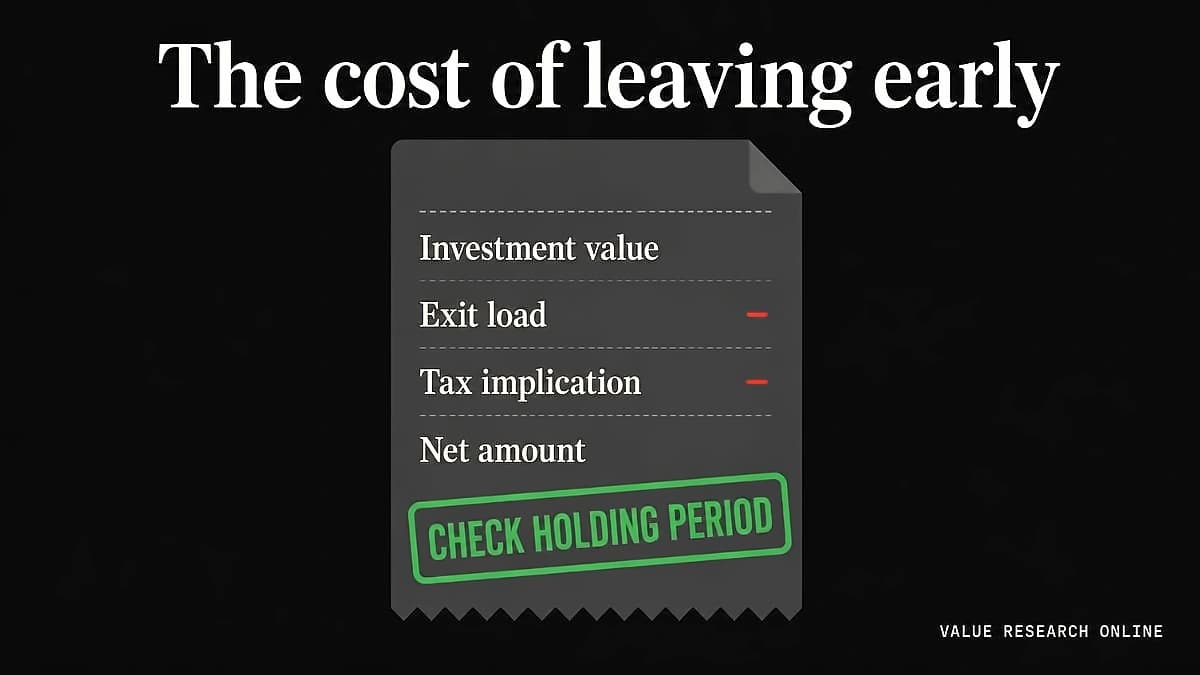
The 20 per cent short-term capital gains tax applies when investors redeem mutual fund units within one year of purchase. According to tax experts, this tax burden can significantly exceed the exit load charges, making it the more substantial cost for investors. The tax is calculated on the capital gains realized from the fund's sale, creating additional financial impact beyond the exit load. For example, if an investor redeems ₹1,00,000 worth of units at an NAV of ₹110 after 12 months, there would be no exit load but the investor would still face capital gains tax on the ₹1,10,000 investment value.
Investors should carefully evaluate both charges when planning mutual fund redemptions, with tax considerations often taking precedence over exit load charges in determining the overall cost of redemption. The analysis suggests that understanding the tax implications and exit load structure can help investors make more informed decisions about timing their fund exits. Mutual fund investors should adhere to the minimum holding period specified by the mutual fund scheme to avoid paying exit loads, as these fees are used to cover the fund's expenses and can vary depending on the type and term of the investment. The exit load may differ for systematic investment plans (SIPs) since each SIP investment is treated as a fresh purchase, requiring separate consideration of the SIP exit load structure.