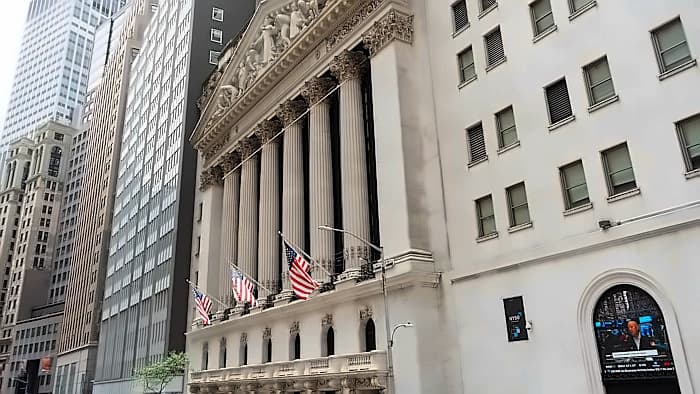
A handful of fund managers are betting that exchange traded funds run by AI stock-picking models can crunch data quicker and make better investment decisions than humans, even as many people remain wary or fearful of artificial intelligence. According to reports from The Hindu BusinessLine, so far, fewer than half-a-dozen ETFs, collectively managing only about $30 million of the ETF industry's nearly $17 trillion in assets, rely solely on AI-powered bots to control everything from research to stock selection. While that represents a tiny fraction of the industry, 91% of asset managers surveyed by Mercer reported plans to increase their use of AI-based portfolio management tools this year. However, new research from G2 reveals that while AI agents are showing real signs of value, much of it is being erased by oversight, rework, and exception handling.
The performance of funds that rely solely on AI to generate returns shows they are beating the market, even if their track records stretch back only a few months. According to The Hindu BusinessLine, Tal Schwartz's High Conviction US Equity AI-Managed ETF is up 2.7% since its August 21 launch, beating the 1.1% gain for the S&P 500 index in the same time frame. Two funds launched by Israeli asset manager FinQ in February have handily beaten the 11% gain by the S&P over that time frame, with the dollar-neutral US Large-Cap AI-managed ETF soaring 25.35% and the version without currency hedge 23.98% higher since inception.
Other firms have rolled out AI-enhanced ETFs, which use AI to undertake quantitative analysis, analyse stocks or monitor risk. As reported by The Hindu BusinessLine, David Wright, head of quantitative investments at Pictet Asset Management, launched the Pictet AI Enhanced US Equity ETF in February, which has attracted $163 million in assets and posted gains of 14.8%, compared to 11.4% for the S&P 500. Wright compares using AI in the investment process to using a plane's autopilot functions, noting that while the autopilot may be able to take off, cruise and land with no humans involved, he wouldn't go on a plane that didn't have a pilot. According to G2's Chief Innovation Officer Tim Sanders, an agent's ability to do work is no longer creating the bottleneck to adoption; it's now formed when organizations don't trust agents to complete the work. Absent trust, agents are limited to isolated use cases and are slowing the market's move into mainstream adoption.
Despite promising performance, advisers and analysts said the funds' short track records and above-average fees may limit investor interest. According to The Hindu BusinessLine, Jeff Judge, a financial adviser at Chesapeake Financial Planners, noted that advisers are comfortable with AI that informs decisions and uneasy with AI that makes them, adding his clients are not clamoring for this approach. Todd Sohn, ETF analyst at Strategas, emphasized that proof that this approach works will really come down to who can thoughtfully manage risk and ride out a down market. The industry appears to be taking a cautious approach, with asset managers focusing on AI-enhanced rather than fully AI-managed funds, reflecting concerns about extreme market events and the need for human oversight. As G2 notes, for agents to cross the mainstream adoption chasm, pragmatists need real proof of credibility — not more marketing promises, but repeatable results in real workflows and the controls that make autonomy safe to extend.