
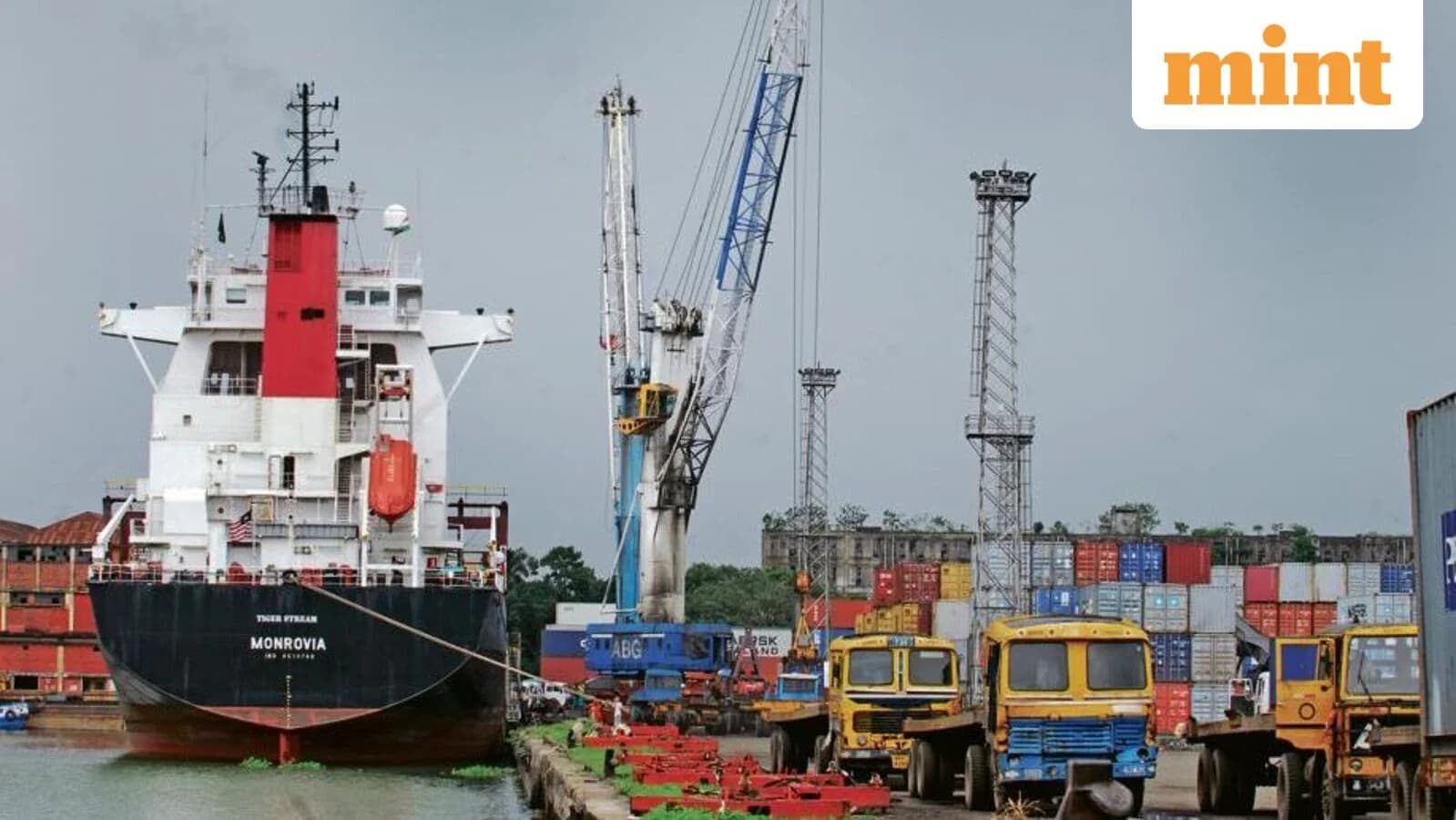
The closure or suspension of shipping through and around the Strait of Hormuz has left consignments stranded at transhipment hubs or stuck in domestic warehouses, tightening liquidity at a time when margins are already thin. According to industry representatives, this disruption follows months of pressure from steep US tariffs of up to 50%, imposed between August 2025 and February 2026. While the US administration cut tariffs to 18% after India signed an interim arrangement with Washington on 6 February and later to 10% after the US Supreme Court struck down President Donald Trump's reciprocal tariffs, exporters say the relief has been offset by rising freight and insurance costs, along with transit uncertainty due to the West Asia conflict. The current conflict, involving nation states, has again led to diversion of vessels, adding 10-15 days to transit times and raising logistics costs by an estimated 30-50%. This marks the second major disruption linked to West Asia since the Red Sea crisis of late 2023.
Industry body India SME Forum, representing about 97,000 MSMEs, estimated that a week-long disruption could affect export orders worth around ₹8,500 crore, equivalent to roughly 13% of the country's monthly non-oil exports. As reported by Mint, Vinod Kumar, president of the forum, warned that if disruptions persist beyond three months, exporters could face 10-20% order cancellations, inventory pile-ups and potential job losses of 100,000-200,000 workers in export clusters. For MSMEs, accounting for about 45% of India's total exports, any prolonged instability threatens not just margins but order continuity. Sushma Morthania, director at Shezar Technologies, which exports electronic components worth around ₹50 lakh each month, noted that storage constraints make it costly for smaller firms to hold finished inventory, with nearly 40% of her shipments going to West Asia, Europe, and parts of Latin America via Dubai's Jebel Ali Port. The conflict has introduced fresh volatility for livestock traders, with Divya Kumar Gulati, Chairman of the Compound Livestock Feed Manufacturers Association, noting that Iran is a major global exporter of urea, shipping roughly 4.5 million tonnes annually, and even without physical damage to production facilities, market nervousness could push prices up by $50–$60 per tonne, raising input costs for farmers cultivating feed crops.
India is facing potential shortages of gold and rough natural diamonds as supplies routed through Dubai are disrupted by the closure of UAE airspace following escalating regional tensions after US and Israeli strikes on Iran. The Gulf trading hub serves as India's largest supplier of rough diamonds and second-biggest source of gold bars, representing a critical artery for the world's biggest bullion-consuming nation. India imports 800-850 tons of gold annually, with as much as 50-60% flowing in via Dubai, alongside a dominant share of the rough stones that feed its vast polishing industry. In calendar year 2025, India imported gold bars worth $16,476.98 million, up by 28.47% compared to 2024. Kirit Bhansali, chairman of the Gem & Jewellery Export Promotion Council (GJEPC), warned that if the supply of rough diamonds and bullion comes to a halt, workers will suffer as there will be no work for them, with exports to Dubai also taking a beating. India cuts and polishes 9 out of 10 diamonds available globally, with Surat, the diamond cutting and polishing hub, employing around 1 million people. Recent market developments show gold prices rallying to $5,278 per ounce internationally, with domestic markets also experiencing significant increases, reflecting the broader geopolitical tensions affecting precious metals trading globally.
West Asia and North Africa remain a key trading region for India, with India–GCC bilateral trade standing at $178.56 billion in FY25 (exports: $56.87 billion; imports: $121.68 billion), accounting for 15.4% of India's total global trade of about $1.16 trillion. The UAE is India's largest GCC trading partner, followed by Saudi Arabia, with trade driven by energy imports, gems and jewellery, machinery, electronics, and food products. India–Iran bilateral trade totalled about $1.68 billion in FY25, with India's exports at $1.24 billion and imports at $0.44 billion. The region also remains a key source of foreign direct investment, with cumulative inflows exceeding $28 billion by late 2024. India's engineering exports to the UAE reached approximately $8.28 billion in FY25, accounting for nearly 7% of the country's total engineering exports of $116.67 billion. India's livestock exports to the MENA region are estimated at $2.3–$2.5 billion in FY25, supported by record global buffalo meat sales of about $4.06 billion.
Sushma Morthania, director at Shezar Technologies, said some buyers placed orders on hold for at least a week ahead of the conflict, adding that storage constraints make it costly for smaller firms to hold finished inventory. Anant Srivastava, President of the Home Textile Welfare Association (HEWA), said the conflict has come at a particularly sensitive time for exporters, noting that the festive and peak summer sales season is underway, with textile and home textile exporters executing large volumes of shipments. He warned that any disturbance around the Strait of Hormuz, along with disruption at key regional ports such as Jebel Ali and Ashdad, could affect trade flows, with even a two-week extension in transit time pushing freight costs up by 25–30%. Motilal Oswal Midcap Fund Direct-Growth reports that exporters should exercise caution before dispatching shipments, with S C Ralhan, President of the Federation of Indian Export Organisations (FIEO), noting that air routes are being altered and maritime trade through the Red Sea and key Gulf straits faces heightened uncertainty. The current US-Iran escalation marks a shift from proxy-level disruption to direct state confrontation, which raises the stakes for global trade and energy corridors. Meanwhile, both gold and silver prices may show volatility as the Middle East conflict involving renewed US and Israeli military action against Iran continues to dominate global risk sentiment, with recent market data showing significant increases in precious metals pricing.
MSMEs contribute about 30% of the country's gross domestic product (GDP) and over 45% of exports, which, in volume terms, stand next only to agriculture, according to the Small Industries Development Bank of India (SIDBI). For MSMEs, accounting for about 45% of India's total exports, any prolonged instability threatens not just margins but order continuity. The conflict involves nation states, which have both the capacity to sustain hostilities and the incentive to contain economic fallout, making the situation more complex than previous disruptions. Industry executives emphasize that even short-term disruptions can strain cash flows, delay payments, and unsettle production schedules, with several countries calling for restraint and peace as a potential solution to the escalating tensions. The situation is particularly challenging for MSMEs given their limited diversification options and the need to maintain cash flows and production schedules, with Pankaj Chadha, President of EEPC India, noting that if the conflict stretches for weeks, it could deliver a significant jolt across multiple segments.