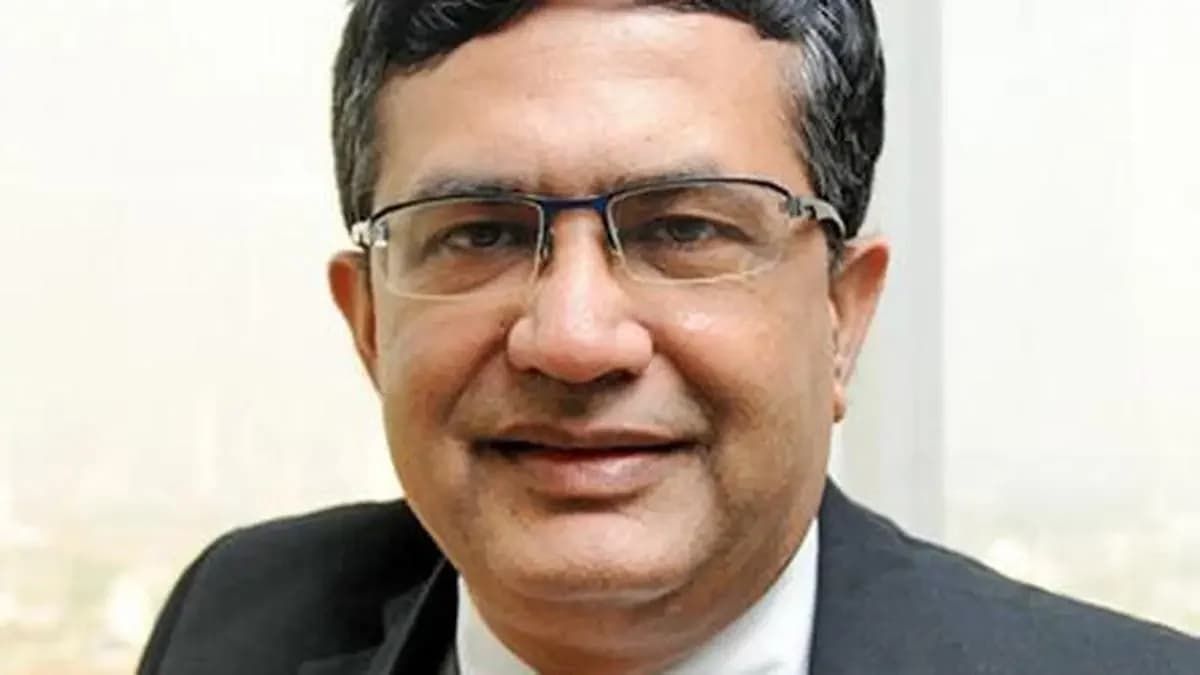
National Stock Exchange (NSE) Managing Director and Chief Executive Ashish Chauhan urged startups and micro, small and medium enterprises (MSMEs) to utilize capital markets for business scaling during the JITO Incubation and Innovation Foundation's (JIIF) Foundation Day event at the NSE. According to reports from The Hindu BusinessLine, Chauhan emphasized that public listing allows founders to raise growth capital while retaining control of their businesses, contrasting this approach with traditional methods where entrepreneurs typically approach banks or private investors who may seek business involvement. "Your business is in your operations, not in the share price. The stock market is only a reflection of your business, it is not the business itself," Chauhan stated, advising founders not to be distracted by daily stock price movements.
As reported by The Hindu BusinessLine, Chauhan explained that listing provides entrepreneurs with 75% ownership retention while offering 25% to the market initially, with the ability to increase market participation later. The NSE MD highlighted that public markets offer greater visibility, attract analyst coverage, improve credibility with lenders and customers, and help attract talent. He noted that compliance requirements increase after listing but should not be viewed as a burden as long as businesses function fairly. "When you list, you keep 75 percent with yourself and offer 25 percent to the market in the beginning. You can give more later. Control stays with you," Chauhan explained, addressing concerns about dilution and ownership control.
According to Chauhan's remarks reported by The Hindu BusinessLine, profitable businesses can command market capitalizations that private balance sheets cannot match. A company earning ₹2 crore annually could potentially achieve a market capitalization of ₹40-50 crore once listed, providing promoters with room to raise capital, bring in partners, and expand operations. He described listed shares as a company's own currency, capable of being used for acquisitions, partnerships, pledging for funds, and employee stock option programs. "If you are doing a business of ₹10 crore or ₹20 crore, you should be planning for ₹200 crore and beyond," Chauhan advised, emphasizing that listing can become a platform for scale provided the underlying business is strong.

As reported by The Hindu BusinessLine, JIIF chairman Jeenendra Bhandari noted that MSMEs have historically viewed public listing as a distant ambition rather than a practical growth tool. He emphasized that listing provides growth capital, sharper governance, and lasting credibility while maintaining promoter control. According to Bhandari, companies listed on NSE's SME platform since its 2012 launch have collectively raised more than ₹21,700 crore and maintain a combined market capitalization exceeding ₹2 lakh crore. The JITO Incubation and Innovation Foundation has completed four incubation cohorts over the past two years and facilitated more than ₹60 crore in startup investments. On liquidity concerns, Chauhan acknowledged that generating trading volume is not the company's responsibility and pointed to the market maker mechanism, under which two-way quotes are provided for three years.
The advocacy comes as NSE filed its draft red herring prospectus for an offer-for-sale of 14.89 crore equity shares or nearly 8% of its shareholding for its long-awaited initial public offering. As reported by The Hindu BusinessLine, Chauhan advised founders not to be distracted by daily stock price movements, emphasizing that business operations are the primary focus rather than share prices. He noted that while SME business models carry higher risk than main-board companies, well-run SME companies can scale quickly, and investors understand the risk-reward trade-offs in the segment. Chauhan addressed takeover concerns, stating that "promoters remain in control and that ownership cannot change against their wishes," while acknowledging that SME businesses carry higher risks than larger mainboard companies but investors understand the risk-reward balance in the segment.