India and the European Union have signed a landmark Free Trade Agreement on December 16, 2026, in Brussels, marking the conclusion of negotiations that resumed in June 2022 and concluded in January 2026. The India-EU FTA is expected to become operational in early 2027, subject to completion of the requisite approval processes. Director General of Foreign Trade (DGFT) Lav Agarwal has now urged industry associations to move beyond awareness-building and work with the government to convert market access into actual exports. Speaking at the Confederation of Indian Industry's National Manufacturing Conclave, Agarwal emphasized that while India has opened up markets globally through trade agreements, the challenge now is to translate these FTAs into action on the ground. He specifically highlighted that Indian industry did not show the same enthusiasm as UK industry in understanding market access after the India-UK agreement, with fewer Indian representatives seeking discussions with DGFT compared to UK government and industry representatives.
The India-EU FTA provides preferential/duty-free access for over 99% of Indian exports by trade value to the EU, with India progressively reducing or eliminating tariffs on around 96.6% of EU import lines/value over time. The agreement covers 144 services sectors and sub-sectors, with benefits particularly for labour-intensive sectors including textiles, leather, footwear, gems and jewellery, and marine products. European firms are expected to gain better access to India's market in sectors such as chemicals, pharmaceuticals, machinery, medical devices and automobiles. The FTA can strengthen the broader India-EU Strategic Partnership by promoting cooperation in trade, investment, technology, clean energy and resilient supply chains, helping India diversify export markets amid increasing global protectionism and tariff uncertainty.
Indian firms have historically utilised only 20-30 per cent of available FTA tariff preferences, highlighting significant implementation challenges, according to Sangeeta Khorana, professor of international trade policy at Aston Business School, UK. The implementation challenge was also highlighted by Khorana, who noted that "Negotiation is not an outcome. It's the implementation which will be the outcome" and that MSMEs would need to work with associations and the government to build capacity to use tariff preferences and enter European value chains. Kate Foster, international affairs and trade policy lead at the Federation of Small Businesses (FSB), UK, said exporters would have to account for compliance requirements across the EU's 27 member states, with EU regulations evolving in areas such as sustainability, supply-chain transparency and due diligence.
The government is preparing MSMEs through the Export Promotion Mission, which has 11 schemes focused on MSMEs, first-time exporters and labour-intensive sectors. According to DGFT Lav Agarwal, the mission covers areas including export finance, market intelligence, logistics efficiency, inland export support and compliance with international trade agreements. The DGFT has funds available under the Export Promotion Mission and has urged industry associations to take these components to the grassroots level. Agarwal suggested combining the Export Promotion Mission with the Districts as Export Hubs initiative, which aims to turn every Indian district into a centre for global trade. Currently, 10 states account for around 85% of India's total exports, while 15 states account for around 95%, with 10 districts contributing around 35% of total exports. At the district level, Jamnagar alone accounts for around 8.29% of total exports, while Kanchipuram and Pune contribute around 5.98% and 6.57% respectively.
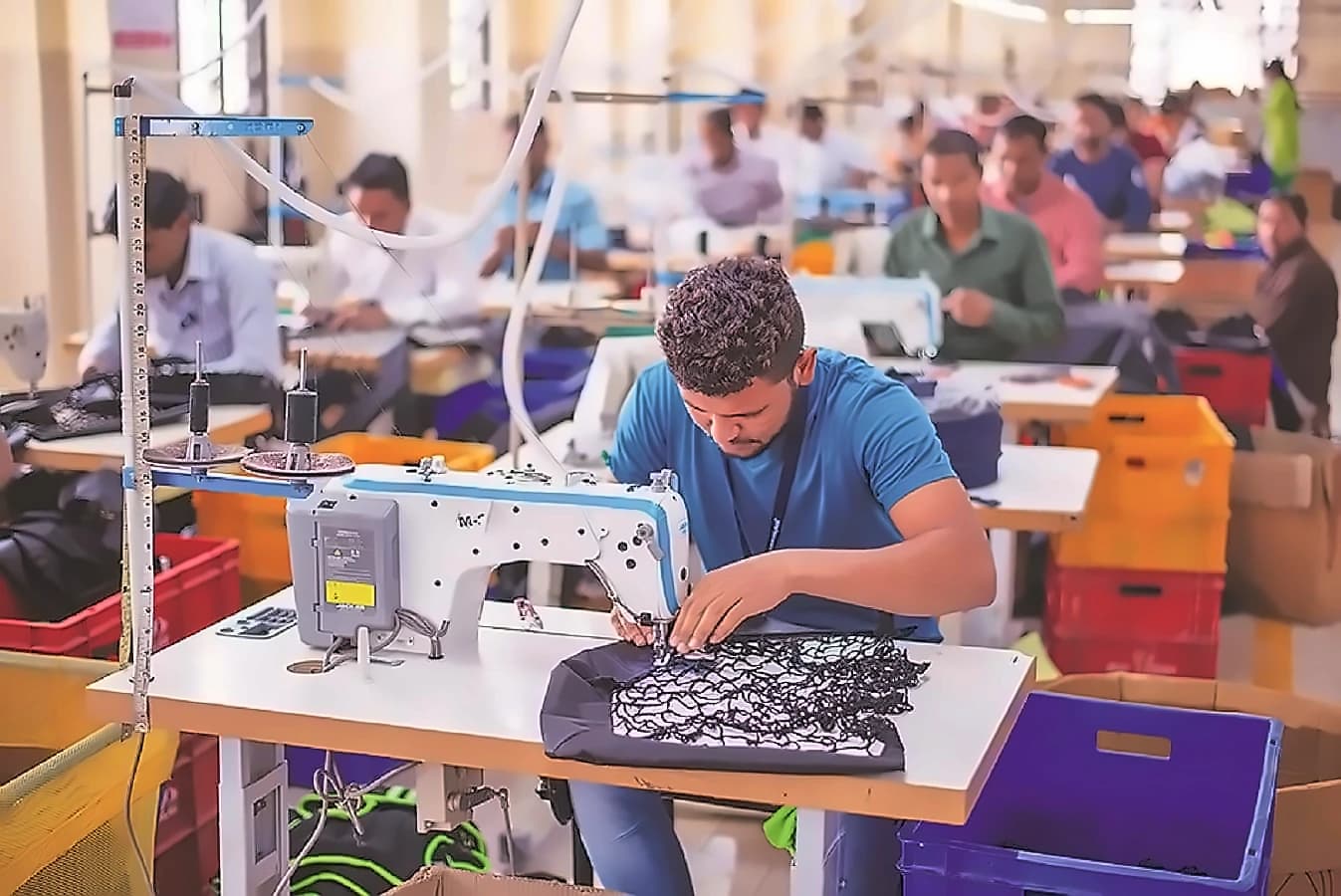
The agreement provides significant market opportunities for Indian exporters, particularly in apparel and leather sectors, according to Carmine Soprano, economist at Tor Vergata University of Rome. The EU imports around €80 billion of garments and apparel annually, but only around 6 per cent of those imports come from India, compared with 17 per cent from Bangladesh. Similarly, India's share of EU leather imports is also around 6 per cent, compared with 23 per cent for Vietnam. Soprano said the FTA could help address the competitive disadvantage faced by India following the phase-out of the EU's Generalised System of Preferences for India. The FTA can help India diversify export markets amid increasing global protectionism and tariff uncertainty, though it also brings challenges including increased competition from European imports and the need to improve India's infrastructure, logistics and export competitiveness.