On June 12, 2026, SpaceX made its historic debut on the Nasdaq, becoming the largest IPO ever with a valuation of around ₹1.77-1.8 trillion. The company sold 556 million shares at ₹135 per share ($135 USD), raising approximately ₹6,25,000 crore ($75 billion). According to latest reports, the IPO process started after the S-1 filing in May 2026, with proceeds going directly to SpaceX for growth initiatives without any Offer For Sale component. The subscription frenzy led to total orders reportedly exceeding ₹25,000 crore (3-4x oversubscribed in some categories), with retail allocation set at up to 30% of the offering - unusually high for such a large IPO. The company's shares began trading under the ticker SPCX on both the Nasdaq and Nasdaq Texas exchanges, with trading starting later in the day due to standard IPO procedures.
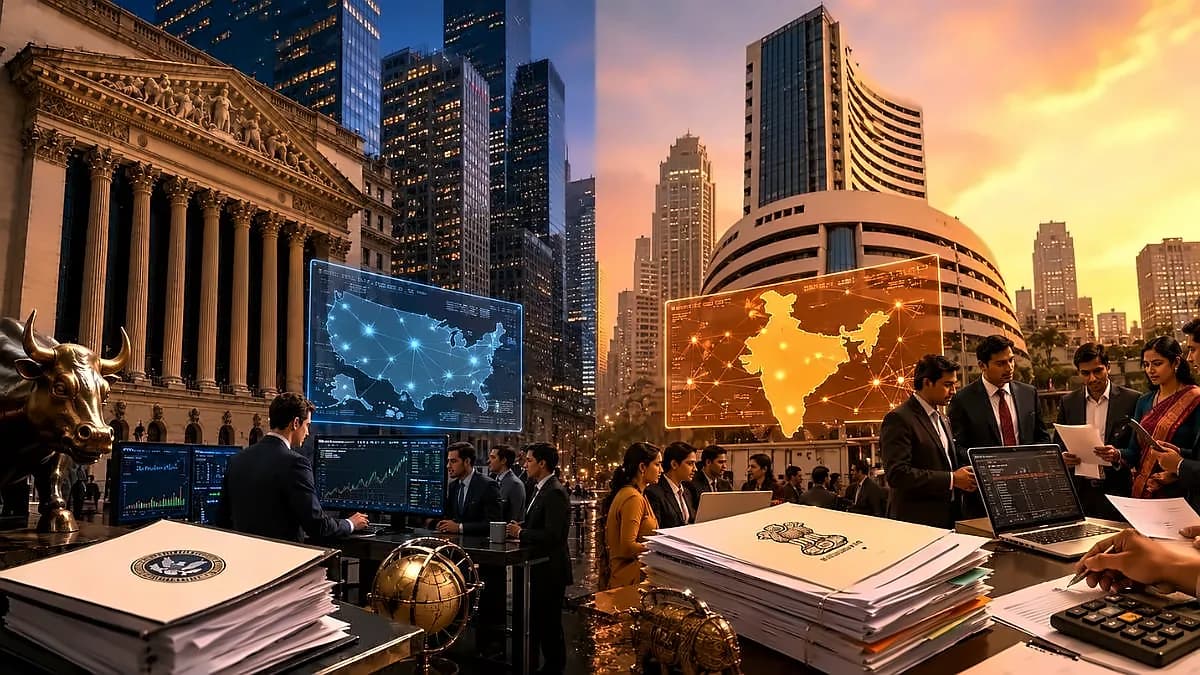
The fundamental difference between US and Indian IPO processes lies in how companies handle new issue risk. According to The Financial Express, in the US, merchant bankers purchase shares and assume all risk, while in India, companies directly allot shares to investors. Subhayu Sen, Partner at Khaitan & Co, explained that "in America, what they do is the merchant bankers first buy the shares and take them on their books and then sell the shares to the investors. So the entire risk is passed on to the merchant bankers. Meanwhile in India, the risk doesn't pass on to the merchant bankers. The risk is entirely upon the company." This structural difference creates different liability frameworks for market participants.
The regulatory environment presents stark contrasts between the two markets. As reported by The Financial Express, the US relies on no-action letters from the SEC, which provide regulatory clarity for certain practices. Sen noted that "no-action letters imply that SEC won't take any action against the company. From the 1970s till now, there have been a very limited number of no-action letters, maybe 50 odd in maybe 50 years." In contrast, India operates under a more dynamic regulatory regime where laws change regularly, with regulators evolving with market conditions. According to the report, "Indian regulators are trying to evolve with times," while US regulators benefit from decades of experience and established frameworks.
The scale of investor participation varies significantly between the markets. According to The Financial Express, Geoff Dennis, an independent emerging markets expert, explained that "the main difference between the IPO process in US and in India relates to the much larger size of the pool of investor money in the US." He noted that "the US equity market has shrunk on an annual basis with share buybacks exceeding new issuance," but this trend is expected to change with major IPOs like SpaceX and OpenAI. The report highlights that "the US equity market has shrunk on an annual basis with share buybacks exceeding new issuance. This will change this year with the huge IPOs already announced by SpaceX and OpenAI, with more likely to follow."
Indian investors can access SpaceX shares through multiple channels despite regulatory restrictions. According to latest reports, Indian investors can open accounts with platforms providing access to US stock markets or SEBI-compliant international investing platforms. Investments are generally made under the Liberalised Remittance Scheme (LRS), which currently allows resident individuals to remit up to ₹2 crore per financial year for investments. An investor needs a PAN card, KYC-compliant account, and eligible banking channel to remit overseas. Overseas investments may attract Tax Collected at Source (TCS) under applicable tax rules, and capital gains or dividend income may have tax implications in India. Indian investors may also gain indirect exposure through mutual funds, international funds, or exchange-traded funds (ETFs) that hold SpaceX shares after listing.