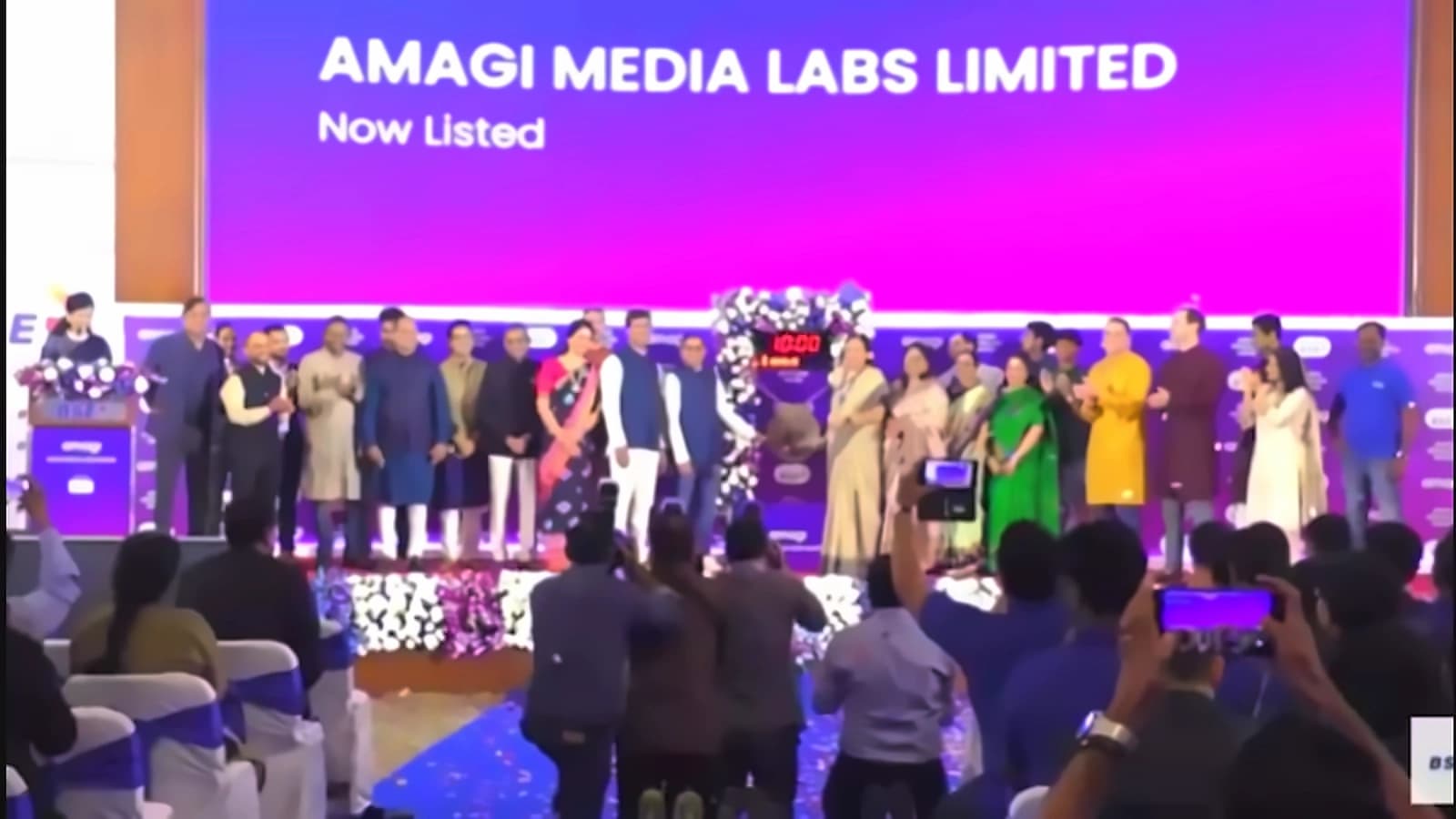
AceVector shares surged 20% to a new high of ₹31.11 on October 7, 2026, after Goldman Sachs sold its stake in the company. The stock was locked in the 20% upper circuit limit amid large volumes, marking a dramatic turnaround from its weak debut performance. According to bulk deal data, Goldman Sachs Bank Europe SE offloaded 32.17 lakh shares (0.59% of paid-up equity) for ₹9.61 crore at ₹29.88 per share. The stake sale was out of Goldman Sachs's 1.56% holding in AceVector as of September 2026. This contrasts sharply with the company's weak debut on October 5, 2026, when shares opened at ₹26.08 on NSE and ₹28.30 on BSE, representing an 18.5% decline from the issue price of ₹32.
The ₹420 crore IPO demonstrated robust investor interest, achieving 4.93 times oversubscription by the close of bidding. According to NSE data, the issue garnered bids for 36.61 crore shares against 7.42 crore shares on offer. The retail portion was subscribed at 4.62 times, QIB category at 3.38 times, and non-institutional investors at 8.16 times. The IPO, which opened for subscription on September 25 and closed on September 29, was priced in the ₹30-32 per share band and available in a lot size of 468 shares requiring a minimum investment of ₹14,976. The ₹420 crore IPO comprised a fresh issue of equity shares worth ₹287 crore and an offer-for-sale (OFS) of 4.16 crore shares aggregating to ₹133 crore at the upper end of the price band.
SoftBank-backed Starfish I Pte Ltd emerged as the biggest beneficiary among selling shareholders in AceVector's ₹420 crore initial public offering, securing approximately ₹88.3 crore through the offer-for-sale component. According to AceVector's red herring prospectus, Starfish, AceVector's largest shareholder, sold 2.76 crore shares at the IPO's upper price of ₹32 per share, accounting for roughly two-thirds of the total OFS proceeds. The company also successfully raised ₹189 crore from anchor investors by allotting 5.9 crore shares at ₹32 apiece, the upper end of the price band. Negen Undiscovered Value Fund received the largest anchor allocation with 1.25 crore shares worth ₹40 crore, while Singularity Growth Opportunities Fund II was allotted 84.37 lakh shares worth ₹27 crore.
Negen Capital Services has increased its stake in AceVector to nearly 4.5% through strategic open-market transactions on October 5. According to bulk deal data, Negen Capital Services bought 1.18 crore equity shares, representing 2.17% of AceVector's paid-up equity, for ₹29.78 crore at a price of ₹25.12 per share. The Neil Bahal-founded fund had already held a 2.3% stake in AceVector before its listing, taking the total stake to 4.47% following the latest acquisition. Negen appears to have used the correction in AceVector shares to increase its exposure to the company, as the stock plunged 18.5% on its listing day. Meanwhile, Leading Light Fund VCC – The Vintage sold 50.26 lakh shares for ₹12.61 crore at ₹25.09 per share, while Necta Bloom VCC and Regal Fund each sold 30.42 lakh shares for ₹8.61 crore through Necta Bloom One, and IDFC First Bank offloaded 35.32 lakh shares for ₹10 crore at ₹28.32 per share.
AceVector reported a consolidated net loss of ₹60.7 crore in FY26, representing a 64% narrowing from ₹139.2 crore in FY25, while revenue from operations rose 29.2% to ₹510.4 crore from ₹395 crore. The company demonstrated strong revenue growth momentum with 15.9% CAGR over FY24-FY26, driven by 40.5% CAGR growth in its high-margin SaaS vertical. Adjusted EBITDA loss narrowed to ₹16 crore in FY26 from ₹27 crore in FY24. The fresh proceeds from the offer are earmarked for funding a portion of the marketing and business promotion expenses of the company's Marketplace business, along with technology infrastructure costs.
AceVector operates an asset-light digital commerce ecosystem through its subsidiaries, spanning data, technology, and AI-driven businesses. Its three core business engines include value e-commerce marketplace Snapdeal, e-commerce enablement SaaS Unicommerce, and consumer brands Stellaro Brands. In an IPO review note, SBI Securities noted that future growth depends on Tier 2+ penetration, AI search enhancements, SaaS client expansion, and retail store rollouts. However, the brokerage cautioned that persistent losses, intense industry competition, and complete reliance on 3PL logistics remain key concerns for investors. According to Pocketful's Sarvam Goel, the company is approaching free cash flow positive with expanding margins as the business consolidates.