Orient Cables (India) Limited opens its IPO on September 25, 2026, with a price band of ₹258–₹272 per share and a total issue size of ₹552 crore. The issue is split into two parts, an offer for sale of ₹232 crore and a fresh issue of ₹320 crore. For investors scanning the cable and connectivity space, this one deserves a closer look; not just because of the headline growth numbers, but because of what lies beneath them.
The business: more than just wires
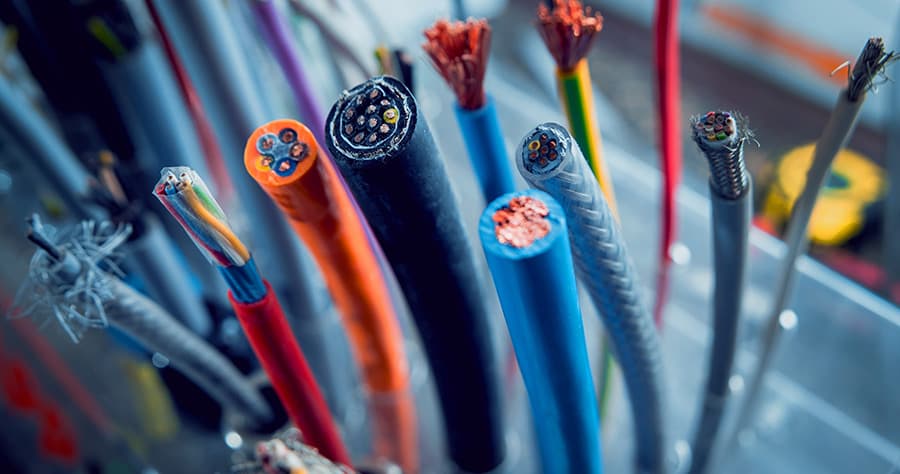
Founded in 2005 and operational since 2006, Orient Cables is a New Delhi-based manufacturer of networking cables, optical fiber cables, power cables, and allied connectivity products. What started as a networking cable play has steadily evolved into a diversified cable solutions company, now venturing into E-Beam cables, solar junction boxes, and tethered drone harnesses.
The company's customer profile is telling. It supplies to 2 out of the top 3 telecom companies in India by revenue (as of FY26), alongside broadband providers, data centres, government entities, and resellers. It has also built an international footprint spanning 8 countries, and its products are cost-competitive against Chinese imports; a meaningful advantage in both domestic tenders and export markets.
On the certification front, Orient Cables was the first in India to receive BIS certification for symmetrical pair/quad cables for digital communications, and holds internationally recognised UL and ETL approvals. These aren't just badges; they are barriers to entry that protect the company's positioning in regulated and institutional procurement.
Riding the right wave
The timing of this IPO is not accidental. India's digital infrastructure buildout; driven by 5G rollouts, BharatNet, data centre expansion, and smart city projects; is creating a multi-year tailwind for cable manufacturers. The fiber-optic cable market alone is projected to grow from ₹10,500 crore in FY26 to ₹23,300 crore by FY31, at a CAGR of 17.3%.
Orient Cables has been capitalising on this wave ahead of the listing. In networking cables, its core segment, its revenue market share has grown from ~16% in FY22 to 22.9% in FY26, making it one of the top four players in that segment. The networking cables market itself grew from ₹20.6 billion in FY22 to ₹35.9 billion in FY26 and is projected to reach ₹84.5 billion by FY31. That combination of market growth and share gain is precisely what growth investors look for.
##The Numbers: strong growth, some wrinkles
The headline financials are impressive. Revenue has compounded at 33.46% CAGR between FY24 and FY26, more than double the peer average of ~17.27%. From ₹657 crore in FY24 to ₹1,171 crore in FY26, the top line tells a story of a company in genuine acceleration.
| Metric | FY24 | FY25 | FY26 |
|---|
| Revenue (₹ Cr) | 657.77 | 824.96 | 1,171.65 |
| EBITDA (₹ Cr) | 58.82 | 83.86 | 96.40 |
| EBITDA Margin | 8.94% | 10.17% | 8.23% |
| PAT (₹ Cr) | 40.07 | 53.32 | 53.81 |
| PAT Margin | 6.03% | 6.41% | 4.55% |
But look closer and two wrinkles emerge. First, EBITDA margin improved to 10.17% in FY25 and then slipped back to 8.23% in FY26. EBITDA grew about 15% in FY26 while revenue grew 42%. A company growing this fast should ideally be demonstrating operating leverage, not margin compression. Second, PAT was virtually flat between FY25 and FY26 (₹53.32 crore vs ₹53.81 crore) despite a 42% jump in revenue, and PAT margin fell from 6.41% to 4.55%. That gap between top-line growth and bottom-line delivery is something investors should probe.
The capital efficiency picture has also shifted as the company scaled. Net working capital days rose from 14 in FY24 to 27 in FY25 and 48 in FY26, and gross fixed asset turnover eased from 8.44x in FY24 to 6.56x and then 5.81x. Borrowings have grown alongside: net debt-to-equity went from 0.23x in FY24 to 0.63x in FY25 and 0.94x in FY26, and net debt-to-EBITDA from 0.49x to 1.36x to 2.31x. The company is still running a fairly lean operation, but it is no longer as capital-light as it was two years ago.
Peer comparison & valuation
Orient Cables is entering a market with well-established, larger listed peers. Here's how it stacks up:
| Company | Revenue (₹ Cr) | EBITDA Margin | RoNW (%) | P/E (x) |
|---|
| Orient Cables | 1,171.65 | 8.23% | 25.84% | ~51.6x* |
| RR Kabel | 9,722.36 | 7.90% | 20.83% | 54.85x |
| Polycab India | 28,883.79 | 13.87% | 24.58% | 46.69x |
| Finolex Cables | 6,321.01 | 9.80% | 12.33% | 26.29x |
| KEI Industries | 11,747.77 | 11.81% | 14.75% | 48.99x |
*Estimated at cap price of ₹272 on FY26 EPS of ₹5.27.
At ~51.6x FY26 earnings, Orient Cables is priced at a premium to Finolex and broadly in line with KEI and RR Kabel. The justification for that premium rests on one key argument: it has the highest RoNW (25.84%) among listed peers and revenue growth that is among the fastest in the group. Its EBITDA margin, however, is below Polycab, KEI and Finolex. For investors who believe the growth trajectory is sustainable, the valuation is defensible. For those who focus on absolute earnings delivery, the flat PAT in FY26 makes that premium harder to swallow.
The IPO structure: read the fine print
The ₹552 crore issue is split into a ₹320 crore fresh issue and a ₹232 crore Offer for Sale (OFS) by the promoter family. That means 42% of the IPO proceeds go directly to the promoters- Vipul Nagpal, Garima Nagpal, and their family trusts; and not to the company.
Of the fresh issue proceeds, ₹155.5 crore is earmarked for debt repayment, ₹91.5 crore for capital expenditure, and the remainder for general corporate purposes. The debt repayment allocation is positive; it will reduce interest burden and potentially improve PAT margins going forward. The capex allocation is modest relative to the company's scale, suggesting the expansion ambitions are measured rather than aggressive.
One flag worth noting: no binding agreements have been signed with vendors for the planned capex as of the RHP date. The bids are valid for a limited period and subject to revision; which introduces execution uncertainty around a stated use of proceeds.
Promoters: skin in the game, but cashing out
The promoter group: led by Vipul Nagpal (CMD) and Garima Nagpal (WTD); holds 100% of the company pre-IPO, entirely through direct holdings and family trusts. There are no PE or VC investors on the cap table, which means the business has been built organically without institutional validation.
The OFS component, while not unusual, does raise a question of timing. Promoters selling ₹232 crore worth of shares at the IPO stage, when the company is still in a high-growth phase, is something investors should factor into their assessment of long-term promoter conviction.
Red flags worth watching
Beyond the margin volatility and OFS concerns, three additional risks stand out from the RHP:
Subsidiary drag: Orient Greentech Private Limited, a subsidiary, had negative net assets of ₹1.34 crore as of June 30, 2026. It's not material at the current scale, but it's a liability on the books that bears monitoring.
Customer concentration: Orient Cables is not a diversified revenue machine; it is heavily dependent on a narrow customer base. As of June 30, 2026, the top 10 customers account for 84% of total revenue. If even one or two of these relationships deteriorate- through contract non-renewal, vendor diversification by the customer, or competitive displacement, the financial impact would be immediate and severe. For a company being valued at ~51x earnings, this level of customer concentration is a risk that the growth story does not fully offset
ROCE compression: Return on Capital Employed dropped sharply from 36.46% in FY25 to 23.82% in FY26; partly explained by asset base expansion, but still a meaningful decline in capital productivity that warrants attention as the company scales further.
The verdict
Orient Cables is a genuinely interesting IPO: not a speculative bet, but a fundamentals-backed growth story in a sector with strong structural tailwinds. The revenue trajectory, market share gains in networking cables, and certification moat are all real. The company is not dressing up a mediocre business for a listing; the bones are solid.
That said, the flat PAT in FY26, the FY26 margin dip, rising leverage, the significant OFS component, and premium valuation mean this is not a no-brainer. The story here rests on India's digital infrastructure buildout, while the near-term variables to track are earnings visibility, margin trends and how the stock trades after listing.
Disclaimer: This AI-generated analysis, based on RHP/DRHP information, is for informational purposes only. Investors should conduct due diligence and consult financial advisors before making investment decisions. Past performance does not guarantee future results, and all investments carry inherent risks including potential loss of principal.