National Stock Exchange of India (NSE) shares were trading 1% lower at ₹1,688.80 per share on Thursday as the one-month shareholder lock-in period ended on October 22, according to Nuvama Alternative & Quantitative Research. The stock is currently trading 5.38% below its IPO issue price of ₹1,785 per share, down from the previous closing price of ₹1,706.55 on Wednesday. As per Nuvama Alternative & Quantitative Research, 18.9 million equity shares worth more than ₹3,225 crore became eligible for trade after the lock-in period expired. The end of the lock-in period means shares will become eligible for trading, but it does not imply that shares will be sold in the open market immediately.
NSE made its stock market debut on September 24, listing at ₹1,800 per share, up 0.84% over the IPO issue price of ₹1,785 per share on BSE, according to Nuvama Alternative & Quantitative Research. The ₹22,561.57 crore initial public offering was an offer-for-sale component of 12.64 crore equity shares by existing shareholders, including State Bank of India (SBI), SBI Capital Markets, Bank of Baroda, Canada Pension Plan Investment Board, New India Assurance Company, Stock Holding Corporation of India, MS Strategic (Mauritius), Aranda Investments (Mauritius), General Insurance Corporation of India and United India Insurance Company. The IPO was subscribed 5.71 times, mobilising bids for 50.58 crore shares compared to 8.86 crore shares on offer, with qualified institutional buyers leading at 12.68 times subscription.
NSE's market capitalisation currently stands at ₹4,17,953.25 crore, down from its peak market value of ₹4.65 lakh crore at the high, according to latest market data. The stock is now 4% below its IPO price of ₹1,785 and has erased around ₹41,000 crore from its peak market value. With a market capitalisation of around ₹4.27 lakh crore, NSE now ranks 13th among Indian companies, behind Reliance Industries, Bharti Airtel, HDFC Bank, ICICI Bank, SBI, TCS, Bajaj Finance, L&T, LIC, Infosys, Kotak Mahindra Bank and HUL, according to BSE data. The exchange remains India's largest stock exchange and one of the major multi-asset exchange platforms in the world.
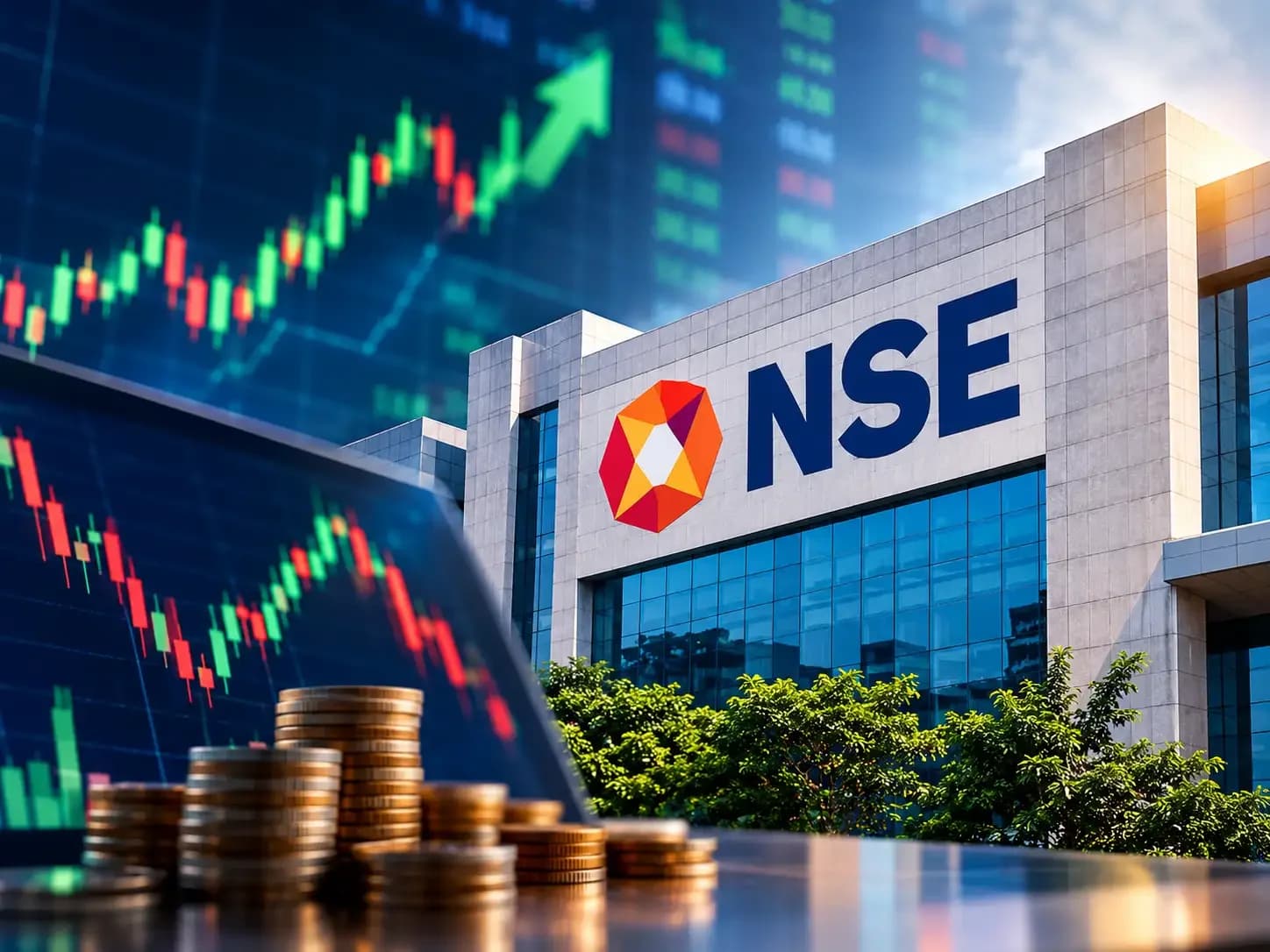
Before the IPO, NSE attracted ₹6,746 crore in the anchor round from investors including Life Insurance Corporation of India (LIC), Goldman Sachs, GIC Singapore, Norges Bank, ICICI Prudential Mutual Fund, Nippon India MF and Axis MF, among others. The bidding was led by qualified institutional buyers who subscribed their portion 12.68 times, while non-institutional investors subscribed 6.55 times and retail investors booked their portion 1.39 times, demonstrating strong institutional confidence in India's third-largest IPO.