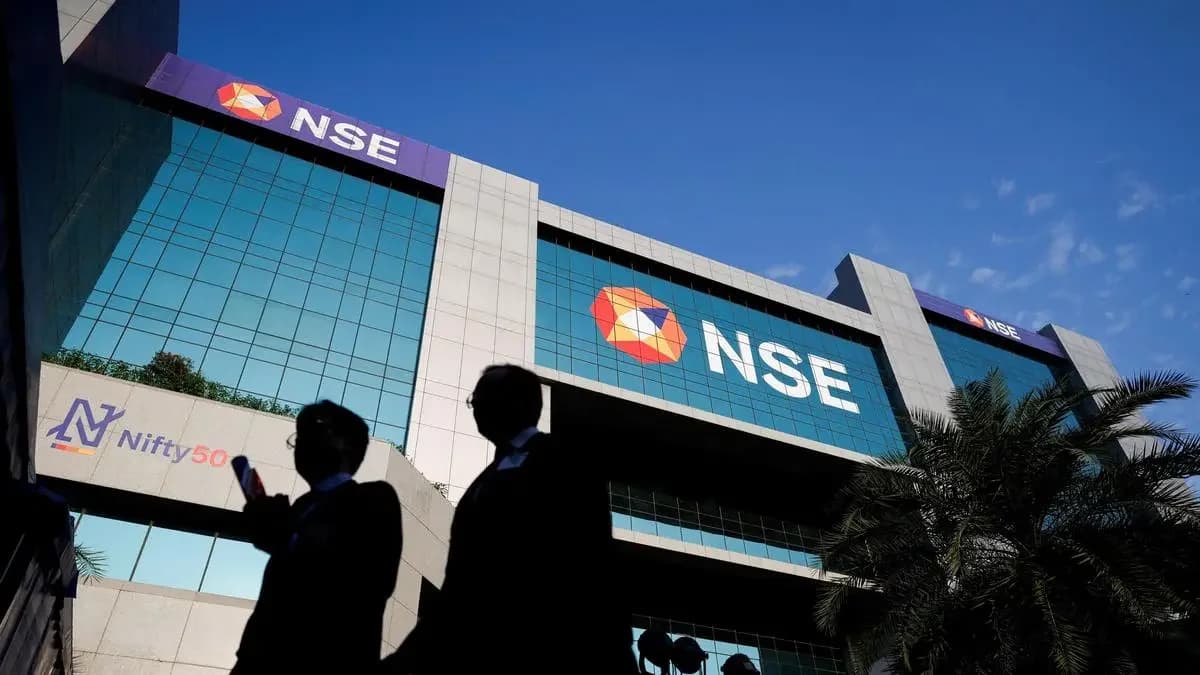
Deena Mehta of Asit C. Mehta Financial Services has endorsed NSE's IPO pricing as attractive for investors, calling it a defining moment for India's markets. According to CNBC TV18, Mehta noted that "in India, of late we have been seeing that the merchant bankers have been pricing very aggressively and leaving very little money on the table for the investors. So, having attractive pricing, especially, the issue size is pretty large, this is ₹22,569 crore plus." The IPO opened at a price band of ₹1,700 to ₹1,785 per share, valuing India's largest stock exchange at ₹4.42 lakh crore. The issue closes on September 21, with shares offered in multiples of eight and a ₹170 discount for employees.
The anchor round demonstrated robust institutional confidence with ₹2,883 crore from foreign portfolio investors and ₹3,588 crore from domestic institutions. As per CNBC TV18, Life Insurance Corporation of India (LIC) emerged as the top anchor investor at ₹450 crore, choosing to add to its stake rather than sell. State Bank of India (SBI) remains the largest seller in the offer for sale, followed by CPPIB, Randa Investments, and Morgan Stanley. This strong anchor investor response validates NSE's market position and growth prospects.
The National Stock Exchange's upcoming initial public offering is valued at ₹1,785 per share, translating to approximately ₹4.4 lakh crore market capitalization. According to Nikhil Khandelwal, Chairman and Managing Director of Systematix Group, this valuation represents roughly 41 times NSE's FY26 earnings. However, recent reports indicate NSE has lowered the valuation by around 15% from its initial seeking, though it remains the most richly valued exchange franchise globally. At the upper end of the IPO price band, NSE is valued at 42.9x earnings, placing it among the most richly valued exchange franchises worldwide. The Grey Market Premium (GMP) stands at ₹161 per share over the IPO price, representing a 9% premium as of September 16.
According to CNBC TV18, Mohit Mangal of Centrum Broking estimates that at the upper end of the IPO price band of ₹1,785, NSE would be valued at around 38 times FY28 earnings and 33 times FY29 earnings. These valuations are broadly comparable with those of the Bombay Stock Exchange (BSE). While NSE has lost some market share in the index options segment, which remains a key contributor to its business, the exchange continues to hold a dominant position across other segments. NSE maintains around 92-93% market share in the cash segment and an almost monopoly position in futures, according to Mangal. In index options, its market share stood at around 60% based on year-to-date FY27 data. Recent regulatory changes have affected trading activity, with the industry's average daily premium turnover in index options falling around 20% month-on-month in August, though volumes had recovered up to September 18.
Despite regulatory headwinds and near-term earnings pressure, experts remain positive on NSE's long-term prospects. Mangal expects FY27 to be a year of consolidation, followed by mid-teens growth from FY28 onwards. Between FY21 and FY26, both operating revenue and profitability grew at a compound annual growth rate (CAGR) of around 23-24%, as noted by CNBC TV18. Around 60% of NSE's revenue still comes from index options, highlighting the importance of trading volumes and regulatory changes in determining the exchange's earnings trajectory. Mehta expects the listing to pull more companies toward public markets over time, particularly highlighting small and medium enterprises (SMEs) as a growing source of new listings.