Fifty years ago, a man named Madan Lal Jindal set up a small proprietary concern in Hisar, Haryana, manufacturing buckets. Today, that same family business: now in its third generation, is knocking on the doors of the public markets. Jindal Supreme (India) Limited opens for bidding on September 16, and closes on September 18, 2026; with a price band of ₹88–₹93 per share and total issue size up to ₹125 crore: out of which ₹100 crore is a fresh issue and ₹25 crore is an offer for sale. Before you decide whether this one deserves a spot in your portfolio, here's what the numbers and the fine print actually say.
What does the company do?
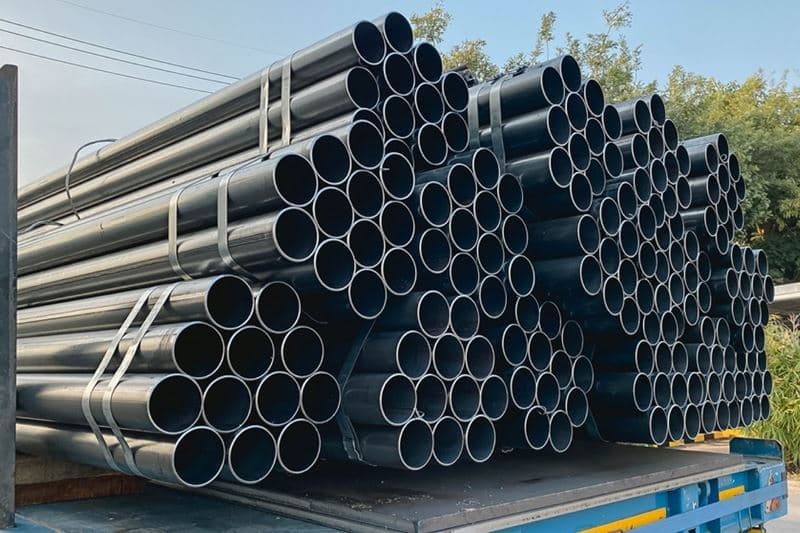
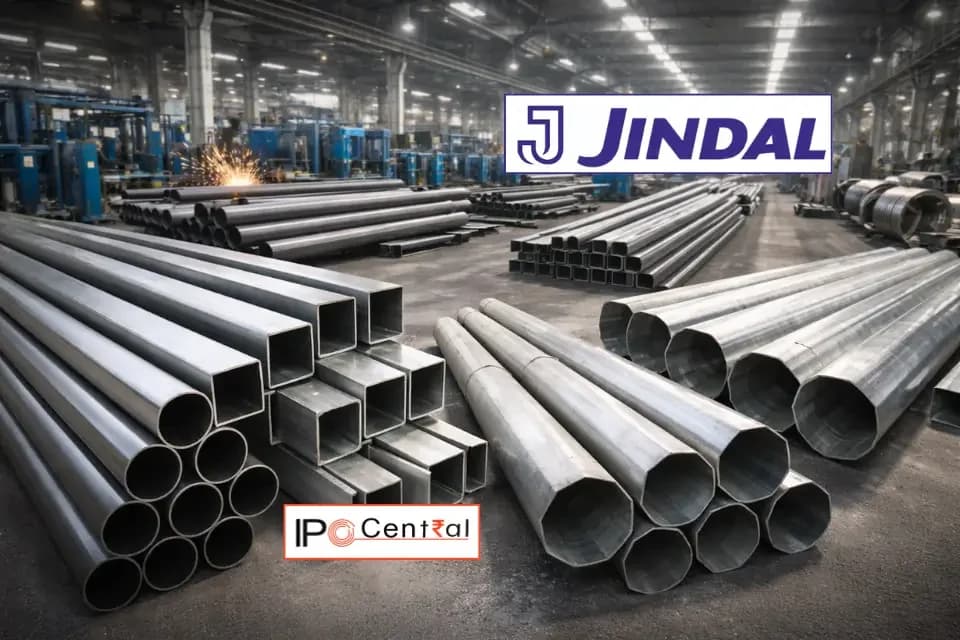
Jindal Supreme is a manufacturer of mild steel black and galvanized pipes & tubes, operating out of a single integrated facility spread across ~16 acres in Hisar, Haryana. The company makes pipes ranging from 0.5 inch to 10 inch, serving sectors like water supply & plumbing, infrastructure & construction, oil & gas, agriculture, and rural electrification.
What makes this more than just a commodity pipe maker is its recent diversification. In FY25, the company commenced commercial production of metal beam crash barriers; the guardrails you see on national highways. In April 2025, it added GI tubular poles to its portfolio. Both are high-growth, government-spending-linked segments. The company uses german ERW (Electric Resistance Welding) and galvanizing technology; it complies with IS, ASTM, and BIS standards, and has commissioned a 5 MW solar power plant: a meaningful ESG signal for a mid-sized manufacturer.
The business is led by Abhishek Jindal (CMD, 40), a third-generation promoter with 18+ years in the ERW pipes industry. His wife, Sonam Jindal, (co-promoter) serves as a Non-Executive Director. The promoter group collectively held 100% of the pre-IPO equity; a tightly held family business making its first foray into public markets.
The financials: improving, but not without blemishes
The headline story here is margin expansion. EBITDA margins have improved consistently; from 3.27% in FY24 to 4.42% in FY25 to 6.16% in FY26. Revenue recovered to ₹675 crore in FY26 after a dip in FY25.
Financial snapshot (₹ in Crore)
| Metric | FY24 | FY25 | FY26 |
|---|
| Revenue from Operations | 645.44 | 586.40 | 675.39 |
| EBITDA | 21.11 | 25.92 | 41.63 |
| EBITDA Margin | 3.27% | 4.42% | 6.16% |
| PAT | 12.87 | 24.27 | 22.53 |
| Basic EPS (₹) | 3.20 | 6.02 | 5.59 |
| Debt/Equity | 2.09x | 1.28x | 1.24x |
| RoE | 27.98% | 38.85% | 26.28% |
The RoE of 26.28% is the standout number; it's the highest among all listed peers in this segment. The debt-to-equity ratio has also improved meaningfully, from 2.09x in FY24 to 0.88x as of Q1FY27, partly aided by internal accruals and partly by what the IPO proceeds intend to do: ₹71 crore of the fresh issue will go directly toward debt repayment.
However, there are two financial metrics that deserve a closer look. First, operating cash flow turned negative in FY26 at ₹5.68 crore, despite strong EBITDA; a sign that working capital consumed more cash than the business generated. Second, the net working capital cycle stretched from 36 days in FY24 to 56.6 days in FY26, driven by rising inventory days (29 → 46.5 days) and an extremely short payable period of just 5 days; suggesting the company has limited bargaining power with its suppliers.
How does it stack up against peers?
This is where the story gets interesting. Jindal Supreme is the smallest player in its peer group by revenue and net worth; but it punches well above its weight on profitability and returns.
Peer comparison (FY26)
| Company | Revenue (₹ Crore) | EBITDA Margin | PAT Margin | RoE | Debt/Equity |
|---|
| Jindal Supreme | 675.94 | 6.16% | 3.33% | 26.28% | 1.24x |
| Vibhor Steel Tubes | 1,149.35 | 3.78% | 0.76% | 4.57% | 0.01x |
| Sambhv Steel Tubes | 2,413.24 | 11.45% | 5.87% | 18.35% | 0.04x |
| Hi-Tech Pipes | 4,200.07 | 4.13% | 1.81% | 6.07% | 0.02x |
Sambhv Steel is the clear profitability leader with 11.45% EBITDA margins. But on RoE, Jindal Supreme leads the pack. Even with D/E improving from 1.24x in FY26 to 0.88x in Q1FY27, it significantly carries more debt than peers. Post-IPO debt repayment should help close this gap.
Valuation: the discount is real
At the cap price of ₹93, Jindal Supreme is priced at approximately 16.6x its FY26 EPS of ₹5.59. The industry composite P/E stands at 36.97x, with peers trading between 22x and 65x. This means the IPO is priced at a ~55% discount to the industry average P/E; a meaningful valuation gap that could attract value-oriented investors.
The NAV per share has grown from ₹10.35 in FY24 to ₹24.04 in FY26, and the issue price at ₹93 represents roughly 3.9x book value: not cheap on a P/B basis, but justifiable given the superior return ratios.
The red flags you shouldn't ignore
No IPO analysis is complete without an honest look at the risks, and Jindal Supreme has a few that stand out:
Single facility risk is the most structural concern. Every rupee of revenue, every tonne of production, runs through one plant in Hisar. A fire, a regulatory shutdown, or even a prolonged power outage could bring the entire business to a halt.
Supplier concentration is another. As of Q1FY27, The top 10 suppliers account for 72.31% of purchases- meaning the company is heavily dependent on a handful of vendors for its raw material supply. Any disruption in that chain flows directly to production.
Capacity utilization has been declining from 75% in FY24 to 61.66% in FY26; even as the company expanded installed capacity from 1,35,000 MTPA to 1,71,000 MTPA. Adding capacity without filling it raises questions about demand visibility.
Finally, the offer for sale component means that ~₹25 crore of the IPO proceeds go to the selling promoters, not to the company. And the objects of the fresh issue; primarily debt repayment- have not been appraised by any bank or financial institution.
The bigger picture
The industry tailwinds are real. The Indian steel pipes and tubes market is projected to grow from $14,416 million in 2026 to $23,933 million by 2036 (CAGR: 5.2%), driven by the Jal Jeevan Mission, Smart Cities, Dedicated Freight Corridors, and highway expansion. Jindal Supreme's new products- crash barriers and GI tubular poles; are directly aligned with these government spending themes.
The company is also expanding its crash barrier capacity from 24,000 MTPA to 42,000 MTPA (as of July 2026), funded through internal accruals; a sign of financial discipline. Its dealer network has grown from 34 dealers (FY24) to 53 dealers (FY26), and its employee base stands at 242 as of June 2026.
The bottom line
Jindal Supreme is a profitable, improving, and reasonably valued business in a sector with genuine long-term demand visibility. Its RoE leadership among peers, improving margins, and a valuation discount to the industry are the key positives. The concerns: single facility risk, high supplier concentration, negative operating cash flow in FY26, and a stretching working capital cycle, are real but not unusual for a company of this size and stage.
What this IPO ultimately represents is a first-generation-to-public-market transition of a family business that has quietly built a solid operation over five decades. Whether the public market gives it the credit it deserves will depend on execution; particularly on debt reduction, capacity utilization improvement, and the ramp-up of its new product lines.
Disclaimer: This AI-generated analysis, based on RHP/DRHP information, is for informational purposes only. Investors should conduct due diligence and consult financial advisors before making investment decisions. Past performance does not guarantee future results, and all investments carry inherent risks including potential loss of principal.