Horizon Industrial Parks, India's largest industrial and logistics infrastructure operator backed by global alternative asset management firm Blackstone, has set its price band at ₹57-60 per share for its ₹2,600-crore IPO opening on August 17, 2026. According to Business Standard, the IPO closes on Wednesday, August 19, with anchor investor bidding set for Friday, August 14. This would be the fourth mainboard IPO to open next week, alongside Lalithaa Jewellery Mart, Sunshine Pictures and Shankesh Jewellers. The initial public offering comprises an entirely fresh issue, with no offer-for-sale component. Qualified Institutional Buyers (QIBs) have been allocated 75 per cent of the offer, while Non-Institutional Investors (NIIs) will get 15 per cent and retail investors 10 per cent. As per Moneycontrol, the company is seeking a valuation of ₹17,300 crore at the upper end of the price band, which translates to a post-issue market capitalisation of around ₹17,298 crore at the upper price band. At the upper price band, the IPO implies a post-issue market capitalisation of around ₹17,298 crore. The company had raised ₹1,650 crore of primary capital in December 2025 from investors including 360 One, SBI Life and Radhakishan Damani, taking its valuation from around ₹13,000 crore to ₹14,650 crore before the current issue. Blackstone currently holds around 89 per cent stake in the company, as per the Red Herring Prospectus (RHP). Equity shares are proposed to be listed on BSE and NSE on August 24, with Axis Capital, JM Financial, IIFL Capital Services, SBI Capital Markets and 360 ONE WAM serving as book-running lead managers, while KFin Technologies is the registrar.
Marquee investors in Horizon's ₹1,650-crore pre-IPO round bought shares at ₹59.81 apiece in December, leaving them with a negligible gain of just 0.32 percent at the offering's upper price band of ₹60. According to Moneycontrol, Damani and SBI Life were allotted 33.44 million shares each for an investment of approximately ₹200 crore apiece, while several 360 ONE funds invested around ₹700 crore in the pre-IPO round. The pre-IPO round included several other institutional and wealthy investors such as Nuvama India Access LVF, Poonawalla Vision Fund I, DSP Investment, Ananta Capital Ventures Fund 1, Munjal Mavjibhai Lakhani, Varun Agarwal and Everest Food Products. State Bank of India invested about ₹50 crore, while DSP Investment received shares worth approximately ₹25 crore. Under IPO lock-in requirements, shares held by pre-IPO shareholders other than the promoters are ordinarily locked in for six months from the date of allotment in the IPO.
According to Business Standard, the proceeds will be used entirely for debt repayment, with the company carrying roughly ₹6,700 crore in gross debt heading into the offer. Combined with a ₹1,650 crore pre-IPO private placement completed in December 2025, the total primary capital raised stands at ₹4,250 crore, which the company says will retire approximately two-thirds of its debt. As reported by CNBC TV18, CFO Kunal noted that interest costs, currently running at around 8.1-8.2 per cent per annum, are expected to fall a further 50-75 basis points as credit ratings improve post-deleveraging. The company had total borrowings of ₹6,884 crore as of March 31, 2026, on a restated basis, and has approached the capital markets primarily to reduce its debt. Pro forma net debt, after accounting for the ₹1,650 crore raised in December and the proposed ₹2,600 crore IPO, would have been around ₹2,100 crore as of March 2026, with current net debt estimated at around ₹2,500-2,600 crore. Horizon plans to use ₹2,250 crore, or nearly 87 percent of the IPO proceeds, to repay or prepay borrowings.
According to Business Standard, Urvish Rambhia, whole-time director and chief executive of Horizon Industrial Parks, revealed that the company plans to expand in existing markets, enter more tier 2 cities and broaden its customer and product mix as India's industrial and warehousing sector becomes increasingly institutionalized. The company is looking to enter tier 2 markets including Lucknow, Vizag, Coimbatore, Indore and Aurangabad, and also plans to explore eastern India, where it currently has no presence. As reported by Business Standard, Rambhia noted that "What we believe today is that all the hard yards required to build the company, putting the building blocks in place, getting the team together and establishing an execution track record, have already been done. Our intent is to embark on the next leg of growth, or Horizon 2.0. We believe this is a good time to invite new investors into the company." The company expects to become a self-funded business after its ₹2,600 crore IPO, with the company saying lower debt and a fully paid land bank will support its next phase of growth without the need for additional capital. Asheesh Mohta, Head of Real Estate India at Blackstone, noted that Horizon has built the largest company at scale with a fully integrated management team and lands fully paid for, making this an appropriate stage to list the business.
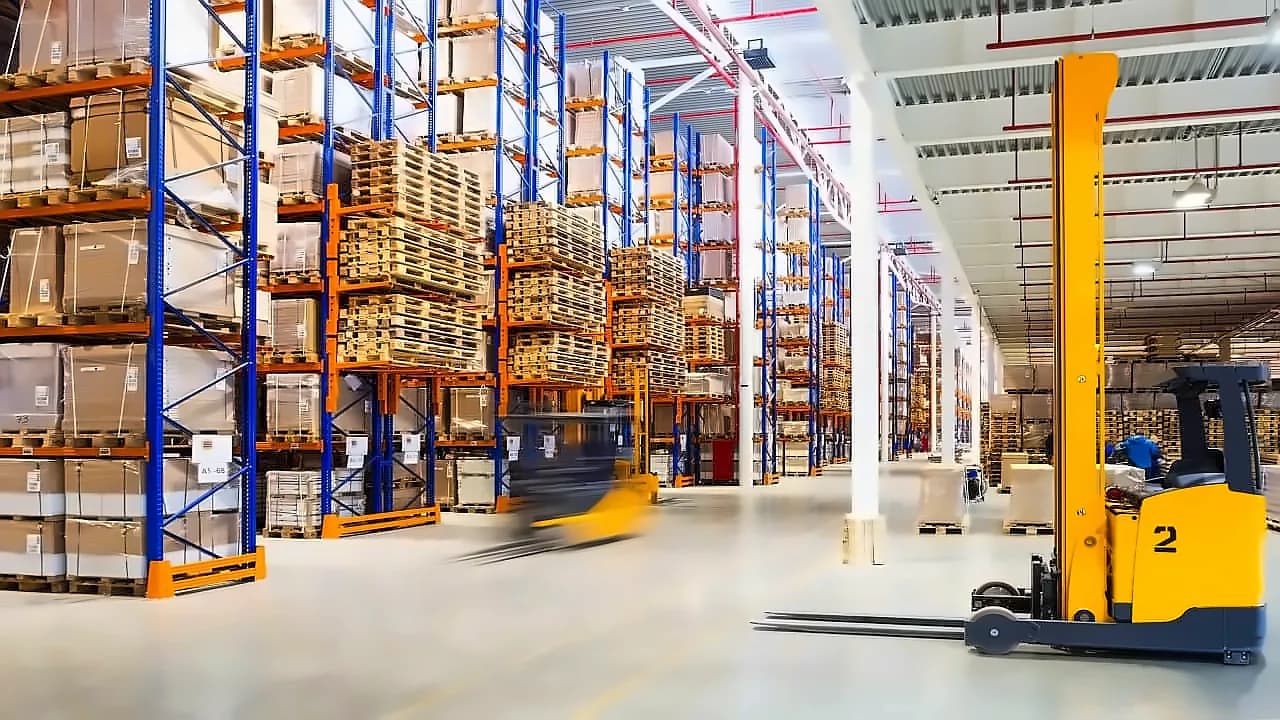
According to The Hindu BusinessLine, Horizon Industrial Parks provides industrial and logistics solutions through a network spanning 29 million square feet across 45 assets in 10 cities as of May 31, 2026, with a committed occupancy of 93.6 per cent. The company's total network, including land under development, stands at 59 million square feet. The company's total network stands at around 58 msf across 10 cities, which expands to 46 assets covering 61.13 msf when its 49% stake in Vision Softech Facilities Pvt Ltd at Narsapura is included. As of May 31, 2026, the operational network stood at 28.55 msf with committed occupancy at 93.56%. The development pipeline comprises 30.03 msf, including 7.22 msf of near-term deliveries and 22.81 msf of planned projects. The company develops and manages fulfilment centres, industrial facilities and in-city centres, with around half of the portfolio already developed. The company has expanded its operational platform from almost 3 million square feet when it acquired its first set of assets around 2022, to nearly 28.6 msf currently, with its total development potential standing at around 61 msf, leaving roughly 33 msf to be developed without acquiring additional land.
As reported by Business Standard, Horizon Industrial Parks is a loss-making company with widening losses, with net loss for the year ended March 2026 standing at ₹203.65 crore, widening from ₹178.7 crore in the previous year. However, during the same period, revenue surged 77.1 percent to ₹691.38 crore from ₹390.3 crore. Despite EBITDA margins of nearly 80%, the company continues to report a negative profit after tax (PAT), highlighting the impact of factors below the operating-profit level. According to Business Standard, Horizon's total income on a pro forma basis rose 18.7 per cent year-on-year to ₹765.2 crore in FY26, while EBITDA rose 20.6 per cent to ₹605 crore. The company had total borrowings of ₹6,884 crore as of March 31, 2026, on a restated basis. According to The Hindu BusinessLine, the company has 118 customers across e-commerce, FMCG, auto, EV, defence and renewables, with the top 10 tenants accounting for roughly 41-42 per cent of revenues. Rental contracts typically include annual escalations of around 4.5-5%, translating into an increase of roughly 15% every three years. One of the key risks is customer concentration, with the top 10 customers contributing 42.6% of FY26 pro forma revenue.