V2 Retail shares surged 4% in Monday's trading session following Motilal Oswal Financial Services' initiation of coverage with a 'buy' rating and target price of ₹275 per share, indicating an upside of 27% from its previous close of ₹216.50. As per Business Standard, the stock opened in the green at ₹220 and touched an intraday high of ₹225.70 on the National Stock Exchange (NSE). At 2:50 PM, the stock was trading firmly in the green at ₹223.25, with nearly three million equities changing hands. The benchmark Nifty 50 index was down 0.6% at 23,753 during the same period, highlighting V2 Retail's strong outperformance.
Motilal Oswal expects V2 Retail's revenue to grow at a Compounded Annual Growth Rate (CAGR) of 40% over FY26-29, with pre-Indian accounting standards (pre-IND AS) EBITDA growing at 38% CAGR and Profit After Tax (PAT) growing at 35% CAGR over the same timeframe. According to Business Standard, the brokerage emphasizes that same store sales growth (SSSG) remains the primary earnings driver, with every 1% change in SSSG translating into a 7-11% change in EBITDA and PAT, reflecting the strong operating leverage embedded in the model. This growth is driven by 450 store additions, mid-single-digit same store sales growth, and fixed-cost dilution on a scaling network. Revenue is projected to increase from ₹3,060 crore in FY26 to ₹8,351 crore in FY29, while pre-IND AS EBITDA is estimated to rise from ₹288 crore to ₹752 crore and adjusted profit is expected to grow from around ₹150 crore to ₹370 crore during the period.
In the bull case scenario, Motilal Oswal assumes 49% revenue CAGR over FY26-29 compared to 40% in the base case, expecting stronger revenue growth driven by higher SSSG of 8% and faster store additions with area CAGR of 38% compared to 33% in the base case. According to Business Standard, driven by better gross margin print and higher SSSG, the brokerage expects pre-IND AS EBITDA margin to improve to 9.9% by FY28, 90 basis points higher than its base case. The bull case target price is based on a price-to-earnings multiple of 30x estimated for September 2028 compared to 25x in its base case. Conversely, in the bear case scenario, Motilal Oswal projects a target price of ₹150 per share, implying a 34% downside potential. In this scenario, the brokerage factors in slower demand and expansion, with revenue CAGR moderating to 24% and SSSG falling to 2%, while lower operating leverage could drag EBITDA margins to about 8.3% by FY28.
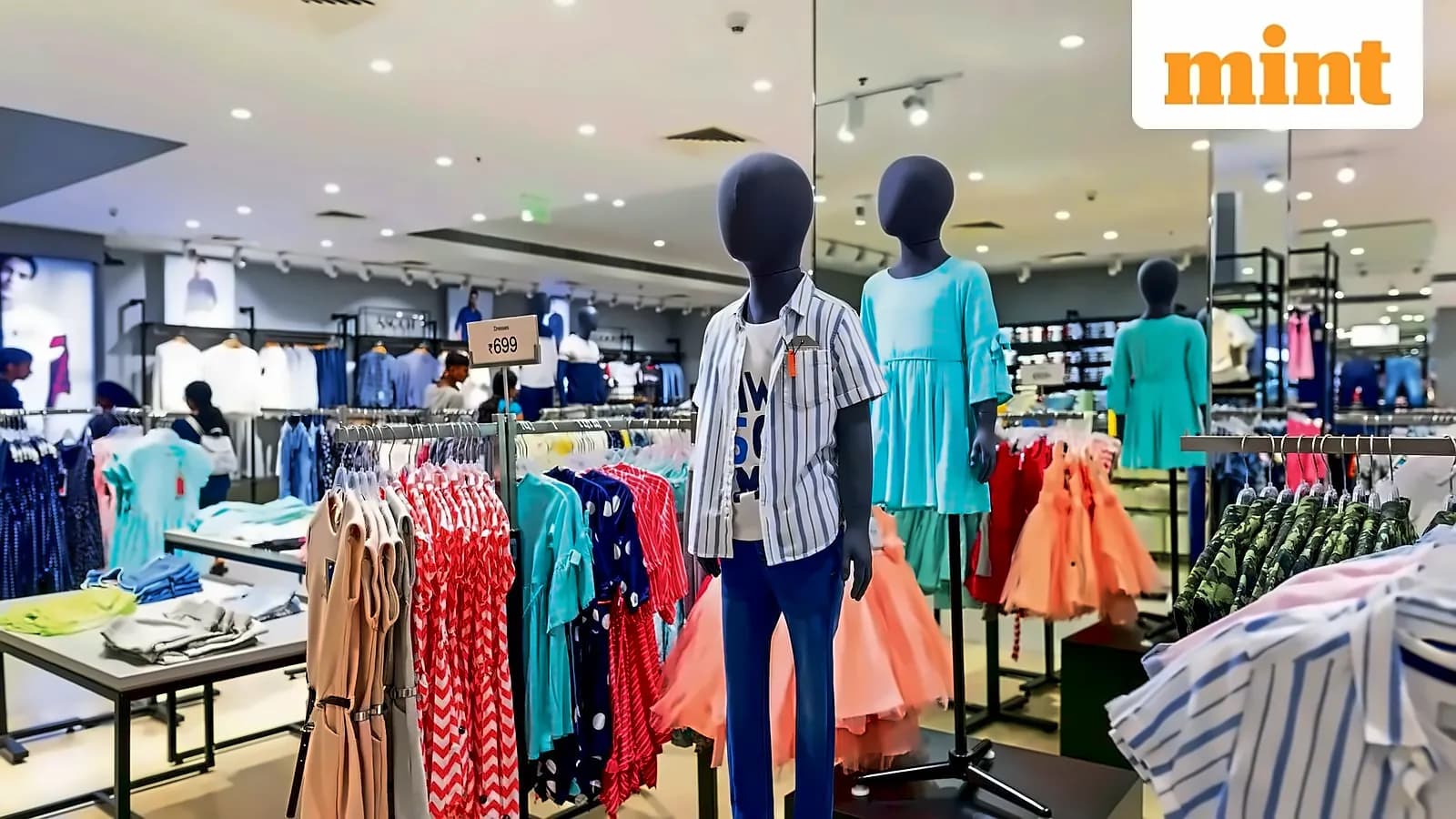
As reported by Business Standard, V2 Retail's differentiation stems from being a focused value-fashion retailer catering to the entire family, with selective lifestyle offerings across 400 stores in over 300 cities. The company operates with a product-ownership model anchored by 90% private-label mix, with in-house design contributing 35-40%. Motilal Oswal highlighted V2's industry-leading store productivity at ₹923 sales per square foot (SPSF) as of FY26, which is the highest among value-fashion retailers, and throughput-led cost structure delivering superior margins despite structurally lower gross margins than peers. The company's aged inventory has declined to less than 5%, while more than 90% of merchandise is sold at full price. V2 Retail's expansion strategy includes plans to reach approximately 770 stores by FY29, supported by around 450 store additions over FY26-FY29, with nearly 460 cities still offering expansion opportunities.
According to Business Standard, V2 Retail, which commands a market capitalisation of ₹8,149 crore as on September 7, has declined 9% in 2026 so far. However, in the same period, the counter has outperformed the market, rising 36% in one year, while the benchmark Nifty has declined 4%. Key risks identified include execution and site-selection risk from rapid geographic expansion, intensifying competition from national value-fashion players, and higher assortment risk as in-house design scales beyond 35-40%, potentially impacting sell-through, margins and store returns. The brokerage expects the company to generate cumulative operating cash flow of around ₹780 crore over FY26-FY29, though free cash flow is likely to remain modest because planned expansion expenditure of approximately ₹770 crore could exceed internal accruals during the accelerated store rollout.