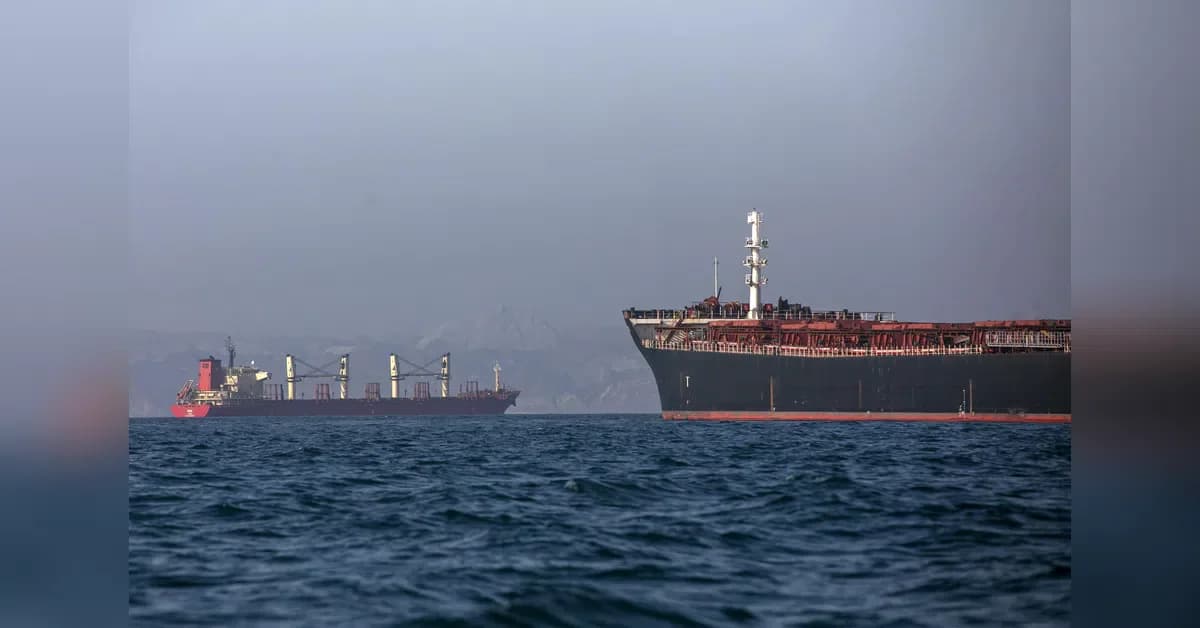
India's macroeconomic outlook has deteriorated significantly following the ongoing West Asia conflict, with the country's growth trajectory, inflation outlook, fiscal position, and external balances remaining closely linked to crude oil and natural gas prices. Around 42% of India's crude oil imports during FY26 passed through the Strait of Hormuz, while 55% of liquefied natural gas imports came through the region. Nearly 88% of liquefied petroleum gas imports also originated from the Middle East, making the waterway particularly important for India's energy security. Kotak Institutional Equities estimates India's current account deficit at 2.5% of gross domestic product in FY27 under its base-case scenario, assuming an average crude oil price of $95 per barrel. In a more adverse environment, the current account deficit could widen to 3% of gross domestic product. High oil prices are negative for India's CAD/BoP, fiscal deficit, growth and inflation, with the impact of crude oil prices being non-linear according to Kotak.

Iran and the US have reportedly reached a breakthrough agreement to reopen the Strait of Hormuz, marking a significant development after months of escalating tensions. Iranian foreign ministry spokesman Esmaeil Baqaei pushed back on Trump's conditions, saying the Islamic republic "said goodbye to the language of 'must' 47 years ago." Exchanges of messages were continuing, he added, but "no final agreement has been reached." In his social media post, Trump said Tehran would remove mines from the Strait of Hormuz and end its closure of the waterway with "no tolls," while the US would lift its blockade of Iranian ports. The two countries would also coordinate on removing and destroying Iran's enriched uranium, with "no money will be exchanged, until further notice." However, Iran's Fars news agency cited sources as saying Tehran was demanding "the immediate release of $12 billion" before moving to the next phase of negotiations. Iranian state television on Saturday said an "unofficial" draft memorandum of understanding said the United States agreed to release $12 billion in frozen assets within 60 days, with the funds to be transferred without restrictions. The White House has previously dismissed such claims as a "fabrication."
Despite the reported breakthrough, crude oil markets are showing mixed signals with WTI trading around $87.75, suggesting investors remain cautious about the sustainability of the deal. Market analysts note that a deal doesn't magically refill the tank, as even if barrels start flowing again by mid-summer, the world will have burned through a large chunk of inventory that now has to be rebuilt. The global economy has already consumed significant energy reserves during the four-month disruption period, creating a floor under prices rather than a trapdoor for immediate price relief. US stock futures are rising as Nvidia and AI cheer offset Iran military flare-up, but equity markets are trading the recovery while policymakers are stuck managing the damage. The Bank of England has already cautioned that gas pricing looks a little too relaxed about the risks, as Europe increasingly fights Asia for LNG cargoes.
Kotak Institutional Equities remains constructive on corporate earnings despite the West Asia conflict, expecting Nifty 50 earnings to grow 18% in FY27 and 14% in FY28 after muted growth of 8% in FY26. The brokerage expects stronger profit growth from financials, global commodities, global services, global products and utilities to support earnings despite mounting concerns over crude oil prices. India's growth trajectory, inflation outlook, fiscal position, and external balances remain closely linked to crude oil and natural gas prices, with the developments in the Strait of Hormuz remaining critical. The eventual economic outcome will largely depend on the duration of the conflict and the availability of oil and natural gas supplies through the Strait of Hormuz. Kotak's base-case scenario assumes the conflict eases over the coming weeks and energy supplies gradually normalise, though a prolonged disruption could result in significantly greater economic pressure.
Inflation risks have increased despite the benign trend seen in FY26, with Kotak expecting average consumer price inflation to rise to 5% in FY27 from 2.5% in FY26. Higher crude oil prices are one source of risk, with elevated raw material costs, food inflation, and weather-related challenges also contributing to higher inflation during the year. The India Meteorological Department's forecast of below-normal monsoon conditions in 2026 could create additional pressure on food prices. Companies have already begun raising prices to offset higher costs, with any increase in retail fuel prices having a direct impact on inflation. Higher transportation costs could spread inflationary pressures across the economy, as noted by Kotak. The current crisis is not purely about oil prices – it is a supply crisis, as distinguished from previous oil shocks in 1973 and 1979.
Market valuations continue to vary significantly despite recent volatility, with consumption stocks remaining expensive while financials trade at attractive-to-fair valuations. Investment-linked sectors continue to command rich valuations, with information technology services and pharmaceutical companies trading at fair-to-expensive levels. The Indian market's valuation is a mixed bag after the helter-skelter price movements in the past few weeks, according to Kotak. Pockets of excess valuation remain visible within sections of the mid-cap and small-cap universe, with investor enthusiasm remaining elevated in several thematic segments. Recent earnings performance was stronger than expected, with Nifty-50 net profit increasing 6.6% in Q4FY26, exceeding Kotak's estimate of 2.2% growth. However, 1QFY27 could be bumpy due to higher energy prices and inflationary pressures.