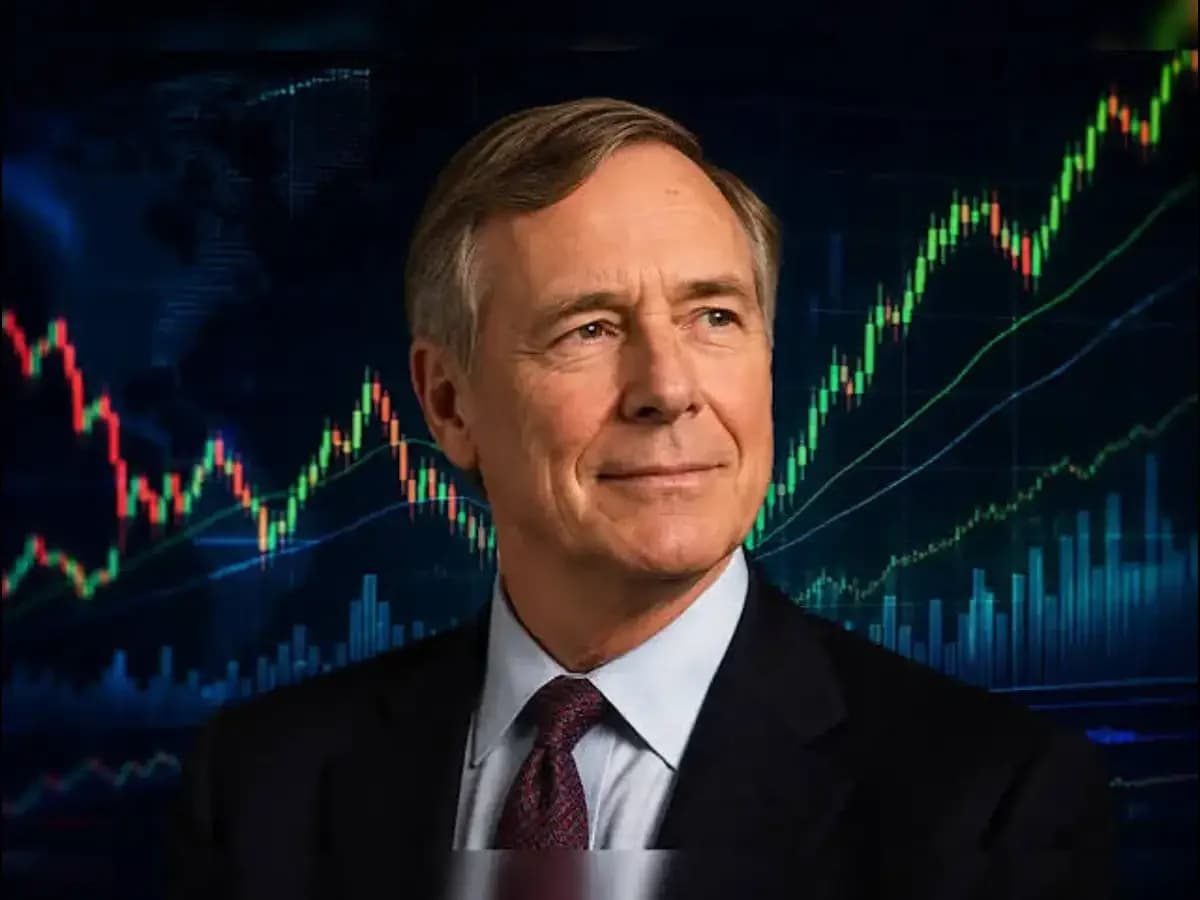
According to The Economic Times, Seth Klarman's investment philosophy centers on a fundamental truth about investor behavior: 'Most investors are primarily oriented toward return, how much they can make, and pay little attention to risk, how much they can lose.' This observation highlights a crucial imbalance in market participants' approach to wealth creation, where the focus on potential gains often overshadows the importance of protecting capital and managing downside risk. As demonstrated by practical investors who embrace this philosophy, the margin of safety concept becomes not just a theoretical framework but a practical necessity for navigating volatile markets.
As reported by The Economic Times, Klarman emphasizes the asymmetry of losses in investing, where a 50% decline requires a 100% gain just to break even. This mathematical reality often goes unnoticed by investors who continue to allocate capital based on expected upside without adequately assessing downside scenarios. Practical application of this principle requires maintaining high-conviction, low-turnover portfolios that focus on businesses trading significantly below their intrinsic value, as demonstrated by successful long-term value investors who have weathered market volatility through disciplined risk management.
Indian value investing legend Manish Goel has developed a complementary approach called The Bucket Hole Theory, which provides a practical framework for identifying investment risks. According to The Economic Times, Goel imagines a strong bucket filled with water representing investment returns, where every deficiency in a stock is a 'hole' in that bucket. His theory includes specific red flags such as debt-to-equity ratio above 0.5, declining operating cash flow for 2+ years, interest coverage ratio below 3x, negative free cash flow despite reported profits, and promoter pledge above 20%. The theory emphasizes that if even one 'Definite Hole' is found, the investment should be stopped immediately, as the bucket is leaking and cannot be repaired.

According to The Economic Times, Klarman's philosophy emphasizes the concept of 'margin of safety', which he defines as 'the idea that you want room to be wrong.' Successful investing, as he sees it, is not just about finding high-return opportunities but about ensuring that the probability and magnitude of loss are minimized. This requires discipline in buying at reasonable valuations, avoiding speculative excess, and maintaining adequate cash positions when opportunities are limited. Practical implementation involves analyzing hundreds of opportunities to find the few that meet strict opportunity-cost criteria, resulting in portfolios backed by deep-dive research and high-conviction positions.
As reported by The Economic Times, Klarman distinguishes between volatility and true risk, stating that 'true risk lies in the permanent loss of capital, driven by weak fundamentals, excessive debt, governance issues, or structural decline in a business.' Investors who focus only on price movements may overlook these deeper threats, while a risk-aware approach promotes contrarian thinking and disciplined decision-making that can help avoid behavioral traps like momentum chasing and herd following. This philosophy has proven particularly valuable in environments of extreme economic and political volatility, where maintaining a battle-hardened perspective on risk becomes essential for long-term wealth preservation.
According to The Economic Times, Klarman's philosophy suggests that 'investing is not about maximising gains in the best-case scenario, but about protecting capital in the worst-case scenario.' The paradox he presents is that 'investors who focus more on risk often end up achieving better returns over time.' This approach separates speculation from disciplined investing, emphasizing that the real path to wealth creation lies in maintaining capital preservation while seeking opportunities that offer reasonable upside potential. Practical implementation involves identifying high-quality businesses trading significantly below their intrinsic value and maintaining strict adherence to opportunity-cost criteria, resulting in portfolios that can withstand market volatility while delivering superior long-term returns.