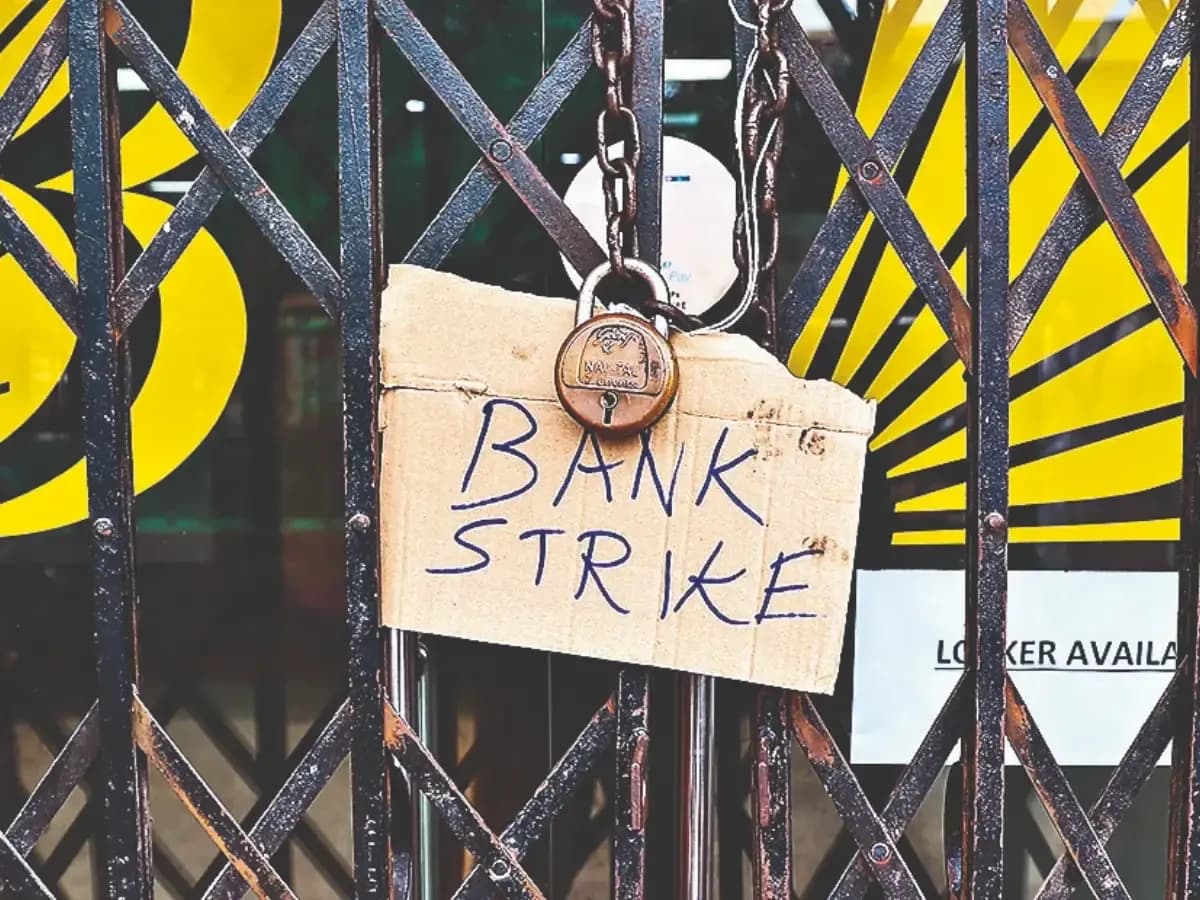
Banking stocks have sharply underperformed the Nifty 50 over three months, with IDFC First Bank declining 32% and HDFC Bank falling 27%. YES Bank dropped 22% while PSU lenders Canara Bank and Bank of Baroda declined 20%. According to reports from ET Now, both State Bank of India and HDFC Bank are showing signs of value after months of underperformance amid global uncertainty and domestic headwinds. The Nifty Bank Index has declined nearly 14% in the past month, with weakness persisting over the last 3, 6, and 12 months. However, recent market correction has recalibrated valuations across the sector, presenting selective buying opportunities with potential upside of 26 to 45% across prominent financial stocks.
As reported by ET Now, Antique maintains a BUY rating on SBI with a target price of ₹1200, implying around 17.7% upside from the current market price of ₹1019.45. Jefferies maintains a BUY rating on HDFC Bank with a target price of ₹1240, implying 65% upside from the current market price of ₹751.10. According to Motilal Oswal, growth is expected to accelerate beyond FY26, with ICICI Bank, HDFC Bank, and SBI highlighted as top banking picks. The brokerage expects an upswing in earnings momentum following a period of downgrades and margin pressures.
According to ET Now reports, SBI reported revenue of ₹130,590 crore and net profit of ₹22,176 crore in Q3, while HDFC Bank recorded revenue of ₹87,067 crore and net profit of ₹20,691 crore. SBI maintained a financing margin of -19% compared to HDFC Bank's -15%, with SBI's ROE at 17.2% versus *HDFC Bank's 14.4%. SBI's stock P/E ratio stands at 11.6 compared to HDFC Bank's 15.5, with SBI's dividend yield at 1.56% versus *HDFC Bank's 1.46%**. SBI showed loan growth of 11% YTD with FY26 guidance at 13-15%, while HDFC Bank projects loan growth at around 13% CAGR for FY26-28.
Recent developments have created additional pressure on HDFC Bank's stock performance, with the bank dropping 10.50% in four consecutive sessions following reports of employee exits linked to an AT1 bond probe. According to media reports, the bank has terminated three senior employees after an internal investigation into alleged mis-selling of AT1 bonds to NRI clients. The transactions were primarily linked to its Dubai branch and involved Credit Suisse AT1 bonds that were written off after Credit Suisse went bankrupt. Additionally, HDFC Bank faces governance concerns following the resignation of part-time chairman Atanu Chakraborty on 18 March 2026, citing certain developments not aligned with his personal values. The Reserve Bank of India has approved Keki Mistry as interim chairman for three months starting 19 March 2026, with the RBI stating the bank remains well-capitalised with no material concerns on governance or financial stability.
According to ET Now analysis, SBI demonstrates stronger historical performance with 10-year CAGR of 19% compared to *HDFC Bank's 11%, and 5-year CAGR of 22% versus *HDFC Bank's 0%. However, HDFC Bank shows 1-year CAGR of 31% compared to *SBI's -16%. SBI maintains strong profit growth at 36.3% 5-year CAGR versus *HDFC Bank's 21%, while HDFC Bank offers higher dividend payout at 23.3% compared to SBI's 18.2%**. SBI faces contigency liabilities of ₹27,42,584 crore compared to HDFC Bank's ₹27,80,601 crore, with both showing low interest coverage ratios. HDFC Bank has expanded its distribution network to 9,616 branches and 21,176 ATMs across 4,170 cities/towns as of December 2025, compared to 9,143 branches and 21,049 ATMs in December 2024.
As reported by ET Now, from an overall perspective, SBI offers stronger growth, better profitability, and cheaper valuations, making it attractive for investors seeking higher returns with moderate risk. HDFC Bank provides stability, strong asset quality, and long-term consistency, though at a premium valuation. According to the analysis, a revival in SBI and HDFC Bank could act as a key catalyst for Nifty Bank rebound, given their heavy weightage. Improved performance in these leaders may lift overall sector sentiment and drive broader sector recovery, with the sector showing signs of value after recent corrections. However, brokerage sentiment has turned cautious following HDFC Bank's recent developments, with some domestic brokerages cutting target prices citing governance-related overhang. The sector's weakness over three months has been attributed to persistent FII selling, high energy prices, and elevated bond yields.