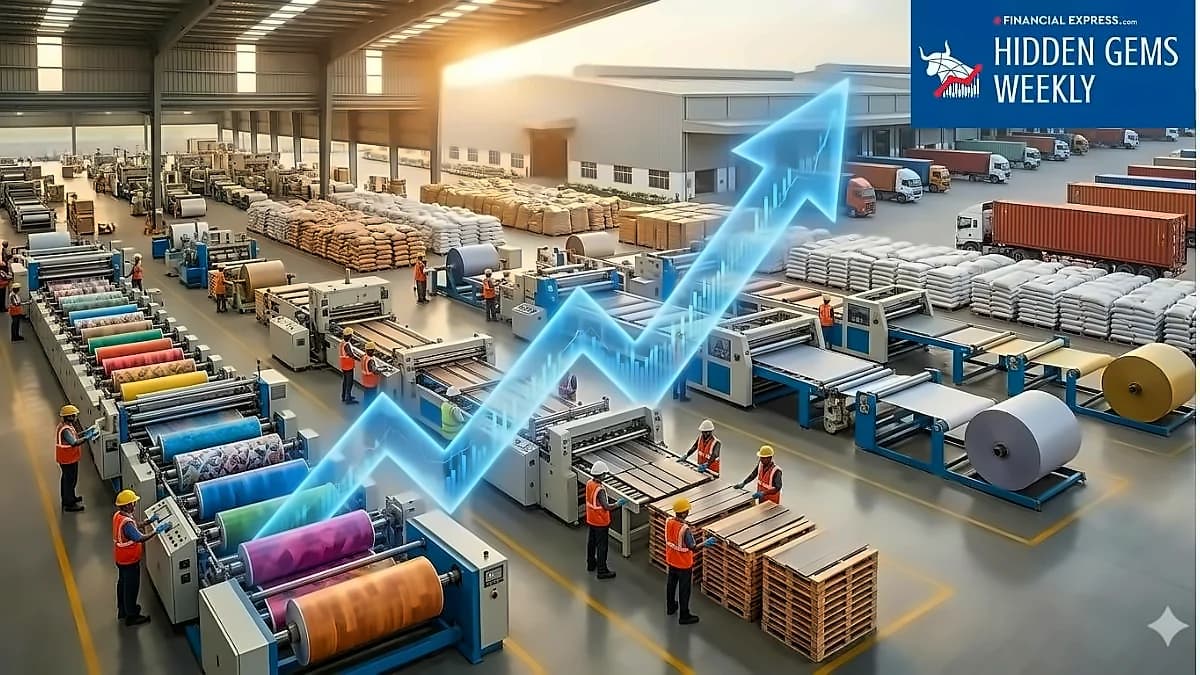
According to The Financial Express, Responsive Industries Ltd operates as a leading manufacturer of vinyl flooring and polyvinyl chloride-based products, with vinyl planks accounting for 56% of revenue and vinyl sheets contributing 28%. The company has built an integrated manufacturing platform spanning over 100 acres across India and China, serving more than 70 countries and over 1,000 institutional and retail customers. The diversified business model spans residential housing, hospitals, railways, commercial buildings and industrial applications, providing stability by reducing dependence on any single end market.
As reported by The Financial Express, the company's recent financial results show revenue of ₹1,394 crore in FY26, down 1% from ₹1,418 crore in FY25. EBITDA margins contracted from 20.8% to 17.3%, while PAT declined from ₹199 crore to ₹148 crore. The March 2026 quarter was particularly weak with revenue of ₹430 crore and operating margins falling to around 11%. Management attributes much of the weakness to higher US import tariffs and related pricing adjustments, which they believe is temporary rather than structural.
According to The Financial Express, Responsive Industries maintains a healthy balance sheet with reserves of ₹1,532 crore and borrowings reduced to ₹195 crore. The debt-to-equity ratio stands at only 0.13 times, with interest coverage remaining above seven times. The company's promoter holdings remain pledged at 5.65%, which is considered manageable compared to many small and mid-cap companies. This financial strength provides the company with the flexibility to pursue growth opportunities without relying heavily on external funding.
As reported by The Financial Express, the company's growth strategy focuses on private-label manufacturing partnerships and increasing export volumes, particularly in the US market. The United States represents a significant opportunity as India's share of the US vinyl flooring market remains relatively small compared to countries like Vietnam and China. The company has recently announced strategic partnerships with global brands and is focusing on capacity utilization improvements to generate growth from existing assets. Management emphasizes that much of the manufacturing backbone is already in place, positioning the company to benefit from improved utilization and operating leverage.
According to The Financial Express, in May 2026, Chairman Rishabh Agarwal resigned citing personal reasons, with the board appointing Aayush Agarwal as Chairperson. The transition appears to be more of a succession event than a governance issue, though investors will need clarity on strategic priorities under the new leadership. The stock currently trades at around ₹191 per share with a market capitalization of ₹5,100 crore, representing 34 times earnings and 3.3 times book value. The investment case rests on whether the company can convert its existing manufacturing infrastructure into higher utilization, stronger margins, and improved returns on capital from its current 16% export contribution.