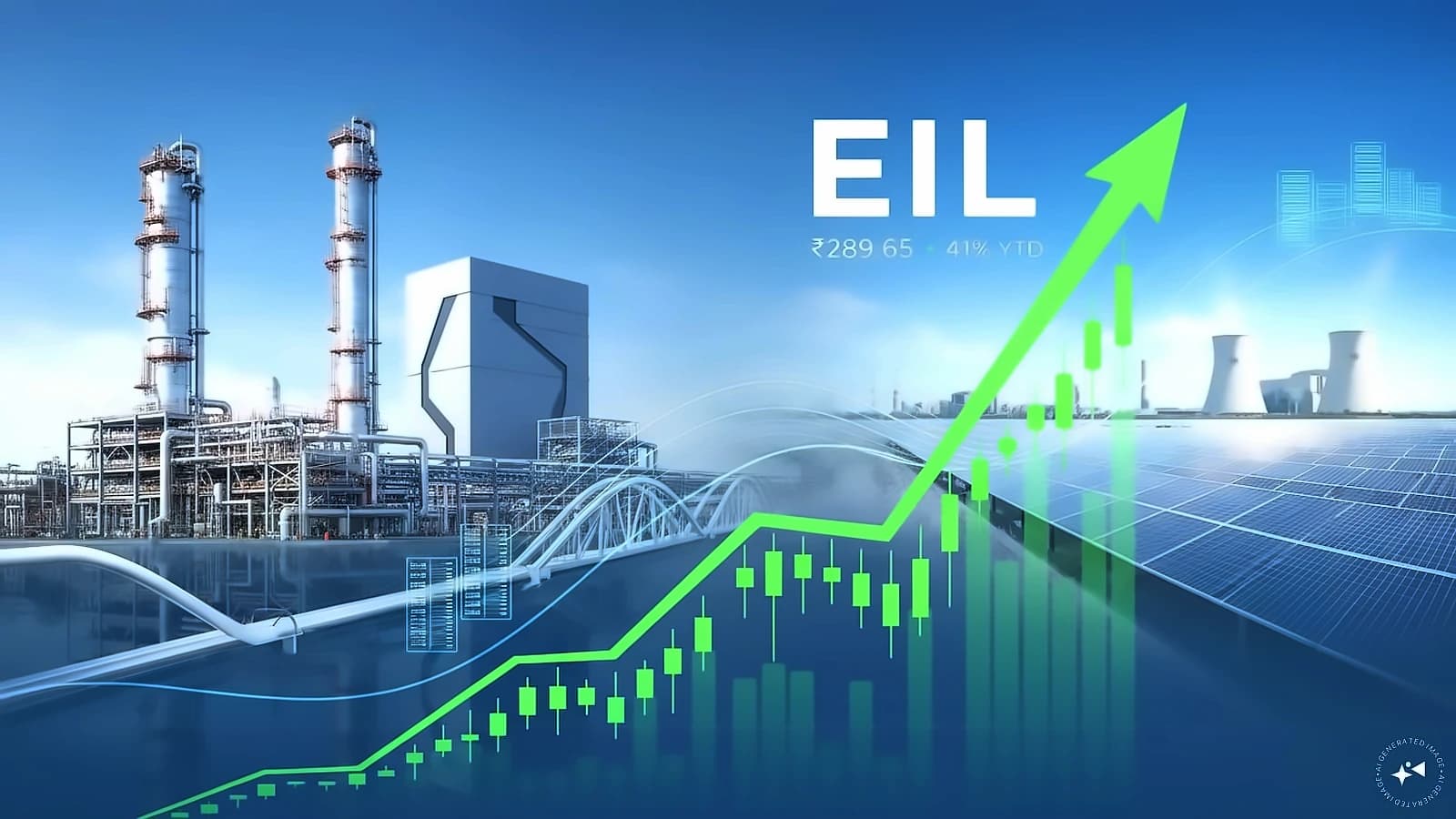
Engineers India shares surged 15% following the company's impressive Q2 FY27 results, with consolidated net profit jumping 136% year-on-year to ₹1.97 billion. According to latest reports, the company also achieved its highest-ever order book of ₹20,420 crore as of September 30, 2026, providing strong business momentum and improved revenue visibility. On a sequential basis, profit increased 66% from ₹1.08 crore in the April-June quarter, while EBITDA margin expanded substantially to 23.51% from 13% in the previous year. However, revenue declined to ₹8.24 billion from ₹9.2 billion a year earlier, though this divergence highlights improved operational efficiency. The latest trading session showed the stock advancing to ₹290 from the previous close of ₹251.85, with the price moving above its 21-day moving average of ₹277.21 and RSI at 55.76. The rally also lifted the stock's gains in 2026 to 44%, with the company positioned for its fifth consecutive year of gains if it closes the year in positive territory.
Engineers India secured fresh orders worth ₹7,428 crore during the first half of FY27, comprising ₹5,762 crore from consultancy services and ₹1,666 crore from turnkey projects. The company's total order book reached an all-time high of ₹20,421 crore as of September 30, 2026, up from ₹15,109 crore as of March 31, 2026. A key driver was the award of PMC and EPCM services for a greenfield refinery and petrochemical plant at Mokowe, Kenya, valued at ₹44,086 crore. This single contract significantly boosted the overseas consultancy segment, which accounted for 95% of the total consultancy business secured in the quarter. The order book provides revenue visibility for the coming periods and reflects sustained demand for the company's engineering and project execution services, though timely order execution and revenue conversion remain crucial for sustaining growth.

For the September quarter, the company reported net profit of ₹180 crore, representing a 66% increase over the previous quarter from ₹108.5 crore in Q1. In terms of operating performance, EBITDA, including other income, increased to ₹240 crore from ₹155 crore in the preceding quarter, while the EBITDA margin improved to 27% from 19%. The company's H1 FY27 net profit increased 56% year-on-year to ₹288 crore from ₹185 crore in the corresponding period last year, while EBITDA for the first half stood at ₹395 crore compared with ₹265 crore a year earlier. The improved sequential performance demonstrates the company's operational efficiency gains and strong business momentum, with the record order book providing a solid foundation for future growth.
The Board of Directors declared a first interim dividend of ₹1.50 per share for FY27, with the record date set for November 5, 2026. The payout is scheduled to be made within 30 days from the record date, following the payment of a final dividend of ₹2.50 per share for FY26 earlier in October 2026. This dividend declaration reflects the company's strong cash generation capabilities and commitment to returning value to shareholders. The company's September quarter performance reflects its diversified business model across oil and gas, petrochemical, fertiliser and infrastructure sectors, with future financial performance dependent on new project awards, execution timelines, and cash flow management.
Nuclear opportunities across engineering consultancy, balance-of-plant and construction supervision are at an early stage, with meaningful order inflows expected from FY28 onwards. The company continues to benefit from a shift towards higher-margin consultancy and engineering services, supported by its record order book and strong order inflows. EIL is also seeking to leverage opportunities across conventional energy, energy transition, and infrastructure sectors, positioning itself to participate in emerging investment and project development opportunities. The record order book, alongside higher first-half profitability and improved EBITDA margins, provides a strong foundation for the company's near-term business prospects, though the pace of order execution and conversion into revenue will remain key to sustaining growth momentum.